Treasury Software: Best Treasury Management Systems 2026
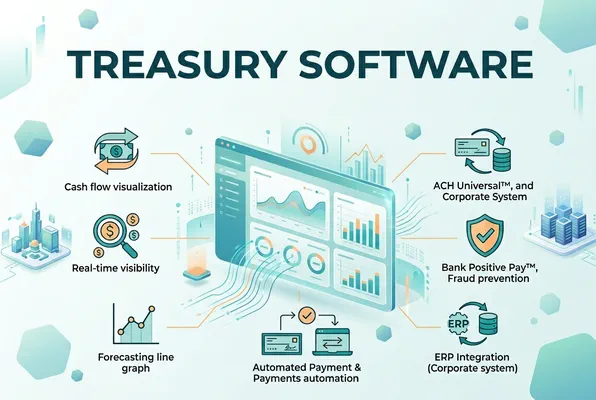

Managing a company’s finances has never been more complex, or more critical. From tracking liquidity across multiple bank accounts to navigating currency risk and regulatory compliance, modern finance teams face mounting pressure to do more with less. That’s exactly where treasury software comes in.
This guide breaks down what treasury software is, how it works, what features matter most, and how to choose the right treasury management system for your organization.
What Is Treasury Software?
Treasury software is a specialized application that automates and centralizes a company’s financial activities, including cash flow management, liquidity monitoring, risk management, payment processing, and financial forecasting. Rather than relying on spreadsheets or disconnected tools, businesses use treasury software to gain a real-time, unified view of their financial position.
At its core, treasury software plays a critical role in helping organizations:
- Monitor and optimize their cash position daily
- Forecast short- and long-term liquidity needs
- Automate payment workflows, including ACH payments
- Manage financial risks like currency and interest rate fluctuations
- Ensure compliance with regulations and banking standards like NACHA
Modern treasury software goes far beyond basic accounting. It acts as the central nervous system of corporate finance, connecting bank accounts, ERP systems, investment portfolios, and risk management tools into one cohesive platform.
What Does a Treasury Management System Do?
A treasury management system (TMS) is the engine behind effective treasury operations. It gives treasurers and CFOs the tools they need to make faster, data-driven decisions.
Core Functions of a TMS
- Cash management: Consolidate balances across all bank accounts and entities in real time
- Liquidity management: Forecast cash inflows and outflows to ensure funds are available when needed
- Risk management: Identify and hedge exposure to currency fluctuations, interest rate changes, and credit risks
- Bank reconciliation: Automate the matching of transactions to reduce errors and accelerate close cycles
- Payment processing: Easily create and transmit ACH files, wire transfers, and positive pay files
- Financial reporting: Generate accurate, audit-ready reports on cash, debt, and investments
The best treasury management systems don’t just record what has happened, they help you anticipate what will happen and take action in advance.
Key Features to Look for in Treasury Software
Not all treasury management software is created equal. As you evaluate your options, pay close attention to the following capabilities.
Real-Time Cash Visibility
The ability to see your cash position across all accounts, at any moment, is foundational. Without it, decision-making is reactive rather than strategic. Look for software that aggregates financial data automatically and surfaces it in an intuitive dashboard.
Advanced Forecasting Tools
Forecast accuracy is one of the most valuable things treasury software can deliver. Sophisticated platforms use historical data, planned transactions, and scenario modeling to project future cash flows with precision. This helps treasury teams prepare for liquidity shortfalls, plan investments, and reduce the need for emergency financing.
ACH Universal™ and Payment Automation
For businesses that process large volumes of payments, the ability to create ACH files efficiently is essential. Features like ACH Universal™ allow you to easily create and transmit NACHA-compliant files for:
- Employee direct deposit
- Vendor and government agency payments
- Customer collections
This level of automation reduces data entry, minimizes errors, and accelerates straight-through processing across the electronic banking network.
Bank Positive Pay™ and Fraud Prevention
Positive pay files are a critical fraud-prevention tool. Treasury software that supports Bank Positive Pay™ allows you to transmit check and payment data to your bank, so any unauthorized transactions can be flagged before they clear. This single feature can save organizations from significant financial losses.
Bank Rec™ and Reconciliation Automation
Manual reconciliation is time-consuming and error-prone. A good Bank Rec™ module automates the matching of bank transactions to internal records, dramatically reducing the time your finance team spends on month-end close and improving the reliability of your financial data.
Risk Management and Compliance Monitoring
From currency exposure to regulatory requirements, treasury and risk management go hand in hand. Top-tier treasury software includes tools for compliance monitoring, exposure analysis, and hedging strategy support, helping businesses of all sizes manage financial risks without requiring a team of specialists.
ERP and System Integration
Your treasury software shouldn’t exist in a silo. Robust integration with ERP platforms and banking systems ensures that financial data flows seamlessly between systems, eliminating duplicate data entry and keeping your records accurate and up to date.
Cloud-Based vs. On-Premise Treasury Solutions
One of the most important architectural decisions you’ll make is whether to deploy a cloud-based treasury solution or an on-premise system.
Cloud-based treasury software offers several advantages: Lower upfront cost and faster deployment, automatic updates and compliance patches ,accessible anywhere, ideal for distributed finance teams, scalable to support business growth.
On-premise systems may still be appropriate for organizations with strict data sovereignty requirements, but for most modern businesses, cloud-based treasury management solutions offer a superior balance of flexibility, security, and cost-efficiency.
How Treasury Software Supports Strategic Decision-Making
A common misconception is that treasury software is purely operational, a tool for moving money and tracking balances. In reality, modern corporate treasury management software plays a strategic role at the highest levels of finance leadership.
By integrating treasury operations with broader financial strategy, the right TMS helps CFOs and treasurers:
- Allocate capital more effectively by identifying periods of surplus liquidity
- Reduce operational risk by replacing manual processes with automated workflows
- Improve financial stability through better cash flow forecasting and debt management
- Bridge the gap between daily financial operations and long-term business goals
When treasury teams have access to accurate, real-time data, they can move from reactive problem-solving to proactive financial leadership, driving overall financial stability and growth for the entire organization.
Choosing the Right Treasury Software for Your Business
With so many options on the market, from enterprise platforms like Kyriba and ATOM Treasury to focused tools like ACH Universal™, selecting the right solution requires careful evaluation.
Questions to Ask Before You Buy
- Does the software cover all the treasury activities I need today and in the future?
- Can it scale as my business grows?
- How quickly can it be implemented, and what does onboarding look like?
- Does it offer real-time reporting and analytics?
- What integration options are available for my existing banking and ERP systems?
- How does it handle security and regulatory compliance?
Why Finflexia Is Worth Considering
If you’re looking for a modern, cloud-based platform designed to streamline treasury and cash management for growing businesses, Finflexia is built with exactly those needs in mind. It combines the core capabilities of a full treasury management system, cash flow visibility, forecasting, payment automation, and risk management, with the simplicity and accessibility that finance teams actually need in day-to-day operations.
Whether you’re a treasurer managing treasury operations across multiple entities or a finance manager looking to automate manual processes, Finflexia offers a scalable software solution that grows with your business.
Final Thoughts
Treasury software has evolved from a back-office utility into a strategic asset for businesses of all sizes. The right treasury management system helps you automate routine tasks, gain real-time visibility into your liquidity, manage financial risks with confidence, and align treasury operations with your company’s broader goals.
As treasury and risk management continue to grow in importance, investing in the right software isn’t just a smart operational decision, it’s a competitive advantage.
Ready to modernize your treasury operations? Explore what Finflexia can do for your team.

Written by
Dominik KonoldFounder
Dominik is the founder of Finflexia and an expert in treasury accounting, financial instrument valuation and IFRS compliance. Since 2016, he's been a certified Professional Risk Manager (PRMIA) and also lectures for the Association of Public Banks and the Academy of International Accounting. He built Finflexia to help treasury teams automate complex accounting workflows.
Related Posts
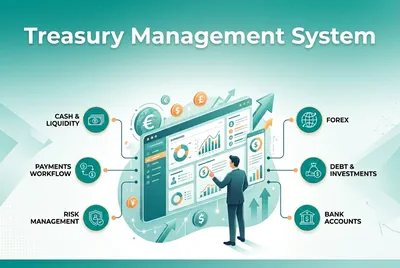
Treasury Management System: Complete TMS Guide 2026
Treasury management system (TMS) guide: features, benefits, cash flow, risk management, ERP vs TMS, and how to choose the best treasury software.
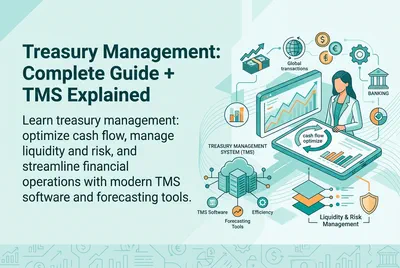
Treasury Management: Complete Guide + TMS Explained
Learn treasury management: optimize cash flow, manage liquidity and risk, and streamline financial operations with modern TMS software and forecasting tools.
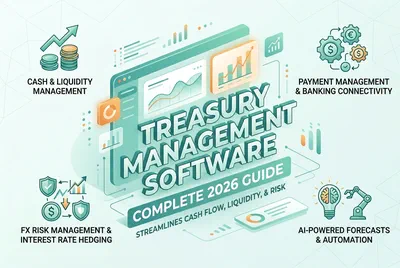
Treasury Management Software: The Complete Guide to Smarter, Faster Treasury Operations
Discover how treasury management software streamlines cash flow, liquidity, and risk. Compare top platforms and find the best solution for your business.
Ready to simplify your treasury accounting?
See how Finflexia helps you manage financial instruments with ease. Book a demo to learn more.
Book a Demo