Best Treasury Management Solutions in 2026 | Finflexia
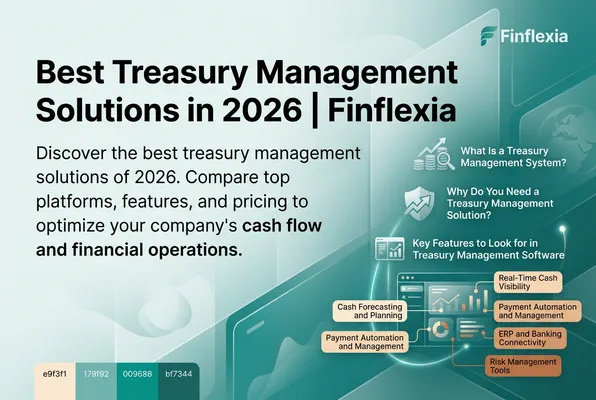

Managing corporate finances in 2026 is more complex than ever. FX volatility, rising banking costs, regulatory pressure, and the demand for real-time financial intelligence are pushing treasury teams to modernize fast. If you are still relying on spreadsheets or fragmented banking portals, you are leaving risk exposure unchecked and efficiency gains on the table.
This guide breaks down everything you need to know about treasury management solutions — what they do, how to choose the right one, and which platforms lead the market today.
What Is a Treasury Management System?
A Treasury Management System (TMS) is a software application designed to help organizations manage their financial operations with greater accuracy and control. At its core, a TMS provides real-time visibility into cash positions, automates payment processes, supports liquidity management, and integrates with existing banking and ERP infrastructure.
Modern treasury management goes well beyond basic cash tracking. A capable TMS also handles:
- Cash and liquidity management — monitoring inflows and outflows to maintain optimal liquidity
- Risk management — identifying and hedging financial risk including FX exposure, interest rate risk, and credit risk
- Payment processing — automating payment workflows across multiple banks and currencies
- Reconciliation — matching transactions with invoices and bank statements automatically
- Cash forecasting — projecting future cash positions to support strategic decision-making
The goal of any treasury management system is to give the treasurer and CFO a complete, accurate, and timely picture of where the company’s money is — and where it needs to go.
Why Do You Need a Treasury Management Solution?
The case for investing in modern treasury management software is straightforward: manual processes introduce errors, create delays, and leave your organization exposed to financial risk.
Without a dedicated treasury solution, treasury teams typically struggle with:
- Poor cash visibility — no consolidated view across multiple bank accounts
- Slow, error-prone payment processes — manual workflows that drain time and invite fraud
- Weak forecasting — cash flow projections based on outdated or incomplete data
- Fragmented banking relationships — no centralized bank account management
- Compliance gaps — difficulty keeping up with evolving regulations
A well-implemented TMS addresses all of these challenges. It centralizes treasury operations, enables treasury automation, and frees treasury teams to focus on strategic work rather than manual data entry.
For large enterprises in particular — those managing payments across multiple banks, multiple currencies, and multiple legal entities — the right treasury management platform is not optional. It is infrastructure.
Key Features to Look for in Treasury Management Software
Not all treasury management solutions are built the same. When evaluating platforms, these are the capabilities that matter most:
Real-Time Cash Visibility
Real-time visibility into cash positions is the foundation of effective treasury management. Your system should aggregate bank balances from all connected accounts and present a consolidated view instantly. This is critical for liquidity management, investment decisions, and avoiding costly overdrafts or idle cash.
Cash Forecasting and Planning
Strong cash forecasting tools allow treasury teams to project cash flow days, weeks, or months ahead. AI-powered forecasting is increasingly standard in best-in-class treasury management software, enabling more accurate predictions by learning from historical payment patterns and external market signals.
Payment Automation and Management
Automating payment workflows reduces processing time, minimizes errors, and strengthens fraud prevention. Look for treasury management solutions that support multiple payment formats, currencies, and banking channels — including SWIFT, SEPA, ACH, and real-time payments — all from a single platform.
ERP and Banking Connectivity
Seamless integration with your ERP system — whether SAP, Oracle, or another platform — is non-negotiable. SAP treasury integration in particular is a priority for many large enterprises. Your TMS should also offer broad banking connectivity, allowing you to manage relationships and transactions across multiple banks from one interface.
Risk Management Tools
A robust treasury management system includes tools to identify, quantify, and hedge financial risk. This means tracking FX exposure, managing interest rate risk, and maintaining compliance with internal and external policies. Real-time risk exposure dashboards help treasurers act before problems escalate.
Reconciliation and Compliance
Automated reconciliation reduces the time spent matching accounts payable and receivable transactions with bank statements. It also supports audit readiness and regulatory compliance — a growing priority for corporate treasury teams globally.
Top Treasury Management Solutions in 2026
The market for treasury management software includes a range of platforms suited to different company sizes, industries, and operational complexities. Here is an overview of the most recognized names:
Kyriba
Kyriba is a leading cloud-based TMS used by large multinational corporations. It is known for deep cash and liquidity management capabilities, real-time cash visibility, strong payment automation, and integrated risk management tools. Kyriba also offers in-house banking and multilateral netting, making it well-suited for complex treasury operations. It is not an ERP — it sits alongside ERP systems like SAP, integrating with them to pull and push financial data.
SAP Treasury
SAP Treasury is a fully embedded treasury management solution within the SAP ERP ecosystem. For companies already running SAP, it offers tight integration with financial modules and strong support for FX hedging, liquidity management, and risk management. SAP is best for large organizations that want treasury functions natively inside their existing ERP system.
TIS (Treasury Intelligence Solutions)
TIS is a cloud-native platform focused on payment management, bank connectivity, and compliance. Rather than replacing a full TMS or ERP, TIS enhances existing infrastructure by centralizing payment processes across multiple banks and automating fraud prevention workflows. It is particularly strong for high-volume payment environments.
Nomentia
Nomentia is a modular, cloud-based treasury management platform designed for mid-sized to large enterprises. Its modular approach means companies can implement only the features they need — whether that is cash forecasting, payment automation, or bank account management — and scale over time.
GTreasury
GTreasury is an all-in-one TMS offering cash positioning, FX risk management, hedge accounting, and payment automation. It serves mid-market and enterprise customers looking to reduce manual treasury work and improve cash visibility across their organization.
Choosing the Right Treasury Management System
Selecting the right treasury management solution requires a structured evaluation process. Here is a practical framework:
1. Assess your current pain points. Start with an honest audit of where treasury operations break down — poor cash visibility, slow payments, manual reconciliation, weak forecasting, or fragmented banking.
2. Define your must-have features. Prioritize capabilities based on your treasury team’s actual workflow. Not every organization needs the full breadth of a complex TMS on day one.
3. Evaluate integration requirements. Confirm that any treasury management software you consider can connect to your ERP system and your banking partners without significant custom development.
4. Consider scalability. The best treasury management system for your business today should also support your operations as you grow — across geographies, currencies, and transaction volumes.
5. Build a business case. CFOs and boards respond to data. Quantify the cost of manual processes, fraud risk, and inefficient working capital management to demonstrate ROI clearly.
6. Plan for implementation. TMS implementations typically range from a few weeks for modular, cloud-based solutions to six months or more for enterprise-wide deployments. Factor this into your planning.
Modern Treasury Management: What’s Next
The future of treasury management is being shaped by AI-powered forecasting, intelligent automation, real-time payment connectivity, and emerging digital asset infrastructure. Corporate treasurers face a genuine strategic question: which platform delivers operational excellence today while positioning the business for what comes next?
At Finflexia , we believe modern treasury management solutions should be accessible, intuitive, and deeply integrated — giving treasury teams of all sizes the tools they need to centralize cash, automate payments, forecast with confidence, and manage financial risk without the complexity and cost of legacy enterprise platforms.
The right treasury management solution is not just a technology investment. It is a competitive advantage.

Written by
Dominik KonoldFounder
Dominik is the founder of Finflexia and an expert in treasury accounting, financial instrument valuation and IFRS compliance. Since 2016, he's been a certified Professional Risk Manager (PRMIA) and also lectures for the Association of Public Banks and the Academy of International Accounting. He built Finflexia to help treasury teams automate complex accounting workflows.
Related Posts
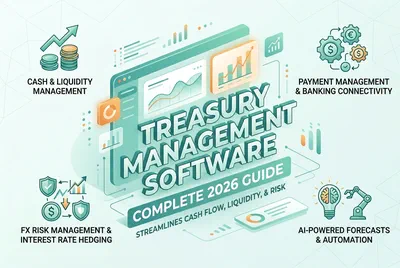
Treasury Management Software: The Complete Guide to Smarter, Faster Treasury Operations
Discover how treasury management software streamlines cash flow, liquidity, and risk. Compare top platforms and find the best solution for your business.
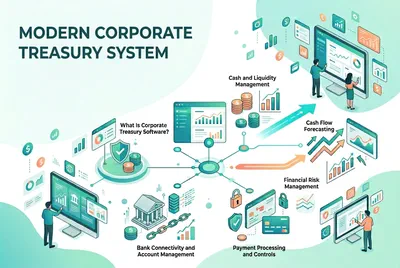
Modern Treasury Management Software for Smarter Financial Operations
Learn how treasury management software improves treasury operations by centralizing financial data, enhancing visibility, automating processes, and optimizing cash and liquidity management within a modern treasury management system.
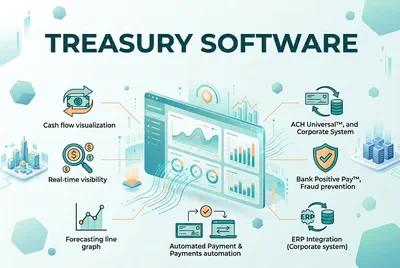
Treasury Software: Best Treasury Management Systems 2026
Treasury software explained: features, benefits, and TMS tools for cash management, forecasting, payments, risk control, and ERP integration.
Ready to simplify your treasury accounting?
See how Finflexia helps you manage financial instruments with ease. Book a demo to learn more.
Book a Demo