Treasury Accounting: The Complete Guide for Finance Professionals
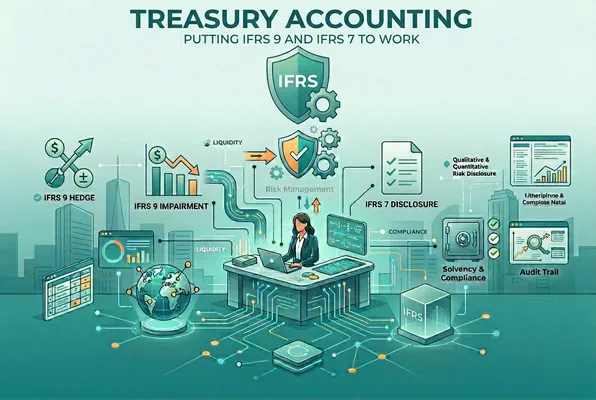

Treasury accounting sits at the intersection of finance, risk management, and strategic decision-making. While it may not always grab the spotlight compared to investor relations or financial planning, treasury accounting is the backbone of a company’s financial health — governing how cash moves, how risk is managed, and how financial instruments are recorded and reported.
Whether you’re a CFO building out a treasury function from scratch, a finance professional looking to deepen your expertise, or a business owner trying to understand why your accountants are talking about hedge accounting and bank covenants, this guide breaks it all down in a clear, structured way.
What Is Treasury Accounting?
Treasury accounting is the specialized branch of accounting responsible for recording, managing, and reporting a company’s financial assets, liabilities, and risk exposures. It encompasses everything from tracking daily cash balances and bank transactions to the complex accounting treatment of derivatives, foreign currency instruments, and debt facilities.
Unlike traditional bookkeeping, which focuses primarily on historical transactions, treasury accounting operates in near-real time. Treasury teams need to know where money is right now — not just where it was last month.
Key Areas Covered by Treasury Accounting
Treasury accounting is broad, but its core domains typically include:
- Cash and liquidity management: Monitoring and optimizing available cash across multiple accounts and entities
- Debt accounting: Recording borrowings, repayments, interest accruals, and covenant compliance
- Investment accounting: Tracking short-term investments, money market instruments, and marketable securities
- Foreign exchange (FX) accounting: Recording foreign currency transactions, revaluations, and realized/unrealized gains and losses
- Hedge accounting: Applying specialized accounting treatments under IFRS 9 or ASC 815 to reduce P&L volatility from hedging instruments
- Bank account management: Maintaining records of all banking relationships, signatories, and account structures
- Cash flow forecasting: Projecting future inflows and outflows to support liquidity planning
Each of these areas requires a precise understanding of both accounting principles and the underlying financial instruments involved.
Why Treasury Accounting Matters for Businesses
Many growing companies underestimate the importance of treasury accounting until something goes wrong — a cash shortfall, an unexpected FX loss, or a failed audit of their hedge documentation. Here’s why getting it right matters from day one.
Maintaining Liquidity and Solvency
At its most fundamental level, treasury accounting ensures a business always knows how much cash it has and where it is. For companies with multiple bank accounts, subsidiaries across different countries, or complex cash pooling structures, this is far from trivial. Accurate treasury accounting enables finance teams to optimize working capital, reduce idle cash, and avoid costly short-term borrowing.
Managing Financial Risk Proactively
Financial risk — whether from interest rate movements, foreign exchange volatility, or counterparty default — can materially impact a company’s bottom line. Treasury accounting provides the framework to measure, record, and communicate these risks accurately. When hedging instruments like forward contracts, options, or interest rate swaps are in place, treasury accountants ensure that the accounting treatment correctly reflects the economic substance of these arrangements.
Supporting Strategic Decision-Making
Accurate, timely treasury data feeds directly into strategic decisions about capital allocation, financing structures, dividend policies, and mergers and acquisitions. Without reliable treasury accounting, even the most sophisticated financial models are built on shaky foundations.
Ensuring Regulatory and Audit Compliance
Treasury transactions are subject to rigorous accounting standards. Misclassifying a financial instrument, failing to document a hedging relationship properly, or incorrectly presenting cash flows on the statement of cash flows can lead to material misstatements, restatements, and regulatory penalties. Robust treasury accounting processes ensure the company remains compliant and audit-ready at all times.
Enhancing Treasury Operations and Financial Stability
A deep understanding of treasury is essential to effectively manage modern treasury and finance structures. Companies today face the challenge of continuously enhancing their treasury operations while complying with complex financial regulations. Corporate treasurers play a central role in this: they coordinate banking partners, monitor every company’s bank account, and ensure maximum transparency over financial data. The goal is to secure the organization’s financial stability in the long term through precise cash forecasting and improved visibility into future cash. A clear financial strategy helps identify fluctuations early and actively manage the company’s cash flow.
Core Principles of Treasury Accounting
Understanding the principles that underpin treasury accounting helps finance professionals make better decisions and apply the right treatment to complex transactions.
The Fair Value Principle
Many financial instruments held by treasury departments — including derivatives, certain investments, and marketable securities — are measured at fair value under IFRS and US GAAP. This means their carrying value on the balance sheet must reflect their current market value, with changes flowing through either profit or loss or other comprehensive income (OCI), depending on their classification.
Amortized Cost Measurement
For financial liabilities like bank loans and bonds, and certain financial assets held to collect contractual cash flows, the amortized cost method is applied. This involves using the effective interest rate (EIR) to allocate interest income or expense over the life of the instrument, ensuring that any discount, premium, or transaction costs are recognized systematically rather than upfront.
Hedge Accounting
Hedge accounting is one of the most technically complex areas of treasury accounting. It allows companies to match the timing of gains and losses on hedging instruments with the recognition of the item being hedged, reducing artificial volatility in reported earnings.
Under IFRS 9 and ASC 815, specific documentation requirements must be met at hedge inception, and effectiveness testing must be performed on an ongoing basis. There are three main types of hedging relationships:
- Fair value hedges — hedging exposure to changes in the fair value of a recognized asset or liability
- Cash flow hedges — hedging exposure to variability in future cash flows
- Net investment hedges — hedging foreign currency exposure in a net investment in a foreign operation
Each type has distinct accounting entries and disclosure requirements.
Foreign Currency Translation
When a company conducts transactions in foreign currencies, treasury accounting governs how these are initially recorded (at the spot rate on the transaction date), how monetary items are retranslated at each reporting date (at the closing rate), and how exchange differences are recognized in profit or loss or OCI, depending on the nature of the item.
For multinational companies, the translation of foreign subsidiaries’ financial statements into the functional currency of the parent adds another layer of complexity.
Cash Management: The Foundation of Treasury Accounting
Cash management is the heartbeat of treasury accounting. Without a clear picture of cash positions across the business, all other treasury activities become significantly more difficult.
Bank Account Structures and Notional Pooling
Large organizations typically maintain dozens — sometimes hundreds — of bank accounts across multiple jurisdictions. Treasury accounting must track each account, reconcile balances daily, and ensure that the bank statements tie back to the general ledger.
Notional pooling and zero-balance cash pooling are common structures used to optimize liquidity across entities. Under notional pooling, account balances are mathematically offset for interest calculation purposes without physically moving funds. Under zero-balance pooling, surplus balances are swept into a master account daily. Each structure has distinct accounting implications for intercompany balances and interest income/expense allocation.
Daily Cash Positioning
A core treasury accounting task is the daily cash position — a snapshot of all cash inflows and outflows across all accounts, typically prepared each morning. This position informs decisions about short-term investment of surplus cash, drawdowns on revolving credit facilities, and intercompany funding transfers.
Bank Reconciliation
Bank reconciliation — matching the company’s internal records against bank statements — is a fundamental control in treasury accounting. Timely reconciliation catches errors, identifies unauthorized transactions, and ensures the accuracy of cash balances reported in the financial statements.
Cash Flow Forecasting and Variance Analysis
Treasury teams develop rolling cash flow forecasts — typically 13-week, monthly, and annual horizons — to anticipate future liquidity needs. Treasury accounting supports this process by providing historical actuals against which forecasts are compared, and by analyzing variances to improve forecasting accuracy over time.
Debt and Investment Accounting
Managing a company’s borrowings and investments correctly is another critical pillar of treasury accounting.
Accounting for Debt Instruments
When a company borrows money — whether through a bank loan, revolving credit facility, private placement, or public bond issuance — the treasury accounting team is responsible for:
- Recording the initial proceeds net of transaction costs
- Calculating the effective interest rate
- Amortizing transaction costs and any discount/premium over the life of the instrument
- Recording interest expense and accruals
- Tracking covenant compliance metrics
- Recording repayments accurately
Failure to apply the effective interest method correctly can result in misstated interest expense and carrying values — common areas of audit focus.
Short-Term Investments and Money Market Instruments
Many treasury departments invest surplus cash in short-term instruments such as money market funds, treasury bills, commercial paper, and certificates of deposit. The accounting treatment depends on the classification of these instruments under IFRS 9 or ASC 320:
- Fair value through profit or loss (FVTPL) — fair value changes recognized in P&L each period
- Fair value through other comprehensive income (FVOCI) — fair value changes recognized in OCI, with recycling to P&L on derecognition
- Amortized cost — held-to-collect instruments measured at amortized cost
Selecting the appropriate classification requires assessing the business model for managing the assets and the contractual cash flow characteristics of the instruments.
Intercompany Lending
In corporate groups, treasury departments often act as an internal bank, lending funds between entities to optimize group liquidity. These intercompany loans must be documented at arm’s length terms, properly priced using transfer pricing principles, and accurately recorded in both entities’ books — including any foreign currency revaluation where loans are denominated in a currency other than the borrower’s functional currency.
Foreign Exchange and Treasury Accounting
For any company operating across borders, foreign exchange management is inseparable from treasury accounting.
Transaction Exposure
When a company enters into a foreign currency transaction — for example, a sale invoiced in USD when the company’s functional currency is EUR — treasury accounting must:
- Record the transaction at the spot rate on the date it occurs
- Retranslate the resulting monetary asset or liability at each reporting date at the closing rate
- Recognize the exchange difference in profit or loss
Translation Exposure
When consolidating foreign subsidiaries, assets and liabilities are translated at the closing rate, while income statement items are typically translated at the average rate for the period. The resulting translation differences are recognized in OCI as part of the foreign currency translation reserve.
Hedging FX Exposure
Many companies use forward contracts, FX options, or cross-currency swaps to hedge their foreign exchange exposure. Treasury accounting determines whether these hedges qualify for hedge accounting treatment, and if so, whether they are designated as cash flow hedges or net investment hedges. Proper documentation at hedge inception — including identification of the hedged item, the hedging instrument, the risk being hedged, and the hedge effectiveness assessment methodology — is essential.
Hedge Accounting in Practice
Hedge accounting is one of the most demanding areas of treasury accounting, requiring both technical expertise and rigorous documentation discipline.
Why Hedge Accounting Is Used
Without hedge accounting, gains and losses on derivatives are recognized in P&L as they occur, while the offsetting gains or losses on the hedged item may be recognized in a different period — creating earnings volatility that doesn’t reflect the economic reality of the hedging strategy.
Hedge accounting aligns the timing of recognition, reducing this volatility and providing investors and analysts with a clearer picture of the company’s underlying financial performance.
Documentation Requirements
Under IFRS 9 and ASC 815, hedge accounting designation requires formal documentation at inception covering:
- The risk management objective and strategy
- The nature of the risk being hedged
- Identification of the hedging instrument and hedged item
- How effectiveness will be assessed
This documentation must be maintained throughout the life of the hedge and is typically reviewed closely by auditors.
Effectiveness Testing
Treasury accountants must perform prospective effectiveness assessments at inception and on an ongoing basis. Under IFRS 9, the effectiveness requirements are principle-based — the hedge must be expected to be highly effective, there must be an economic relationship between the hedged item and the hedging instrument, and credit risk must not dominate the fair value changes.
Common Hedging Instruments and Their Accounting
| Instrument | Common Use | Accounting Treatment |
|---|---|---|
| Forward contracts | FX transaction hedging | Fair value on balance sheet; OCI for cash flow hedges |
| Interest rate swaps | Fixed-to-floating debt hedging | Fair value on balance sheet; P&L for fair value hedges |
| FX options | FX risk hedging with optionality | Intrinsic and time value separated under IFRS 9 |
| Cross-currency swaps | Foreign currency debt hedging | Combination of interest rate and FX treatment |
Treasury Accounting Systems and Technology
The complexity of modern treasury accounting makes dedicated systems essential for all but the smallest organizations.
Treasury Management Systems (TMS)
A Treasury Management System (TMS) is purpose-built software that supports the full lifecycle of treasury activities — from trade capture and cash positioning to accounting entries and reporting. Key capabilities include:
- Automated bank connectivity — direct integration with banks via SWIFT or API for real-time balance and transaction data
- Cash positioning and forecasting — aggregated views across all accounts and entities
- Deal management — capturing and tracking treasury instruments including FX, money market, and derivatives
- Hedge accounting automation — documentation management, effectiveness testing, and journal entry generation
- ERP integration — seamless posting of treasury entries to the general ledger
Integration with ERP Systems
Treasury accounting doesn’t exist in isolation — it must integrate tightly with the broader accounting infrastructure. ERP systems such as SAP, Oracle, or Microsoft Dynamics serve as the system of record for financial reporting, and treasury entries must flow accurately into the general ledger. Disconnected systems create reconciliation headaches and increase the risk of errors.
The Role of Platforms Like Finflexia
Modern platforms like Finflexia are designed to bring clarity and automation to treasury accounting workflows. By connecting cash data, instrument accounting, and reporting in a unified environment, they help finance teams reduce manual work, improve accuracy, and gain the real-time visibility that effective treasury management demands. For growing companies that have outgrown spreadsheet-based treasury processes but aren’t ready for enterprise-scale TMS implementations, platforms that combine accessibility with financial rigor are increasingly attractive.
Spreadsheets vs. Dedicated Solutions
Many smaller companies still manage treasury accounting in spreadsheets. While this is understandable in the early stages, spreadsheets introduce significant risks as transaction volumes and complexity grow:
- Manual entry errors with no systematic controls
- Version control issues across multiple users
- No audit trail for changes
- Inability to handle hedge accounting documentation requirements reliably
- Limited integration with banking systems and ERP
As companies scale, investing in dedicated treasury accounting capabilities typically delivers significant returns in accuracy, efficiency, and risk reduction.
Streamlining Processes and Minimizing Risks
Modern treasury teams increasingly rely on digital financial systems to streamline processes and replace inefficient manual treasury processes. This not only reduces operational effort but also significantly contributes to reducing the risk of errors. Through integrated systems, companies gain better visibility into cash as well as more accurate insights into actual cash flows, accounts payable, and accounts receivable. At the same time, these tools support compliance with financial reporting standards and strengthen regulatory compliance with financial institutions and authorities. A structured approach to debt management, interest rate risks, and investment management enables companies to minimize financial risks while also maximizing returns.
Key Accounting Standards for Treasury Professionals
A solid understanding of the relevant accounting standards is non-negotiable for treasury accountants.
IFRS 9: Financial Instruments
IFRS 9, issued by the International Accounting Standards Board (IASB), governs the classification and measurement of financial assets and liabilities, impairment of financial assets (using the expected credit loss model), and hedge accounting. It replaced IAS 39 and introduced a more principles-based approach to hedge accounting that better aligns with risk management practice.
ASC 815: Derivatives and Hedging (US GAAP)
ASC 815 is the US GAAP equivalent for derivatives and hedging. While conceptually similar to IFRS 9 in many respects, there are important differences in the qualifying criteria, effectiveness testing requirements, and the treatment of specific instruments. Companies reporting under US GAAP must apply ASC 815 alongside ASC 320 (Investments in Debt and Equity Securities) and ASC 825 (Financial Instruments).
IAS 7 / ASC 230: Statement of Cash Flows
The presentation of cash flows is critically important for treasury, as it determines how investing and financing activities are classified and disclosed. Treasury accountants must ensure that cash flows from treasury instruments — including derivatives used for hedging — are correctly classified between operating, investing, and financing activities.
IFRS 7 / ASC 825: Disclosures
IFRS 7 and ASC 825 require extensive disclosures about the significance of financial instruments to the company’s financial position and performance, and the nature and extent of associated risks. Treasury accountants play a key role in preparing these disclosures, which cover credit risk, liquidity risk, market risk (including sensitivity analyses), and fair value hierarchies.
Building an Effective Treasury Accounting Function
Whether you’re establishing a treasury accounting function for the first time or looking to mature an existing one, certain practices consistently distinguish high-performing teams.
Define Clear Policies and Procedures
Every treasury accounting function should operate under a formal treasury policy that defines:
- Approved financial instruments and counterparties
- Delegation of authority and approval thresholds
- Hedge accounting designation criteria
- Bank account opening and closing procedures
- Cash concentration and pooling structures
Clear policies reduce the risk of unauthorized activities and ensure consistency across geographies and business units.
Segregation of Duties
Treasury accounting involves the authorization, execution, and recording of financial transactions. Strong internal controls require that these functions are performed by different individuals — those who execute trades should not be the same people who record and reconcile them. This segregation is a fundamental principle of financial governance and is routinely tested by auditors.
Regular Reconciliation and Controls
Daily bank reconciliation, monthly intercompany loan reconciliation, and regular fair value reconciliation of derivatives are all essential controls. Any unreconciled items should be escalated and resolved promptly, not left to accumulate.
Staff Training and Development
Treasury accounting requires a combination of accounting knowledge, financial markets understanding, and systems expertise that is relatively rare. Investing in the ongoing development of treasury accounting staff — through professional qualifications, training on new accounting standards, and exposure to broader treasury activities — builds a more resilient and capable function.
Collaboration with Risk Management and FP&A
Treasury accounting doesn’t operate in a silo. Effective functions work closely with the risk management team to ensure that hedging strategies are accounted for correctly, with FP&A to incorporate treasury data into budgets and forecasts, and with tax and legal teams on financing structures and instrument documentation.
Common Challenges in Treasury Accounting
Even well-resourced treasury functions face recurring challenges. Being aware of these helps teams anticipate and address them proactively.
Hedge Accounting Complexity
Applying hedge accounting correctly under IFRS 9 or ASC 815 is challenging. The documentation requirements are onerous, effectiveness testing must be performed consistently, and any failure in the hedge relationship can result in discontinuation — with potentially material P&L impacts. Many companies underinvest in hedge accounting expertise and systems, leaving themselves exposed to restatement risk.
Fragmented Data and Systems
When bank data, deal information, and accounting records live in separate systems, reconciling and reporting becomes time-consuming and error-prone. Fragmented systems are one of the most common barriers to treasury accounting efficiency and accuracy.
FX Volatility
Periods of significant currency volatility can create large, unexpected FX gains or losses on unhedged positions, and can also create challenges in demonstrating hedge effectiveness. Treasury accountants need to monitor FX positions closely and ensure that the accounting accurately reflects the economic impact of currency movements.
Evolving Accounting Standards
Accounting standards applicable to treasury continue to evolve. Changes to LIBOR and benchmark interest rate reform, for example, required significant updates to hedge accounting documentation and designations. Keeping up with standard-setting developments and assessing their impact on existing treasury accounting practices is an ongoing requirement.
Treasury Accounting Best Practices Summary
To bring it all together, here are the most impactful best practices for treasury accounting:
- Maintain real-time cash visibility across all entities and bank accounts
- Apply the correct accounting standard (IFRS 9 or US GAAP) consistently to all financial instruments
- Document hedging relationships thoroughly at inception and maintain documentation throughout the hedge term
- Reconcile daily — bank statements, cash positions, and derivative fair values
- Segregate duties between transaction execution and accounting/reconciliation
- Integrate treasury systems with ERP to eliminate manual data entry and reduce reconciliation burdens
- Train your team on both technical accounting requirements and the financial instruments they’re accounting for
- Review and update treasury policy regularly to reflect changes in business activities and risk appetite
- Engage auditors early on complex accounting positions, particularly new instrument types or hedging strategies
- Leverage technology to automate routine tasks and free up time for higher-value analysis
Strategic Role of Treasury in Corporate Finance
Treasury is no longer just an operational function — it is a strategic component of corporate finance. The roles and responsibilities range from working capital management and optimizing the capital structure to managing capital investments. In close alignment with senior management, treasury helps deploy financial resources efficiently and sustainably safeguard the organization’s financial stability. This is not only about ensuring liquidity, but also about strengthening the overall financial management architecture. Treasury teams operate at the intersection of internal and external stakeholders, ensuring that all aspects of treasury are aligned — because treasury management is a multifaceted discipline that has a direct impact on growth, resilience, and long-term business success.
Conclusion
Treasury accounting is far more than a back-office function. It is the discipline that ensures a company’s financial assets, liabilities, and risk exposures are accurately recorded, properly controlled, and clearly communicated to stakeholders. From daily cash positioning to the intricacies of hedge accounting under IFRS 9, from managing intercompany loans to preparing complex financial instrument disclosures, treasury accounting demands technical expertise, rigorous processes, and increasingly, the right technology.
For finance teams looking to build stronger treasury accounting capabilities, the journey starts with clear policies, investment in people and systems, and a commitment to the accounting standards that govern this specialized domain. Platforms like Finflexia can play a meaningful role in that journey — bringing structure, automation, and visibility to treasury accounting workflows that many teams are still managing through fragmented spreadsheets and manual processes.
As financial markets become more complex and regulatory expectations continue to rise, the companies that invest in robust treasury accounting functions will be better positioned to manage risk, optimize liquidity, and report with confidence.

Written by
Dominik KonoldFounder
Dominik is the founder of Finflexia and an expert in treasury accounting, financial instrument valuation and IFRS compliance. Since 2016, he's been a certified Professional Risk Manager (PRMIA) and also lectures for the Association of Public Banks and the Academy of International Accounting. He built Finflexia to help treasury teams automate complex accounting workflows.
Related Posts
Convertible Loans Explained: Understanding Convertible Debt and Convertible Notes in Modern Financing
Convertible loans and convertible notes are flexible financing instruments that raise capital as debt securities and later convert into equity during a funding round. They help startups secure funding without immediate valuation while offering investors future equity upside.
Modern Treasury Management Software for Smarter Financial Operations
Learn how treasury management software improves treasury operations by centralizing financial data, enhancing visibility, automating processes, and optimizing cash and liquidity management within a modern treasury management system.
Convertible Bond: Complete Guide for Investors
Convertible bonds are hybrid securities that combine fixed income with equity upside, allowing investors to earn interest and convert into shares of common stock under defined conditions.
Ready to simplify your treasury accounting?
See how Finflexia helps you manage financial instruments with ease. Book a demo to learn more.
Book a Demo