POCI Asset Under IFRS 9: Impairment & Reporting Framework
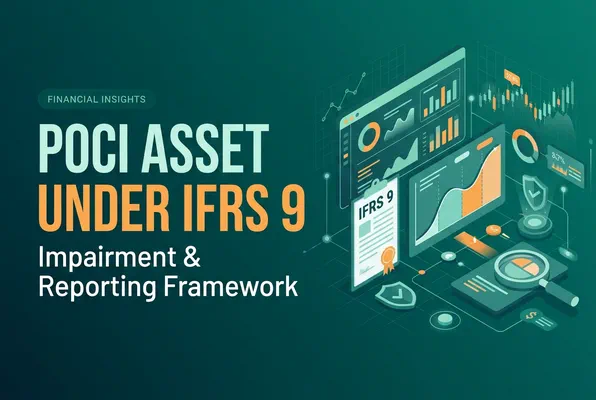

Understanding the POCI Asset Under IFRS 9
A POCI asset, short for Purchased or Originated Credit-Impaired, is a specific category of financial asset defined within the IFRS 9 impairment framework. Unlike typical financial instruments, a POCI asset is already credit-impaired at the moment of initial recognition. This distinction matters significantly for reporting, because it changes how impairment is measured and disclosed throughout the asset’s life.
Definition and Initial Recognition
Under IFRS 9, an asset qualifies as POCI when objective evidence of credit impairment exists at initial recognition, for example, when a bank purchases a non-performing loan portfolio or originates a loan to a borrower already in financial distress. This is different from assets that become impaired later; a POCI asset carries that impairment status from day one.
At initial recognition, a POCI asset is recorded at fair value, and the effective interest rate applied is credit-adjusted to reflect the embedded risk. This credit-adjusted effective interest rate is a core requirement of the IFRS 9 methodology for these instruments.
Why POCI Assets Don’t Follow the Standard Staging Model
Most financial instruments under IFRS 9 move through a three-stage impairment framework, Stage 1 (performing), Stage 2 (significant increase in credit risk), and Stage 3 (credit-impaired). A POCI asset, however, sits outside this staging structure entirely. Since it starts out as credit-impaired, it doesn’t need to transition between stages; instead, it is tracked separately with its own impairment methodology based on lifetime expected credit losses from inception.
How Impairment Works for POCI Assets
The impairment approach for a POCI asset focuses on changes in lifetime expected credit losses rather than the 12-month expected loss calculation used for Stage 1 assets. Any favorable or unfavorable change in cumulative lifetime losses since initial recognition is recognized immediately in profit or loss. This ensures reporting reflects the true credit risk trajectory of the instrument.
Data and Methodology Considerations
Accurately classifying and reporting a POCI asset requires robust data. Entities need historical credit information, origination details, and ongoing performance data to apply the correct methodology. Weak data quality can distort impairment calculations and misrepresent the value of these instruments on the balance sheet.
Common Questions About POCI Assets
What are POCI assets, and how common are they? They typically arise from distressed debt purchases, loan portfolio acquisitions, or restructuring situations where credit impairment is evident before the deal closes.
Has the volume of POCI assets gone up? Many institutions have seen increases in POCI classifications during periods of economic stress, as more originated or purchased instruments carry impairment at inception.
Which POCI asset classification is best for a given portfolio? The right classification depends on the credit evidence available at acquisition or origination, there’s no universal answer, only accurate application of the IFRS 9 definition.
Final Thoughts on the POCI Asset Framework
The POCI asset category is a specialized but essential part of the IFRS 9 impairment framework. By requiring entities to recognize credit-adjusted value and track lifetime expected credit losses separately, this reporting requirement promotes transparency around genuinely high-risk financial instruments from the very start.

Written by
Dominik KonoldFounder
Dominik is the founder of Finflexia and an expert in treasury accounting, financial instrument valuation and IFRS compliance. Since 2016, he's been a certified Professional Risk Manager (PRMIA) and also lectures for the Association of Public Banks and the Academy of International Accounting. He built Finflexia to help treasury teams automate complex accounting workflows.
Related Posts
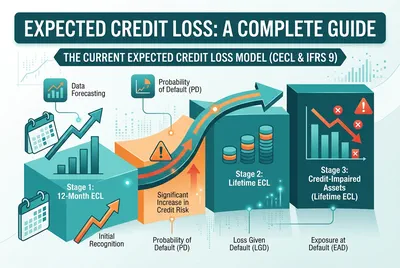
Expected Credit Loss: A Complete Guide to the Current Expected Credit Loss Model
This guide explains expected credit loss (ECL) under CECL and IFRS 9, covering calculation methods, credit risk models, regulatory requirements, and best practices for estimating and managing credit losses.
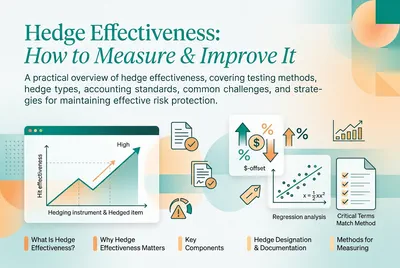
Hedge Effectiveness: How to Measure & Improve It
A practical overview of hedge effectiveness, covering testing methods, hedge types, accounting standards, common challenges, and strategies for maintaining effective risk protection.
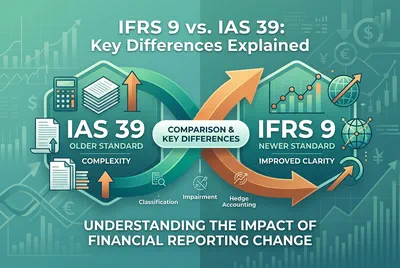
IFRS 9 vs. IAS 39: Key Differences Explained
This article explores the key differences between IAS 39 and IFRS 9, focusing on classification, impairment, hedge accounting, and the practical impact of the transition on financial reporting.
Ready to simplify your treasury accounting?
See how Finflexia helps you manage financial instruments with ease. Book a demo to learn more.
Book a Demo