Finflexia Blog
Insights & updates
Insights on treasury accounting
Guides, industry trends, product updates, and best practices for managing financial instruments effectively.
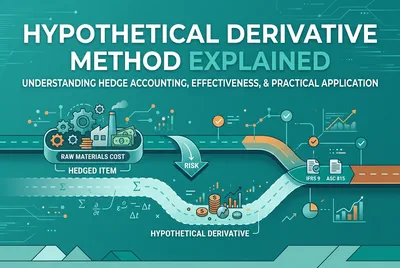
Hypothetical Derivative Method Explained
To better understand the practical application of hedge accounting, the following sections examine key concepts related to hedge effectiveness, hypothetical derivatives, and cash flow hedges.
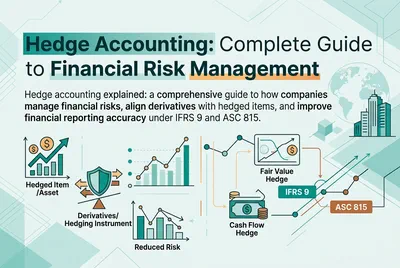
Hedge Accounting: Complete Guide to Financial Risk Management
Hedge accounting explained: a comprehensive guide to how companies manage financial risks, align derivatives with hedged items, and improve financial reporting accuracy under IFRS 9 and ASC 815.
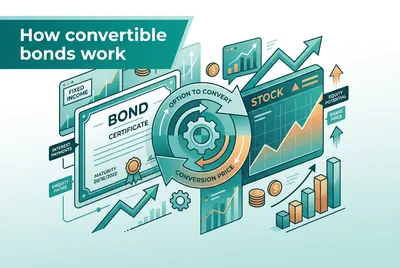
How Convertible Bonds Work: The Guide to Convertible Bonds
This guide explains how convertible bonds work, covering their key features, pricing, risks, conversion mechanisms, and the benefits they offer as hybrid securities that combine fixed-income investing with equity upside potential.
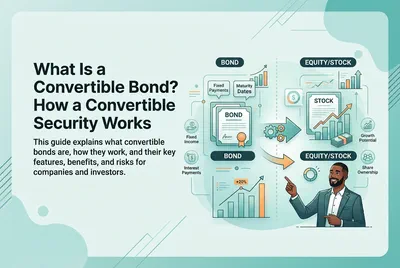
What Is a Convertible Bond? How a Convertible Security Works
This guide explains what convertible bonds are, how they work, and their key features, benefits, and risks for companies and investors.
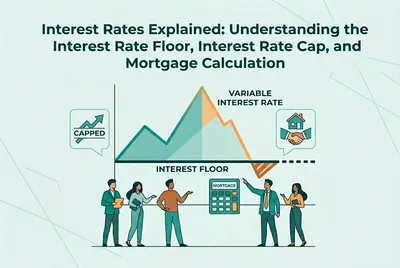
Interest Rate Floor Explained
This Guide provides an overview of interest rate caps and floors in lending, explaining how they set upper and lower limits on variable interest rates in loan contracts and protect lenders and borrowers from extreme market movements.
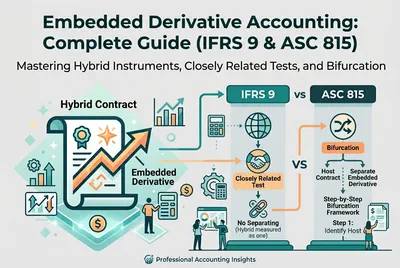
Embedded Derivative Accounting: Complete Guide (IFRS 9 & ASC 815)
This guide explains embedded derivative accounting under IFRS and ASC 815, including fair value measurement, hybrid instrument assessment, and the closely related test.
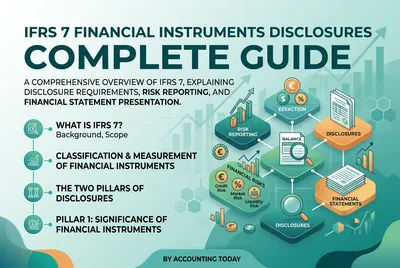
IFRS 7 Financial Instruments Disclosures: Complete Guide
This Guide provides a comprehensive overview of IFRS 7, explaining its disclosure requirements for financial instruments, risk reporting, and presentation in financial statements.
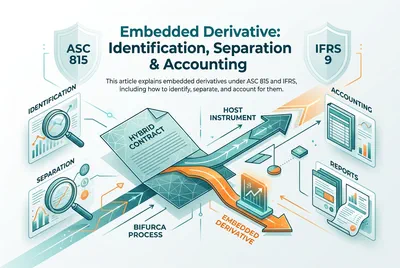
Embedded Derivative: Identification, Separation & Accounting
This article explains embedded derivatives under ASC 815 and IFRS, including how to identify, separate, and account for them. It also outlines when a derivative under ASC 815 must be bifurcated and how it impacts financial reporting.
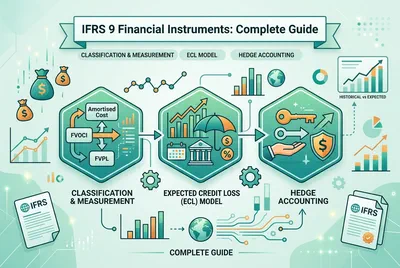
IFRS 9 Financial Instruments: Complete Guide
This Guide provides a comprehensive overview of IFRS 9, explaining its classification and measurement rules, expected credit loss model, hedge accounting requirements, and its interaction with IFRS 7 and other IFRS standards.
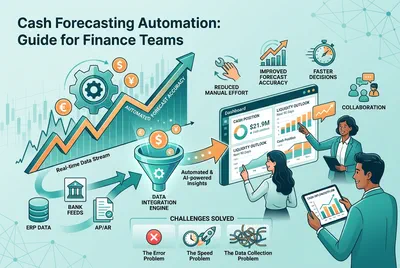
Cash Forecasting Automation: Guide for Finance Teams
Cash forecasting automation helps finance teams gain real-time visibility into cash positions, improve forecast accuracy, and reduce the manual effort associated with spreadsheet-based processes. By leveraging connected data sources, automation, and AI-powered forecasting capabilities, organizations can make more informed liquidity and treasury management decisions.
Ready to simplify your treasury accounting?
See how Finflexia helps you manage financial instruments with ease. Book a demo to learn more.
Book a Demo