Make Whole Call Provisions in Bonds: Understanding Make-Whole Call Mechanisms and Call Provisions


When a company issues a bond, investors expect a predictable stream of interest payments until maturity. But what happens if the issuer decides to repay the debt early? Without protection, investors could be forced to reinvest their money at lower rates and lose the income they planned on. That is exactly the problem the make whole premium is designed to solve.
In this guide, you will learn what a make whole premium is, how the make whole call provision works, how to calculate it step by step, how it compares with other call features, and what it means for both issuers and investors.
What Is a Make Whole Premium?
A make whole premium is a lump-sum payment that a bond issuer owes to bondholders when it redeems a bond before its scheduled maturity date. The payment compensates investors for the interest income they would have earned if the bond had remained outstanding until maturity.
The name says it all: the investor is “made whole.” After the early redemption, the investor should be in roughly the same financial position as if the issuer had continued to make every scheduled payment.
The make whole premium is embedded in a bond’s contract, known as the indenture, through a feature called a make whole call provision. This provision gives the issuer the right to call the bond early, but only if it pays a premium calculated by a specific formula.
Where You Will Encounter It
Make whole provisions are most common in:
- Investment-grade corporate bonds, where they have become the standard call feature
- High-yield (junk) bonds, often combined with a non-call period
- Private placements and structured debt
- Some convertible and subordinated notes
For investors managing a portfolio, understanding this feature matters because it directly affects the total return you can expect from a bond.
How a Make Whole Call Provision Works
A make whole call provision works in a few straightforward steps:
- The issuer decides to redeem the bond early. This might happen because interest rates have fallen, the company wants to refinance, or it is restructuring its balance sheet.
- The issuer notifies bondholders. The indenture usually requires a notice period, commonly 15 to 60 days.
- The premium is calculated. The calculation follows the formula specified in the bond documentation.
- The issuer pays the redemption price. This equals the greater of par value (plus accrued interest) or the present value of the remaining payments discounted at the agreed rate.
Because the premium is based on prevailing market rates, it moves in a predictable direction: when rates fall, the present value of the remaining cash flows rises, and so does the premium. This makes early redemption less attractive for the issuer exactly when refinancing would otherwise be most tempting.
Legal Structure and Contractual Scope of a Make-Whole Call Option
A make-whole call option is a contractual right granted to the issuer under the bond indenture. The make-whole call provision in a bond specifies the circumstances under which the issuer can exercise this call option and redeem the outstanding debt before maturity. Unlike a conventional call feature, it does not establish a simple fixed redemption price. Instead, the contractual mechanism is designed to predefine how the compensation is determined, ensuring that the terms of an early repayment are transparent to both parties. The provision also outlines important conditions, including applicable notice periods, eligible redemption dates, and the calculation methodology. This contractual framework gives the issuer flexibility while establishing clear financial protection for bondholders.
How to Calculate the Make Whole Premium
The exact formula is always defined in the bond’s indenture, but the general approach is consistent across most issues.
The Core Formula
The make whole redemption price is typically the greater of:
- The bond’s par value (or another stated minimum call price), and
- The present value of all remaining scheduled payments of principal and interest, discounted at the Treasury rate plus a spread
The make whole premium itself is the difference between that present value and par value.
Key Inputs
| Input | Description |
|---|---|
| Remaining coupon payments | All future interest payments up to maturity |
| Principal | The face value repaid at maturity |
| Discount rate | Yield of a comparable US Treasury security plus a fixed spread |
| Spread | Commonly between 15 and 50 basis points |
| Time to maturity | The remaining life of the bond |
A Simple Example
Imagine a corporate bond with the following terms:
- Face value: $1,000
- Annual coupon: 6% ($60 per year)
- Remaining life: 5 years
- Comparable Treasury yield: 3.5%
- Spread: 0.30% (30 basis points)
- Discount rate: 3.8%
The present value of the remaining payments would be calculated as:
PV = $60 / (1.038) + $60 / (1.038)² + $60 / (1.038)³ + $60 / (1.038)⁴ + $1,060 / (1.038)⁵
This works out to roughly $1,098. Since the present value exceeds par ($1,000), the make whole premium is approximately $98 per bond, and the issuer would pay about $1,098 (plus accrued interest) to redeem it.
The lower the Treasury yield falls, the higher this number climbs. If Treasury yields dropped to 2%, the same bond could carry a premium well above $120.
Why the Spread Matters
The spread is a negotiated component. A smaller spread (for example, 15 basis points) results in a higher premium because the discount rate is lower. A larger spread reduces the premium and gives the issuer more flexibility. Investors should check this figure in the offering documents, as it directly affects the strength of their protection.
Exercising the Make-Whole Call Option and Its Financial Implications
When an issuer decides to exercise the make-whole call option, it initiates the process of redeeming the bond prior to maturity. This allows the issuer to pay off remaining debt early, provided that the contractual requirements are fulfilled. The redemption amount is generally derived from a formula based on the net present value of the remaining interest payments and the principal amount. By requiring the issuer to pay an additional amount where applicable, the mechanism compensates bondholders for the loss of future contractual income. Consequently, the decision to exercise the call option involves comparing the financial benefits of retiring existing debt with the additional costs associated with early repayment. This is particularly relevant when companies consider refinancing their obligations under changing market conditions.
Make Whole Premium vs. Call Premium
Many investors confuse these two terms. Both compensate bondholders for early redemption, but they work very differently.
Call Premium
A traditional call premium is fixed in advance. For example, a bond might be callable at 103% of par in year five, 102% in year six, and 101% in year seven. The amount does not depend on market interest rates.
Make Whole Premium
A make whole premium is variable. It depends on current Treasury yields and the time remaining until maturity. It is almost always more expensive for the issuer than a standard call premium, especially when rates have fallen.
Quick Comparison
| Feature | Make Whole Premium | Standard Call Premium |
|---|---|---|
| Amount | Variable, formula-based | Fixed percentage of par |
| Depends on interest rates | Yes | No |
| Cost to issuer | Typically higher | Typically lower |
| Investor protection | Strong | Moderate |
| Typical use | Investment-grade bonds | High-yield and older issues |
Many high-yield bonds combine both: a make whole call during the early years, followed by fixed-price call dates later in the bond’s life.
Benefits and Drawbacks
Benefits for Investors
- Income protection: You receive compensation for lost interest payments.
- Reduced reinvestment risk: Early redemption does not leave you worse off if rates have fallen.
- Predictable framework: The calculation method is defined in advance.
- Discourages opportunistic calls: Because the premium is high when refinancing is attractive, issuers rarely call bonds purely to exploit lower rates.
Benefits for Issuers
- Lower borrowing costs: Investors accept lower coupons in exchange for strong call protection.
- Flexibility: The issuer keeps the option to retire debt early for strategic reasons such as mergers, asset sales, or restructurings.
- Clear cost of exit: The redemption price is determined by a formula rather than negotiation.
Drawbacks and Risks
- Expensive for issuers: Early redemption can cost significantly more than par, which makes refinancing less attractive.
- Complexity: The formula can be difficult for retail investors to evaluate without reading the indenture.
- Not always a guaranteed windfall: If an issuer never calls the bond, you simply hold it to maturity and the feature has no direct value.
- Tax implications: The premium received may be taxed as ordinary income or capital gain depending on your jurisdiction and circumstances.
When Is a Make Whole Premium Triggered?
A make whole premium is typically paid in these situations:
- Voluntary early redemption by the issuer under the make whole call provision
- Refinancing of existing debt with new, cheaper debt
- Change-of-control events, in some indentures
- Acceleration of debt after certain events of default, in some loan agreements and structured financing documents
It is worth noting that the make whole concept also appears outside traditional bonds. In term loans and private credit agreements, a make whole or “prepayment premium” often protects lenders from losing expected interest income when a borrower repays early. The mechanics may differ, but the principle is the same.
What Investors Should Check Before Buying a Bond
If you invest in corporate bonds, look at the following details in the offering memorandum or prospectus:
- Is there a make whole call provision? Not every bond has one.
- What is the spread over Treasuries? A lower spread means stronger protection.
- Is there a non-call period? Some bonds prohibit early redemption entirely for a set time.
- Are there additional call dates at fixed prices? Many bonds switch to a fixed call schedule later in life.
- Are there special redemption rights? Certain events, such as equity offerings, may allow redemption at lower prices.
- How is accrued interest handled? It is generally paid on top of the redemption price.
Reading these terms carefully helps you understand your true downside and upside, and you can then compare bonds more accurately on a yield-to-worst basis.
Make Whole Premium and Yield Analysis
Because a make whole call is usually expensive for the issuer, bonds with this feature are generally priced close to yield to maturity rather than yield to call. The probability of early redemption is lower, so the investor is not forced to assume the worst-case reinvestment scenario.
By contrast, bonds with cheap fixed-price call features often trade based on yield to worst, meaning investors assume the issuer will call the bond as soon as it benefits them. This is one reason make whole bonds can trade at a slight premium compared with similar bonds that have more issuer-friendly call terms.
Practical Tips for Tracking Bond Calls and Premiums
Keeping track of callable bonds across a portfolio can become complicated. A few practical habits help:
- Record key terms such as call type, spread, notice period, and maturity for every bond you own.
- Monitor Treasury yields. Since the make whole premium depends on them, falling yields increase your potential compensation.
- Watch issuer news. Mergers, asset sales, and refinancing announcements often precede redemptions.
- Plan for reinvestment. If a bond is called, have a strategy for where the proceeds will go.
- Use a structured tool. A personal finance app such as finflexia.app can help you organize holdings, track expected cash flows, and keep an overview of your fixed-income investments in one place.
Common Misconceptions About the Make Whole Premium
“It guarantees I will earn all the interest until maturity.” Not exactly. The premium is a present value calculation. You receive the discounted value of the lost payments today, not the nominal sum.
“Every corporate bond has one.” No. Many bonds have standard call schedules, no call protection at all, or are non-callable.
“A higher premium is always good for me.” A high premium is compensation, but you still lose the bond’s future income stream. If comparable bonds now yield less, you may struggle to replace that income.
“It only applies to bonds.” The make whole concept also appears in loan agreements, preferred stock, and structured finance, though under different names such as prepayment premium or yield maintenance.
Conclusion
The make whole premium is one of the most investor-friendly features in the bond market. By requiring issuers to compensate bondholders for lost interest when redeeming early, it protects income, reduces reinvestment risk, and makes opportunistic refinancing costly. For issuers, it offers a way to keep flexibility while borrowing at lower rates.
Before buying a callable bond, take a few minutes to read the indenture, identify the spread, and understand how the redemption price would be calculated. Doing so helps you evaluate real risk and return, rather than relying on the headline coupon alone.
If you want a clearer overview of your investments and cash flows, tools like finflexia.app can make it easier to organize your financial picture and make informed decisions about your fixed-income portfolio.
This article is for educational purposes only and does not constitute financial or investment advice. Always review the specific terms of any bond and consult a qualified professional before investing.

Written by
Dominik KonoldFounder
Dominik is the founder of Finflexia and an expert in treasury accounting, financial instrument valuation and IFRS compliance. Since 2016, he's been a certified Professional Risk Manager (PRMIA) and also lectures for the Association of Public Banks and the Academy of International Accounting. He built Finflexia to help treasury teams automate complex accounting workflows.
Related Posts
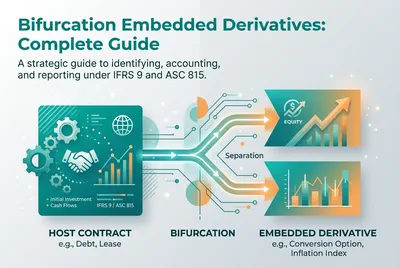
Bifurcation Embedded Derivatives: Complete Guide
This guide explains how embedded derivatives are identified, evaluated, and accounted for under IFRS 9 and ASC 815.
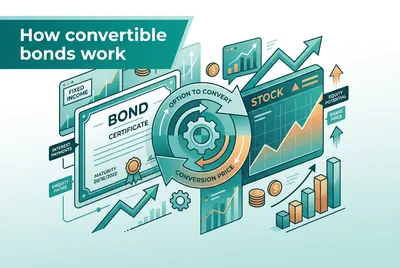
How Convertible Bonds Work: The Guide to Convertible Bonds
This guide explains how convertible bonds work, covering their key features, pricing, risks, conversion mechanisms, and the benefits they offer as hybrid securities that combine fixed-income investing with equity upside potential.
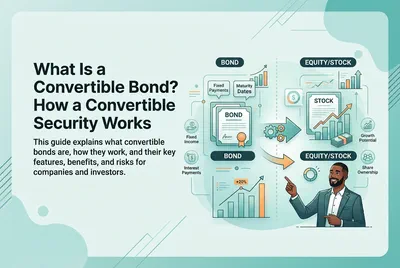
What Is a Convertible Bond? How a Convertible Security Works
This guide explains what convertible bonds are, how they work, and their key features, benefits, and risks for companies and investors.
Ready to simplify your treasury accounting?
See how Finflexia helps you manage financial instruments with ease. Book a demo to learn more.
Book a Demo