IFRS 7 Financial Instruments Disclosures: Complete Guide
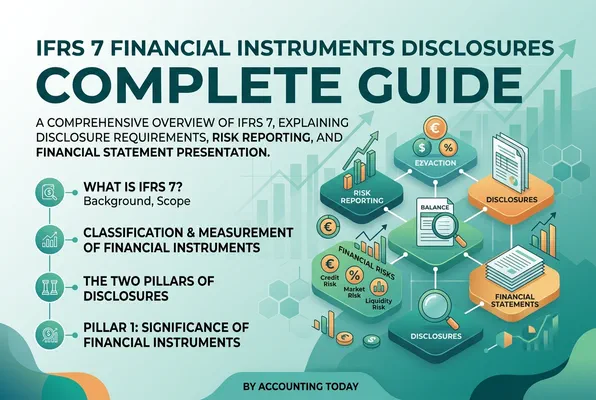

IFRS 7 is one of the most demanding disclosure standards in the entire IFRS framework. For finance professionals, auditors, and investors, it sits at the intersection of financial reporting, risk management, and corporate governance — making it both essential and notoriously complex to implement well.
Whether you are preparing financial statements for the first time under IFRS or looking to sharpen your existing disclosures, this guide breaks down everything you need to know about IFRS 7: its objectives, scope, disclosure requirements, interaction with other standards, and practical strategies to stay compliant without drowning in complexity.
What Is IFRS 7?
IFRS 7 Financial Instruments: Disclosures is an International Financial Reporting Standard issued by the International Accounting Standards Board (IASB). It was first issued in August 2005 and became effective for annual periods beginning on or after 1 January 2007.
The core objective of IFRS 7 is straightforward: to require entities to provide disclosures in their financial statements that enable users to evaluate:
- The significance of financial instruments for the entity’s financial position and performance
- The nature and extent of risks arising from financial instruments, and how the entity manages those risks
This seemingly simple goal produces some of the most detailed and technically demanding disclosures in practice. Financial instruments encompass a broad range of items — from cash and trade receivables to complex derivatives, hedge instruments, and structured products — and each carries its own risk profile.
Background and Development
Before IFRS 7, financial instrument disclosures were scattered across IAS 30 (for banks) and IAS 32. The IASB consolidated and expanded these requirements under a single standard to give investors a more coherent picture of how companies use financial instruments and manage the associated risks.
Since its introduction, IFRS 7 has been amended several times — most significantly alongside the introduction of IFRS 9 Financial Instruments, which replaced IAS 39 and overhauled classification, measurement, and impairment requirements. These changes triggered significant updates to IFRS 7 disclosures, particularly around the expected credit loss (ECL) model.
Scope of IFRS 7
IFRS 7 applies to all types of financial instruments recognised in the financial statements, with limited exceptions. It is applied by all entities that have financial instruments, regardless of their industry.
What Is Included
- Financial assets and financial liabilities measured at fair value through profit or loss (FVTPL)
- Financial assets measured at fair value through other comprehensive income (FVOCI)
- Financial assets measured at amortised cost
- Derivatives, including embedded derivatives
- Loan commitments not measured at FVTPL
- Lease receivables and payables (to the extent they are financial instruments)
- Financial guarantee contracts
What Is Excluded
IFRS 7 does not apply to:
- Interests in subsidiaries, associates, and joint ventures accounted for under IFRS 10, IAS 27, or IAS 28 (unless those interests are measured at fair value)
- Employee benefit plans within the scope of IAS 19
- Insurance contracts under IFRS 17 (although some crossover exists)
- Equity instruments of the reporting entity
Understanding scope is critical. Many preparers inadvertently omit disclosures for instruments such as trade receivables or intercompany loans, assuming IFRS 7 only applies to “complex” financial products. It does not — the standard is broad.
Classification and Measurement of Financial Instruments under IFRS Accounting
IFRS accounting standards require a clear classification and measurement of financial instruments, which directly influences how measurement of financial instruments is presented in the disclosures in financial statements. Under the requirements of IFRS, entities must explain the classification of financial assets and how each class of financial instrument is measured in accordance with IFRS accounting standards. This is particularly important in the financial statements of banks and banks and similar financial institutions, where complex portfolios demand specific disclosures and consistent application of qualitative disclosures and quantitative disclosures.
Recent amended IFRS developments, including amended IFRS 9 and related updates such as amendments to IFRS 9 and IFRS 7, have further refined the classification and measurement of financial instruments. In addition, financial instruments classified as equity instruments and instruments classified as equity instruments require careful analysis under IFRS rules, especially where puttable financial instruments classified or other hybrid features exist. These updates also interact with IFRS 16 and other IFRS accounting standards, shaping how entities apply presentation and disclosure in financial reporting.
The Two Pillars of IFRS 7 Disclosures
All IFRS 7 requirements can be grouped into two major disclosure pillars.
Pillar 1: Significance of Financial Instruments
These disclosures focus on the financial statements themselves — primarily the statement of financial position and the statement of profit or loss and other comprehensive income (OCI).
Statement of Financial Position Disclosures
Entities must disclose the carrying amounts of each category of financial asset and liability as defined under IFRS 9:
- Financial assets at amortised cost
- Financial assets at FVOCI (with recycling — debt instruments)
- Financial assets at FVOCI (without recycling — equity instruments)
- Financial assets at FVTPL
- Financial liabilities at amortised cost
- Financial liabilities at FVTPL
Entities that have designated financial instruments at fair value through profit or loss must disclose the reasons for doing so, and — for financial liabilities — the impact of own credit risk changes on the fair value.
Statement of Profit or Loss and OCI Disclosures
IFRS 7 requires entities to disclose:
- Net gains or losses for each category of financial instrument
- Total interest income and expense (calculated using the effective interest method)
- Fee income and expense
- Impairment losses recognised, including the breakdown across the three ECL stages
Fair Value Disclosures
One of the most technically complex areas of IFRS 7 is the fair value hierarchy. Entities must categorise their financial instruments into one of three levels:
| Level | Description |
|---|---|
| Level 1 | Quoted prices in active markets for identical assets or liabilities |
| Level 2 | Observable inputs other than Level 1 prices (e.g., market-corroborated data) |
| Level 3 | Unobservable inputs based on entity-specific assumptions |
For Level 3 instruments, entities must provide a reconciliation from opening to closing balances, disclose the valuation techniques and significant unobservable inputs used, and perform sensitivity analyses to show the impact of changing key assumptions.
Pillar 2: Nature and Extent of Risks
This is where IFRS 7 becomes particularly demanding. Entities must disclose qualitative and quantitative information about three primary risk categories.
Credit Risk
Credit risk is the risk that a counterparty will fail to meet its contractual obligations, causing a financial loss. Under IFRS 7, entities must disclose:
- Maximum exposure to credit risk at the reporting date (before collateral or credit enhancements)
- Credit quality information, typically using internal credit risk grades or external ratings
- Concentration of credit risk — large exposures to individual counterparties, geographies, or industries
- Collateral and other credit enhancements held, and their fair value
- Impairment information — the gross carrying amount of financial assets and the related loss allowance, broken down by ECL stage
The Three-Stage ECL Model and IFRS 7
The expected credit loss model under IFRS 9 divides financial assets into three stages:
- Stage 1: Performing — 12-month ECL recognised
- Stage 2: Underperforming — significant increase in credit risk — lifetime ECL recognised
- Stage 3: Credit-impaired — lifetime ECL recognised on a credit-adjusted basis
IFRS 7 requires detailed disclosure of each stage, including the gross carrying amount, loss allowance, and the movements between stages during the period. These “staging disclosures” are among the most resource-intensive IFRS 7 requirements for lenders and corporates alike.
Entities must also explain their definition of default, what constitutes a significant increase in credit risk, and the assumptions underlying their ECL models — including forward-looking macroeconomic scenarios.
Liquidity Risk
Liquidity risk is the risk that an entity will be unable to meet its financial obligations as they fall due. IFRS 7 requires entities to disclose:
- A maturity analysis of financial liabilities — showing contractual undiscounted cash flows in time bands (e.g., less than 1 month, 1–3 months, 3–12 months, 1–5 years, over 5 years)
- How the entity manages liquidity risk — including whether it maintains undrawn credit facilities, monitors liquidity ratios, or uses cash flow forecasting
For derivatives, the maturity analysis must consider whether gross or net settlement applies, with gross-settled derivatives typically presenting significantly larger liquidity exposures.
Market Risk
Market risk covers the risk that changes in market variables — such as interest rates, foreign exchange rates, or equity prices — will affect the fair value or future cash flows of financial instruments.
Interest Rate Risk
Entities must disclose:
- Sensitivity analyses showing the impact on profit or loss and equity of reasonably possible changes in interest rates
- For entities using value-at-risk (VaR) or other internal models, a description of the methodology and key assumptions
Currency Risk
Foreign currency risk disclosures must include:
- Carrying amounts of monetary items denominated in foreign currencies at the reporting date
- Sensitivity analyses showing the effect of a reasonably possible change in exchange rates on profit or loss and equity
Other Price Risk
This includes equity price risk and commodity price risk. Sensitivity analyses are again required, along with disclosures about how the entity manages these exposures.
Hedge Accounting Disclosures Under IFRS 7
For entities that apply hedge accounting under IFRS 9, IFRS 7 requires extensive additional disclosures. These are designed to help users understand the entity’s risk management strategy and how hedge accounting affects the financial statements.
Required Hedge Disclosures
Entities must disclose for each type of hedge (fair value hedge, cash flow hedge, net investment hedge):
- The hedging strategy — a description of each hedging relationship and risk management objective
- Nominal amounts of hedging instruments
- Fair values of hedging instruments at the reporting date (assets and liabilities separately)
- Hedge effectiveness — the amount of hedge ineffectiveness recognised in profit or loss
- Cash flow hedge reserve movements in OCI
- Maturity profile of hedging instruments
The IASB significantly expanded IFRS 7 hedge accounting disclosures when IFRS 9 replaced IAS 39, recognising that the new, principles-based hedge accounting model required more robust narrative explanation alongside quantitative data.
Common Compliance Challenges
Despite being in force for nearly two decades, IFRS 7 continues to produce compliance difficulties. Auditors and regulators frequently identify the following shortcomings:
Generic, Boilerplate Disclosures
Many entities copy forward risk disclosures from prior years without tailoring them to current circumstances. Regulators — including the European Securities and Markets Authority (ESMA) — have repeatedly flagged boilerplate disclosures as a key concern. IFRS 7 requires entity-specific information that reflects the actual risks the business faces.
Inadequate Sensitivity Analyses
Sensitivity analyses under IFRS 7 must reflect reasonably possible changes in market variables at the reporting date. Using overly conservative assumptions (e.g., a 1 basis point shift in interest rates for a highly volatile environment) undermines the usefulness of the disclosure.
Poor ECL Staging Disclosures
The ECL staging disclosures are complex and data-intensive. Many entities struggle to present clear reconciliations of gross carrying amounts and loss allowances across the three stages, particularly for entities with large, diversified loan portfolios.
Incomplete Fair Value Hierarchy
Entities sometimes misclassify instruments between levels — particularly Level 2 and Level 3 — or fail to provide adequate narrative about the valuation techniques and inputs used for Level 3 instruments.
Insufficient Collateral Disclosures
Many entities omit or under-disclose information about collateral held against financial assets, even when such collateral is material to understanding credit risk.
IFRS 7 and Its Relationship to Other Standards
IFRS 7 does not operate in isolation. It forms part of an interlocking suite of financial instrument standards.
IFRS 7 and IFRS 9
This is the most critical relationship. IFRS 9 governs how financial instruments are classified, measured, and impaired. IFRS 7 governs what must be disclosed about them. Changes to IFRS 9 — particularly the ECL model and the revised hedge accounting model — have directly shaped the current version of IFRS 7 disclosures.
IFRS 7 and IFRS 13
IFRS 13 Fair Value Measurement provides the framework for measuring fair value across all IFRS standards. IFRS 7 requires disclosures about fair values (including the hierarchy), but IFRS 13 sets out how those fair values are determined. The two standards must be read together for fair value disclosures.
IFRS 7 and IAS 32
IAS 32 Financial Instruments: Presentation covers the presentation of financial instruments — including the debt/equity classification and offsetting requirements. IFRS 7 requires disclosures about offsetting arrangements, which links directly to IAS 32 criteria.
How Technology Is Transforming IFRS 7 Compliance
The volume and complexity of IFRS 7 disclosures make manual, spreadsheet-based approaches increasingly untenable — particularly for entities with large or complex financial instrument portfolios.
Data Aggregation and Automation
Modern financial reporting platforms can automate the aggregation of financial instrument data from multiple source systems, classify instruments into the correct IFRS 9 categories, and generate draft disclosure tables — including maturity analyses, sensitivity analyses, and ECL staging schedules.
Audit Trails and Version Control
IFRS 7 disclosures require robust audit trails, particularly for ECL calculations, fair value measurements, and hedge effectiveness assessments. Digital platforms with built-in version control and workflow management reduce the risk of errors and provide auditors with clear evidence of the disclosure preparation process.
Scenario Modelling
For market risk and ECL disclosures, scenario modelling tools allow finance teams to run multiple macroeconomic scenarios quickly — helping them meet IFRS 7’s requirement to disclose forward-looking information and sensitivity analyses in a defensible, structured way.
Tools like Finflexia are designed to support exactly these kinds of complex, data-driven financial reporting workflows — helping teams move from fragmented spreadsheet processes to integrated, controlled disclosure environments.
Best Practices for IFRS 7 Disclosure Preparation
1. Start With a Risk Inventory
Before drafting disclosures, map all financial instruments held by the entity to their relevant risk categories. This forms the backbone of your IFRS 7 disclosure framework.
2. Tailor Disclosures to Your Business Model
Your liquidity risk disclosures should reflect your actual funding structure. Your credit risk disclosures should describe your actual credit assessment processes, not generic industry language. Regulators can tell the difference.
3. Engage Risk Management Early
IFRS 7 requires disclosures about how management monitors and manages risk. Finance teams should work closely with treasury, credit, and risk management functions to ensure disclosures accurately reflect internal risk management practices.
4. Benchmark Against Peers
Reviewing the IFRS 7 disclosures of comparable entities — particularly those with similar business models and risk profiles — can help identify gaps and best practices in your own disclosures.
5. Document Your Assumptions
For ECL models, fair value measurements, and sensitivity analyses, document the key assumptions, their basis, and the rationale for choosing specific parameters. This documentation supports both your internal review process and external audit.
6. Review for Materiality
Not every disclosure requirement is material to every entity. Apply materiality judgements systematically, but document why certain disclosures have been omitted or condensed. Remember that IFRS 7 requires disclosures to be presented in a way that is consistent with how the entity manages risk.
IFRS 7 for Small and Medium-Sized Entities
IFRS for SMEs (the IASB’s simplified framework for smaller entities) includes its own, scaled-down financial instrument disclosures in Section 11 and Section 12. These are significantly less demanding than full IFRS 7. However, entities that apply full IFRS — whether publicly listed or not — must comply with IFRS 7 in its entirety.
For many mid-sized entities applying full IFRS for the first time, IFRS 7 is one of the most challenging standards to implement, often requiring investment in new data infrastructure and disclosure processes.
Recent Developments and Future Changes
The IASB continues to monitor the application of IFRS 7 and periodically issues narrow-scope amendments.
Post-Implementation Review
The IASB conducted a post-implementation review of IFRS 9’s classification and measurement requirements, which has implications for IFRS 7. Feedback indicated that some disclosures — particularly around contractual cash flow characteristics — could be improved for investor clarity.
Sustainability-Linked Financial Instruments
As sustainability-linked loans and green bonds become more prevalent, questions are arising about whether existing IFRS 7 disclosures adequately capture the risks and features of these instruments. The IASB is considering whether targeted amendments are needed.
IASB Financial Instruments with Characteristics of Equity (FICE) Project
This project, which may result in amendments to IAS 32, could also trigger consequential amendments to IFRS 7 disclosures about equity and financial liability classification.
Summary: Key IFRS 7 Disclosure Requirements at a Glance
| Disclosure Area | Key Requirements |
|---|---|
| Carrying amounts | By IFRS 9 category for assets and liabilities |
| Fair value | Level 1/2/3 hierarchy, valuation techniques, sensitivities |
| Net gains/losses | By IFRS 9 category |
| Interest income/expense | Using effective interest method |
| Impairment | ECL by stage, movements, write-offs |
| Credit risk | Maximum exposure, credit quality, concentrations, collateral |
| Liquidity risk | Maturity analysis of contractual cash flows |
| Market risk | Sensitivity analyses for interest rate, FX, price risk |
| Hedge accounting | Strategy, effectiveness, OCI movements |
Conclusion
IFRS 7 is far more than a compliance checkbox. When implemented thoughtfully, it provides investors, creditors, and other stakeholders with a transparent, entity-specific picture of how financial instruments affect an organisation’s financial health and risk profile. Done poorly, it produces boilerplate disclosures that satisfy neither regulators nor investors.
The standard rewards preparers who invest in understanding their own risk exposures, build robust data processes, and communicate clearly — in plain English — about how they manage those risks. As financial instruments grow more complex and macroeconomic uncertainty increases, high-quality IFRS 7 disclosures become not just a regulatory obligation but a genuine competitive differentiator in the capital markets.
Whether you are building your IFRS 7 disclosure framework from scratch or looking to improve existing processes, a structured, technology-supported approach — combined with a deep understanding of both the letter and the spirit of the standard — is the most reliable path to compliance and credibility.

Written by
Dominik KonoldFounder
Dominik is the founder of Finflexia and an expert in treasury accounting, financial instrument valuation and IFRS compliance. Since 2016, he's been a certified Professional Risk Manager (PRMIA) and also lectures for the Association of Public Banks and the Academy of International Accounting. He built Finflexia to help treasury teams automate complex accounting workflows.
Related Posts
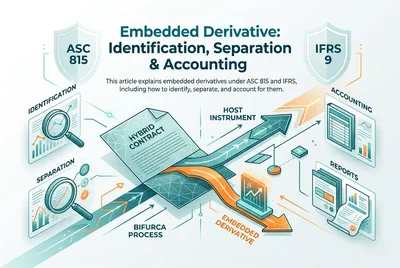
Embedded Derivative: Identification, Separation & Accounting
This article explains embedded derivatives under ASC 815 and IFRS, including how to identify, separate, and account for them. It also outlines when a derivative under ASC 815 must be bifurcated and how it impacts financial reporting.
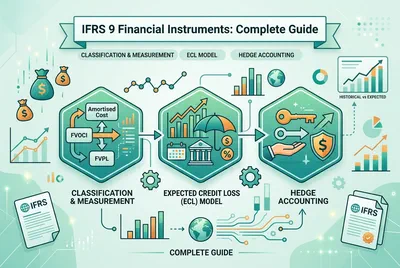
IFRS 9 Financial Instruments: Complete Guide
This Guide provides a comprehensive overview of IFRS 9, explaining its classification and measurement rules, expected credit loss model, hedge accounting requirements, and its interaction with IFRS 7 and other IFRS standards.
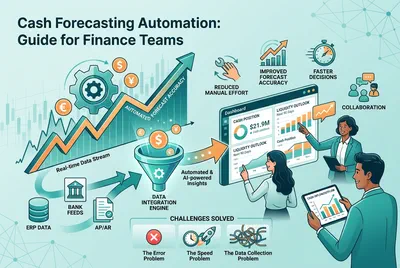
Cash Forecasting Automation: Guide for Finance Teams
Cash forecasting automation helps finance teams gain real-time visibility into cash positions, improve forecast accuracy, and reduce the manual effort associated with spreadsheet-based processes. By leveraging connected data sources, automation, and AI-powered forecasting capabilities, organizations can make more informed liquidity and treasury management decisions.
Ready to simplify your treasury accounting?
See how Finflexia helps you manage financial instruments with ease. Book a demo to learn more.
Book a Demo