IFRS 13 Fair Value Measurement: Complete Guide
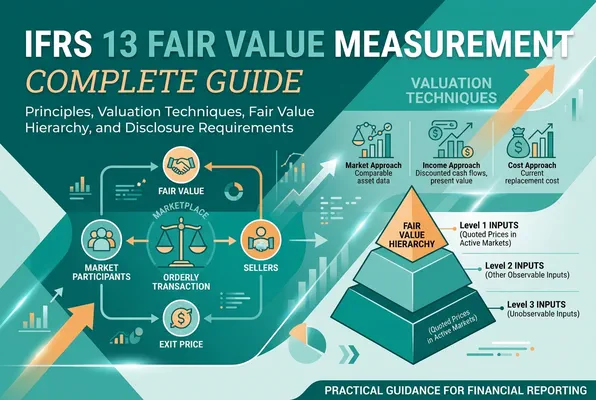

Fair value accounting sits at the heart of modern financial reporting, and IFRS 13 is the standard that defines exactly how fair value must be measured and disclosed. Whether you are preparing consolidated financial statements, auditing a complex investment portfolio, or advising clients on financial instrument valuation, a thorough understanding of IFRS 13 is non-negotiable.
This guide walks through every critical element of IFRS 13, from its foundational definition of fair value to the intricate mechanics of the three-level hierarchy, approved valuation techniques, and the disclosure framework that keeps stakeholders informed.
What Is IFRS 13 and Why Does It Matter?
IFRS 13, Fair Value Measurement, was issued by the International Accounting Standards Board (IASB) in May 2011 and became effective for annual periods beginning on or after 1 January 2013. It replaced the disparate fair value guidance that had previously been embedded in individual standards such as IAS 39, IFRS 9, IAS 40, and others.
Before IFRS 13, entities faced inconsistencies: different standards defined fair value slightly differently, used different hierarchies, and required different disclosures. This created confusion for preparers, auditors, and investors alike. IFRS 13 solved this by creating one consistent framework applicable across all IFRS standards that require or permit fair value measurement.
What Does IFRS 13 Cover?
IFRS 13 applies when another IFRS standard requires or permits fair value measurement or disclosures about fair value measurements. It covers:
- Financial assets and liabilities measured at fair value through profit or loss (FVTPL) or through other comprehensive income (FVOCI) under IFRS 9
- Investment property measured using the fair value model under IAS 40
- Biological assets measured at fair value less costs to sell under IAS 41
- Property, plant and equipment revalued under IAS 16
- Business combinations under IFRS 3, where acquired assets and assumed liabilities are recognised at fair value
- Impairment testing under IAS 36, where recoverable amount is sometimes determined using fair value less costs of disposal
What IFRS 13 Does Not Cover
It is equally important to understand the scope exclusions. IFRS 13 does not apply to:
- Share-based payment transactions within the scope of IFRS 2
- Leasing transactions within the scope of IFRS 16
- Measurements that are similar to fair value but are not fair value, such as net realisable value under IAS 2 or value in use under IAS 36
Development and Disclosure Requirements
IFRS 13 was issued in May 2011 and was further clarified through the annual improvements to IFRSs 2011–2013 cycle, with several refinements included within amendment projects. The standard applies when another standard requires or permits fair value measurement and also requires disclosures about fair value measurements. These disclosures improve transparency by explaining the valuation techniques, significant assumptions, and the extent to which measurements are based on observable or unobservable inputs, enabling users of financial statements to better assess valuation uncertainty and, where relevant, the impairment of assets.
The Core Definition: What Is Fair Value Under IFRS 13?
IFRS 13 defines fair value as:
“The price that would be received to sell an asset or paid to transfer a liability in an orderly transaction between market participants at the measurement date.”
This definition contains several critical concepts that must each be understood precisely.
An Exit Price, Not an Entry Price
Fair value is explicitly an exit price, the price from the perspective of selling an asset or transferring a liability. This is not the price an entity paid to acquire the asset (entry price), though in practice the two may be the same at initial recognition. The distinction becomes significant when measuring assets held for strategic purposes or liabilities with entity-specific credit risk.
Orderly Transaction
The transaction must be orderly, meaning it occurs under normal market conditions. IFRS 13 is not measuring a forced liquidation price or a distressed sale price. If observable market prices reflect distressed conditions, entities must adjust those prices accordingly.
Market Participants
Fair value is measured from the perspective of market participants, hypothetical buyers and sellers who are:
- Independent of each other (not related parties)
- Knowledgeable, having a reasonable understanding of the asset, liability, and the transaction
- Able to enter into a transaction for the asset or liability
- Willing to enter into a transaction—motivated but not forced
This market participant perspective means that entity-specific synergies or restrictions that would not be available to, or considered by, a typical market participant are generally excluded from the fair value measurement.
The Measurement Date
Fair value is a point-in-time measurement. Market conditions, credit spreads, volatility, and liquidity can all change, meaning that the fair value of an instrument on 31 December may differ materially from its fair value just weeks later. This is particularly relevant for financial instruments and investment properties in volatile markets.
The Principal Market and Most Advantageous Market
When measuring fair value, IFRS 13 requires entities to first identify the principal market for the asset or liability, the market with the greatest volume and level of activity. If there is no principal market, the entity uses the most advantageous market, which is the market that maximises the amount that would be received to sell an asset or minimises the amount that would be paid to transfer a liability, after transaction costs and transport costs.
Importantly, transaction costs are not included in the fair value measurement itself, even though they are considered when identifying the most advantageous market. Transport costs are also excluded from fair value if the entity’s location is a characteristic of the asset.
The IFRS 13 Fair Value Hierarchy
One of the most practically significant contributions of IFRS 13 is the three-level fair value hierarchy, which prioritises the inputs used in valuation techniques. The hierarchy is designed to maximise the use of observable, market-based inputs and minimise the reliance on unobservable, entity-specific inputs.
Level 1: Quoted Prices in Active Markets
Level 1 inputs are quoted prices (unadjusted) in active markets for identical assets or liabilities that the entity can access at the measurement date. These represent the most reliable, high-quality evidence of fair value.
Examples include: - Listed equity securities traded on major stock exchanges (e.g., shares listed on the London Stock Exchange or NYSE) - Government bonds with active secondary market trading - Commodity futures quoted on recognised exchanges
When a Level 1 price is available, IFRS 13 requires its use without adjustment, except in very limited circumstances (for example, when the entity holds a large block of securities that would be sold in multiple transactions, which may require a blockage discount—though IFRS 13 prohibits this for financial instruments measured at fair value).
Level 2: Observable Inputs Other Than Level 1
Level 2 inputs are inputs other than quoted prices included in Level 1 that are observable for the asset or liability, either directly or indirectly. These might include:
- Quoted prices for similar assets or liabilities in active markets (e.g., a bond similar to but not identical to the one being measured)
- Quoted prices for identical or similar assets or liabilities in markets that are not active
- Observable inputs other than quoted prices, such as interest rate yield curves, credit spreads, implied volatilities, and foreign exchange rates
- Market-corroborated inputs derived principally from, or corroborated by, observable market data through correlation or other means
Many over-the-counter (OTC) derivatives, interest rate swaps, and corporate bonds without active markets fall into Level 2. The valuation models used to measure these instruments are populated with observable market inputs.
Level 3: Unobservable Inputs
Level 3 inputs are unobservable inputs for the asset or liability. These are used when observable market data is not available, often because the market for the asset is inactive or the asset is highly specialised.
Level 3 inputs reflect the entity’s own assumptions about what market participants would use in pricing the asset or liability. Examples include:
- Long-term cash flow projections used to value a private equity investment
- Internally developed credit risk assumptions for illiquid structured products
- Assumptions about future occupancy rates and capitalisation rates used to value investment property in an inactive market
- Projected revenues and EBITDA multiples for an unlisted business
Level 3 measurements require the most judgment and carry the greatest subjectivity and estimation uncertainty, which is why IFRS 13 imposes the most stringent disclosure requirements on them.
Classifying a Measurement in the Hierarchy
The level within the fair value hierarchy in which a measurement is classified is determined by the lowest level input that is significant to the entire measurement. If a valuation model uses both observable yield curves (Level 2) and an unobservable credit risk assumption (Level 3), and the credit risk assumption is significant to the overall fair value, the entire measurement is classified as Level 3.
This significance assessment requires professional judgment and should be documented thoroughly.
Valuation Techniques Under IFRS 13
IFRS 13 identifies three broadly applicable valuation approaches. Entities must select the technique or combination of techniques most appropriate in the circumstances, with the objective of maximising the use of relevant observable inputs and minimising unobservable inputs.
The Market Approach
The market approach uses prices and other relevant information generated by market transactions involving identical or comparable assets, liabilities, or groups of assets and liabilities (businesses).
Common market approach methods include:
- Comparable company analysis (CCA): Applying valuation multiples (EV/EBITDA, P/E, EV/Revenue) derived from publicly traded comparable companies to the subject company’s financial metrics
- Comparable transaction analysis (CTA): Applying multiples derived from precedent M&A transactions in the same industry
- Market price adjustments: Adjusting an observed transaction price for differences in characteristics between the comparable and the subject asset
The market approach is most reliable when active market transactions exist for identical or genuinely comparable assets.
The Income Approach
The income approach converts future amounts, cash flows or income and expenses, to a single current (discounted) amount. This reflects current market expectations about those future amounts.
Techniques include:
- Discounted cash flow (DCF) analysis: Projecting future free cash flows and discounting them at a risk-adjusted rate (weighted average cost of capital or WACC)
- Dividend discount model: For equity investments where dividends are the primary cash return
- Option pricing models (e.g., Black-Scholes, binomial models): For financial instruments with optionality features
- Multi-period excess earnings method (MEEM): Commonly used to value intangible assets in purchase price allocations under IFRS 3
The income approach is widely used for Level 2 and Level 3 measurements where observable market prices are unavailable.
The Cost Approach
The cost approach reflects the amount that would currently be required to replace the service capacity of an asset, often referred to as current replacement cost. A market participant buyer would not pay more for an asset than the cost to acquire or construct a substitute asset of comparable utility.
The cost approach is frequently used for:
- Specialised or purpose-built assets with no active market
- Tangible assets such as machinery and equipment in purchase price allocations
- Infrastructure assets
Adjustments for physical deterioration, functional obsolescence, and economic obsolescence are applied to arrive at the depreciated replacement cost.
Selecting and Applying Valuation Techniques
IFRS 13 does not prescribe which valuation technique to use in a given situation. However, it requires consistency: once selected, a valuation technique should not be changed unless the change results in a measurement that is equally or more representative of fair value in the circumstances, or new information becomes available.
A change in valuation technique is treated as a change in accounting estimate under IAS 8.
The Concept of Highest and Best Use
For non-financial assets, IFRS 13 requires fair value to be measured using the asset’s highest and best use (HBU) from the perspective of a market participant. Highest and best use is the use that maximises the value of the asset, and must be:
- Physically possible: The size, shape, and location of the asset physically support the proposed use
- Legally permissible: The use is legally allowed under zoning laws, environmental regulations, and contractual restrictions
- Financially feasible: The use generates adequate return to motivate market participants to put the asset to that use
An entity’s current use of a non-financial asset is presumed to be its highest and best use unless market or other factors suggest that a different use by market participants would maximise the asset’s value. For example, a parcel of land currently used as a car park might have a higher and better use as a residential development site.
Highest and best use is not applicable to financial assets and liabilities, for which no such concept applies under IFRS 13.
Highest and Best Use of Non-Financial Assets
For non-financial assets, fair value measurement assumes that the asset is used in its best use of the asset from the perspective of market participants. This may involve the asset being used individually or in combination with other assets if such use generates greater economic benefits. Consequently, fair value is the price that would be received for the asset or liability being measured, based on assumptions about risk, market accessibility, and the level of activity for the asset at the measurement date.
Fair Value Measurement of Liabilities and Own Equity Instruments
Measuring the fair value of a liability under IFRS 13 presents particular challenges. When a quoted price for a liability is not available, the standard requires measuring fair value from the perspective of a market participant that holds the identical item as an asset at the measurement date.
Key considerations include:
- Non-performance risk: The fair value of a liability must reflect the risk that the entity will not fulfil the obligation. This includes own credit risk. When an entity’s creditworthiness deteriorates, the fair value of its financial liabilities may decrease, potentially generating a gain—a counterintuitive but technically correct outcome under IFRS 9, where such gains are recognised in OCI as a debit valuation adjustment (DVA).
- Restrictions on transfer: IFRS 13 assumes the liability is transferred to a market participant at the measurement date without being settled, cancelled, or extinguished. The effect of a restriction preventing transfer is included in the fair value.
For own equity instruments (such as when an entity needs to measure the fair value of its own shares for purposes such as share-based payments), the same market participant exit price concept applies.
IFRS 13 Disclosure Requirements
The disclosure requirements under IFRS 13 are among the most extensive in IFRS. Their purpose is to help users of financial statements understand:
- The valuation techniques and inputs used to develop fair value measurements
- The effect of fair value measurements using significant unobservable inputs (Level 3) on profit or loss or OCI
Qualitative Disclosures
For all recurring and non-recurring fair value measurements, entities must disclose:
- The fair value measurement at the end of the reporting period
- The level in the fair value hierarchy within which the fair value measurement is categorised in its entirety
- For Level 2 and Level 3 measurements: the valuation techniques and inputs used
- Any transfers between Level 1 and Level 2 during the period, and the reasons for those transfers
Quantitative Disclosures for Level 3 Measurements
For Level 3 fair value measurements, significantly more granular disclosure is required:
- A reconciliation from opening to closing balances, showing separately:
- Total gains or losses recognised in profit or loss, indicating the line item(s) affected
- Total gains or losses recognised in OCI
- Purchases, sales, issuances, and settlements
- Transfers into and out of Level 3
- The amount of total gains or losses recognised in profit or loss that are attributable to the change in unrealised gains or losses relating to assets and liabilities held at the end of the reporting period
- Quantitative information about the significant unobservable inputs used (e.g., discount rates, growth rates, EBITDA multiples, probability weightings for scenarios)
- A sensitivity analysis showing how the fair value measurement would change if the unobservable inputs were changed to reflect reasonably possible alternative assumptions, and the reasons why those inputs are unobservable
Disclosures for Assets Not Measured at Fair Value
An important and often-overlooked aspect of IFRS 13 is that it also requires fair value disclosures for assets and liabilities that are not measured at fair value in the statement of financial position but for which fair value is disclosed. The most common example is long-term borrowings measured at amortised cost under IFRS 9, for which fair value must be disclosed and classified within the hierarchy.
Day 1 Profit or Loss (Transaction Price vs. Fair Value)
At initial recognition, the fair value of an asset or liability is typically the transaction price (the price paid or received). However, in some cases, particularly for complex financial instruments, the transaction price may differ from the fair value determined using a valuation model.
IFRS 13 (in conjunction with IFRS 9) addresses this “Day 1 P&L” issue:
- If the fair value at initial recognition is evidenced by a quoted price in an active market (Level 1) or is based on a valuation technique that uses only observable market data (Level 2), the difference between the transaction price and the fair value is recognised immediately in profit or loss.
- If the fair value at initial recognition is determined using significant unobservable inputs (Level 3), the difference (the Day 1 gain or loss) is deferred and not recognised immediately. It is subsequently recognised over the life of the instrument, as the inputs become observable, or on derecognition.
This approach prevents entities from recognising potentially illusory profits at inception of a transaction simply because their proprietary model produces a value higher than the price actually agreed with a counterparty.
Practical Application: Common Challenges and How to Address Them
Determining Whether a Market Is Active
IFRS 13 does not define what constitutes an “active market” with mathematical precision, leaving it to professional judgment. Indicators of an inactive market include:
- A significant decline in the volume and level of trading activity
- A wide bid-ask spread
- Prices that vary significantly across dealers or over time in ways not explained by changes in fundamental factors
- A significant increase in implied liquidity premiums or risk premiums compared to historical levels
When a market is deemed inactive, Level 1 prices may not reflect fair value, and entities must use Level 2 or Level 3 approaches with appropriate adjustments.
Calibration to Transaction Prices
A useful practical technique encouraged under IFRS 13 is calibration: when an entity uses a valuation model for a financial instrument, it should calibrate the model to ensure that at initial recognition, the output equals the transaction price (assuming the transaction price represents fair value). Thereafter, the model is applied using current market inputs. Calibration helps identify whether the model has structural biases over time.
Accounting for Premiums and Discounts
IFRS 13 explicitly requires entities to consider whether premiums or discounts should be applied in fair value measurement. However, it prohibits the application of a blockage factor (a discount for holding a large position that would move the market if liquidated all at once) when measuring financial instruments classified at fair value. In contrast, a control premium may be appropriate when measuring the fair value of a controlling interest in an investment, reflecting what a market participant would pay for the ability to direct the activities of the investee.
Unit of Account
The unit of account for fair value measurement is determined by the IFRS standard that requires or permits the measurement. For financial instruments, IFRS 9 generally specifies that the unit of account is the individual instrument, not a portfolio. However, IFRS 13 contains a portfolio exception that allows entities, as an accounting policy election, to measure the fair value of a group of financial assets and financial liabilities on a net basis when they manage and disclose risk on a portfolio basis (as many banks do for interest rate risk and credit risk).
IFRS 13 vs. ASC 820: Key Differences
Many multinational groups report under both IFRS and US GAAP. It is worth noting that ASC 820, Fair Value Measurement, is the US GAAP equivalent of IFRS 13, developed through the joint convergence project between the IASB and FASB.
The two standards are substantially converged, with similar definitions, hierarchies, and disclosure requirements. However, some differences remain:
| Feature | IFRS 13 | ASC 820 |
|---|---|---|
| Applicability to leases | Excludes lease transactions | Excludes lease accounting measurements |
| Effective date | 1 January 2013 | Various (phased implementation) |
| Portfolio exception | Permitted as accounting policy election | Permitted with similar conditions |
| Private company relief | Limited scope exceptions | More extensive practical expedients for private companies |
Finance professionals working across jurisdictions should understand these nuances to avoid inadvertent differences in valuation or disclosure.
How Technology and Data Analytics Are Changing IFRS 13 Compliance
The complexity of IFRS 13, particularly for entities holding large books of financial instruments, has driven significant investment in technology solutions. Modern treasury and financial reporting platforms can automate:
- Real-time pricing feeds for Level 1 and Level 2 instruments, reducing manual data entry errors
- Model validation workflows that document the calibration of Level 3 valuation models
- Hierarchy classification engines that assess the significance of unobservable inputs and automatically flag Level 3 items for enhanced review
- Disclosure generation tools that produce the quantitative Level 3 rollforward and sensitivity tables directly from the underlying valuation data
Platforms like Finflexia are designed to help finance teams manage the end-to-end fair value measurement and disclosure process, reducing the operational burden of IFRS 13 compliance while improving the auditability of fair value judgments.
Best Practices for IFRS 13 Implementation
Establish a Robust Valuation Policy
Every entity subject to IFRS 13 should maintain a comprehensive valuation policy that documents:
- The valuation techniques selected for each class of asset and liability
- The hierarchy classification and the process for assessing the significance of unobservable inputs
- The frequency of valuation updates and the triggers for ad hoc revaluations
- Governance and approval processes (who signs off on Level 3 valuations, and how independent price verification is performed)
Ensure Independent Price Verification
For significant Level 2 and Level 3 measurements, best practice involves independent price verification (IPV), a process whereby a team independent of the front office or business unit that originated the position validates the fair values used in financial reporting. This reduces model risk and guards against valuation bias.
Document Judgment and Estimation Uncertainty
Given the subjectivity inherent in Level 3 measurements, documentation is critical. Preparers should document:
- Why selected inputs are considered representative of market participant assumptions
- How alternative inputs were considered and why they were rejected
- The output of sensitivity analyses and how they informed any measurement adjustments
- Any expert reports or third-party appraisals relied upon
This documentation supports the audit process and demonstrates that the entity has exercised appropriate professional judgment.
Review the Appropriateness of Classifications Regularly
Markets evolve. An instrument classified as Level 2 during a period of normal market conditions may need to be reclassified to Level 3 if the relevant market becomes inactive due to economic stress. Entities should have processes in place to monitor changes in market activity and reassess hierarchy classifications at each reporting date.
Summary: Key Takeaways on IFRS 13
IFRS 13 is a demanding but logically coherent standard. Understanding it deeply requires grasping several interlocking concepts:
- Fair value is an exit price measured from the perspective of market participants, not the entity itself
- The three-level fair value hierarchy prioritises observable inputs and signals the reliability of the measurement
- Three valuation approaches—market, income, and cost—are available, and must be selected to maximise observable inputs
- For non-financial assets, the highest and best use concept is central to the measurement
- For liabilities, own credit risk and non-performance risk must be reflected
- Disclosures are extensive, particularly for Level 3 measurements, and serve a critical role in financial statement transparency
- Day 1 profits on Level 3 instruments are deferred to prevent fictitious income recognition
Mastering IFRS 13 is essential not only for technical compliance but for delivering credible, decision-useful financial information to investors, creditors, and regulators. As markets become more complex and the range of assets and liabilities measured at fair value continues to grow, the importance of this standard will only increase.

Written by
Dominik KonoldFounder
Dominik is the founder of Finflexia and an expert in treasury accounting, financial instrument valuation and IFRS compliance. Since 2016, he's been a certified Professional Risk Manager (PRMIA) and also lectures for the Association of Public Banks and the Academy of International Accounting. He built Finflexia to help treasury teams automate complex accounting workflows.
Related Posts

Hypothetical Derivative Method Explained
To better understand the practical application of hedge accounting, the following sections examine key concepts related to hedge effectiveness, hypothetical derivatives, and cash flow hedges.
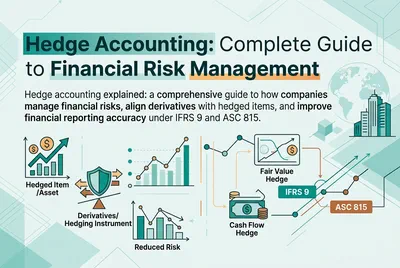
Hedge Accounting: Complete Guide to Financial Risk Management
Hedge accounting explained: a comprehensive guide to how companies manage financial risks, align derivatives with hedged items, and improve financial reporting accuracy under IFRS 9 and ASC 815.
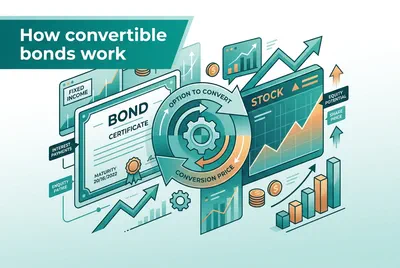
How Convertible Bonds Work: The Guide to Convertible Bonds
This guide explains how convertible bonds work, covering their key features, pricing, risks, conversion mechanisms, and the benefits they offer as hybrid securities that combine fixed-income investing with equity upside potential.
Ready to simplify your treasury accounting?
See how Finflexia helps you manage financial instruments with ease. Book a demo to learn more.
Book a Demo