Hypothetical Derivative Method Explained


The hypothetical derivative method sits at the heart of modern hedge accounting, yet it remains one of the most misunderstood techniques in financial risk management. Whether you are a treasury professional, a financial controller, or an auditor working through hedge documentation, understanding this method is essential for producing accurate, compliant, and defensible accounting under both IFRS 9 and ASC 815.
This guide walks you through everything you need to know: what the hypothetical derivative method is, how it works mechanically, where it fits into the broader framework of hedge effectiveness testing, and how technology like FinFlexia can help you apply it with confidence and efficiency.
What Is the Hypothetical Derivative Method?
The hypothetical derivative method is a quantitative approach used to measure hedge effectiveness in a hedging relationship. Rather than comparing the actual hedging instrument directly to the cash flows or fair value changes of the hedged item, which can be difficult when the hedged item is a non-financial asset, a forecast transaction, or a floating-rate liability, this method constructs a theoretical “perfect” derivative that represents what a perfectly effective hedge of that item would look like.
This hypothetical derivative is designed to have:
- The same notional amount as the hedged item
- The same reset dates, maturity, and payment frequency
- The same underlying risk variable (e.g., a benchmark interest rate, a foreign exchange rate, or a commodity price)
- A fair value of zero at the inception of the hedge
The actual hedging instrument is then compared to this hypothetical perfect derivative. The degree to which the two align determines hedge effectiveness.
Why a “Hypothetical” Derivative?
When accounting standards require you to measure hedge effectiveness, you need a reliable benchmark for what the hedged item would generate in a perfectly effective scenario. Because hedged items are often not derivatives themselves, they might be future purchases of raw materials, forecast revenue in a foreign currency, or a variable-rate loan, you cannot simply price them the same way you price a swap or an option.
The hypothetical derivative solves this problem by translating the hedged item’s risk characteristics into derivative terms, making it possible to compute a fair value and compare it to the actual hedging instrument using consistent, well-established valuation methods.
The Regulatory Framework: IFRS 9 and ASC 815
IFRS 9 and Hedge Effectiveness Testing
Under IFRS 9, entities must demonstrate that a hedging relationship meets effectiveness requirements on an ongoing basis. Specifically, IFRS 9 requires:
- An economic relationship between the hedged item and the hedging instrument
- That the effect of credit risk does not dominate value changes
- That the hedge ratio reflects actual quantities used in risk management
IFRS 9 does not prescribe the hypothetical derivative method by name, but it is widely accepted, and often preferred, as the quantitative method for prospective and retrospective effectiveness testing, particularly for cash flow hedges.
ASC 815 Under US GAAP
ASC 815 (Derivatives and Hedging) under US GAAP provides more prescriptive guidance. The hypothetical derivative method is explicitly referenced and accepted for measuring the change in fair value of the hedged item in a cash flow hedge. ASC 815-20-25 and related subtopics outline how entities can use this method to compare cumulative fair value changes of the hedging instrument against the hypothetical derivative’s cumulative fair value changes.
The long-haul method under ASC 815 uses the hypothetical derivative approach extensively, and the shortcut method (where applicable) can be seen as a simplified version of the same underlying logic — assuming perfect effectiveness rather than computing it.
How the Hypothetical Derivative Method Works Step by Step
Step 1: Define the Hedged Item and Its Risk
The first step is to clearly identify what you are hedging and which specific risk you are hedging against. For example:
- Hedged item: A forecast purchase of 10,000 metric tonnes of crude oil in six months
- Risk hedged: Commodity price risk (changes in the price of WTI crude oil)
This definition forms the foundation for constructing the hypothetical derivative. The more precisely you define the hedged risk, the more accurately the hypothetical derivative can represent it.
Step 2: Construct the Hypothetical Derivative
Design a derivative that would achieve perfect hedge effectiveness for the hedged item. This typically means:
- Setting the notional amount equal to the hedged item’s exposure
- Aligning maturity date with the expected date of the hedged transaction
- Using the same reference rate, index, or commodity price that drives the hedged item’s variability
- Setting the contractual rate or price so that the hypothetical derivative has a fair value of zero at inception
For interest rate hedges, this often takes the form of a hypothetical interest rate swap with terms that match the variable-rate borrowing being hedged.
Step 3: Value the Hypothetical Derivative Over Time
At each reporting date and testing date, compute the fair value of the hypothetical derivative. This involves:
- Using a discount curve consistent with the hedged risk (e.g., SOFR or EURIBOR for interest rate hedges)
- Applying appropriate credit adjustments if necessary
- Recording the cumulative change in fair value from inception
This cumulative change represents what a perfectly effective hedge would have produced.
Step 4: Value the Actual Hedging Instrument
Independently compute the fair value of the actual hedging instrument — for example, an interest rate swap, a cross-currency swap, a commodity forward, or an FX forward contract. This valuation should follow the same general methodology but will reflect the actual contractual terms, including any differences from the hypothetical.
Step 5: Compare and Measure Effectiveness
The effectiveness ratio is calculated as:
Effectiveness Ratio = Change in Fair Value of Actual Hedging Instrument
                      ÷ Change in Fair Value of Hypothetical Derivative
Under most frameworks, a ratio between 80% and 125% has historically been cited as the acceptable range for highly effective hedges (particularly under older IAS 39 rules). Under IFRS 9, the focus shifts somewhat from bright-line tests to qualitative assessment and ongoing documentation, though quantitative methods remain critically important.
Any ineffectiveness — the difference between the two fair value changes — must be recognized immediately in profit or loss.
Selecting the Appropriate Method to Assess Hedge Effectivneness
Selecting an appropriate method to assess hedge effectiveness depends on the nature of the hedging relationship, the underlying risk exposure, and the objectives of the entity’s risk management strategy. For many cash flow hedging relationships, the change-in-variable-cash-flows method provides a reliable framework for the assessment of hedge effectiveness, particularly when the hedge is designed to mitigate variability in expected future cash flows. A robust quantitative assessment of effectiveness should be performed at hedge inception as part of the initial prospective quantitative effectiveness analysis and subsequently throughout the life of the hedge. The chosen methodology should consistently demonstrate whether the hedge is highly effective in offsetting the designated risk and support the continued use of hedge accounting.
Sources of Hedge Ineffectiveness
Even when using the hypothetical derivative method carefully, real-world hedges are rarely perfectly effective. Common sources of ineffectiveness include:
Credit Risk Differences
The actual hedging instrument (e.g., a swap with a bank counterparty) carries credit value adjustment (CVA) and debit value adjustment (DVA) effects that the hypothetical derivative does not. These adjustments reflect counterparty credit risk and the entity’s own credit risk, respectively.
Timing Mismatches
If the reset dates or payment dates of the actual instrument do not precisely match those of the hypothetical derivative, small timing differences create ineffectiveness. This is particularly relevant for cross-currency basis swaps or instruments with non-standard settlement terms.
Notional Differences
If the hedged item’s notional amount changes over time — for example, because of partial prepayments on a loan — while the hedging instrument’s notional remains fixed, a notional mismatch arises and generates ineffectiveness.
Rate Differences (Off-Market Derivatives)
An actual hedging instrument entered at an off-market rate (i.e., a non-zero fair value at inception) will behave differently from the hypothetical derivative, which is always constructed at market. This difference flows through effectiveness calculations as ineffectiveness.
Basis Risk
When the index used in the hedging instrument (e.g., one-month SOFR) does not precisely match the index driving variability in the hedged item (e.g., three-month SOFR), basis risk exists. This is one of the most common and significant sources of ineffectiveness in interest rate hedges.
Hypothetical Derivative Method vs. Other Effectiveness Testing Methods
The hypothetical derivative method is not the only approach available. Understanding where it fits relative to alternatives helps treasury teams choose the right tool for each hedging relationship.
The Shortcut Method and the Assumption of Perfect Effectiveness
Under US GAAP, the use of the shortcut method allows entities to avoid ongoing quantitative testing when strict qualifying criteria are satisfied. This approach is based on the assumption of perfect effectiveness, meaning that the hedging relationship is perfectly effective throughout its life. Consequently, no recurring calculation is required to demonstrate that the hedge is expected to achieve the desired offset. However, eligibility for this simplified approach is limited because the actual derivative must match the actual characteristics of the hedged exposure in virtually every material aspect. If these requirements are not fulfilled, entities must apply another method to assess hedge effectiveness, typically involving a detailed quantitative analysis.
Dollar-Offset Method
The dollar-offset method directly compares cumulative fair value or cash flow changes of the actual hedging instrument and the hedged item (or a representation of it). While simpler in concept, it can produce volatile effectiveness ratios when changes are small in absolute terms, making it less robust for certain hedging strategies.
Regression Analysis
Regression-based effectiveness testing uses statistical analysis, typically ordinary least squares regression, to assess whether changes in the hedging instrument are statistically associated with changes in the hedged item. This approach is more sophisticated and can accommodate complex, non-linear relationships, but requires larger data sets and more technical expertise.
Shortcut Method (ASC 815)
Under US GAAP, the shortcut method allows entities to assume perfect effectiveness without ongoing quantitative testing if very specific criteria are met. It essentially assumes the hypothetical derivative and the actual instrument are identical. While operationally convenient, its strict eligibility requirements limit its applicability.
Critical Terms Match
The critical terms match method (used qualitatively under IFRS 9) asserts that when key terms of the hedging instrument and the hedged item are perfectly aligned, the hedge is expected to be highly effective. This is a qualitative test only and must be supported by quantitative evidence in practice.
In most real-world situations, the hypothetical derivative method offers the best combination of rigor, flexibility, and regulatory acceptability, especially for complex or non-standard hedging relationships.
Documentation Requirements When Using the Hypothetical Derivative Method
Proper documentation is not optional — it is a prerequisite for hedge accounting qualification. When applying the hypothetical derivative method, your hedge documentation should include:
At Hedge Inception
- Description of the hedging relationship: What is being hedged, and against which risk?
- Identification of the hedging instrument: Counterparty, terms, notional, maturity
- Terms of the hypothetical derivative: How it was constructed and why those terms represent a perfect hedge
- Risk management objective and strategy: Why this hedge is consistent with the entity’s overall risk management approach
- Method for assessing effectiveness: Explicit statement that the hypothetical derivative method will be used, with description of how calculations will be performed
On an Ongoing Basis
- Effectiveness test results at each testing date (often quarterly or at minimum at each reporting date)
- Fair value calculations for both the actual instrument and the hypothetical derivative
- Amounts recognized in Other Comprehensive Income (OCI) and profit or loss
- Any changes to the hedging relationship (rebalancing, discontinuation)
Under both IFRS 9 and ASC 815, incomplete or missing documentation can result in the disqualification of hedge accounting — potentially forcing restatements and creating significant earnings volatility.
Cash Flow Implications and Hedge Accounting
For flow hedges of the variability in future cash flows, including a net investment hedge, the objective is to ensure that changes in the hedging instrument appropriately offset the hedged cash flows attributable to the designated risk. Ideally, the hedge is expected to perfectly offset the hedged cash flows, resulting in only minimal hedge ineffectiveness. The comparison focuses on the cash flows of the hedging instrument and the cash flows on the hedged item, particularly the terms of the hedged forecasted transaction. Any change in expected future cash flows may influence the measurement of hedge effectiveness and the amounts recognized in the cash flow statement. Where the designated hedged item is an asset or liability containing an embedded derivative, additional analysis may be required to ensure that the hedging relationship continues to qualify for the use of hedge accounting.
Practical Application: Interest Rate Cash Flow Hedges
To make the hypothetical derivative method concrete, consider the following scenario:
Scenario: A company has a €50 million floating-rate loan priced at three-month EURIBOR + 150 basis points, maturing in five years. To manage interest rate risk, the company enters into a receive-floating, pay-fixed interest rate swap with a notional of €50 million.
Step 1 — Hedged item: The floating interest payments on the loan (specifically, the EURIBOR component)
Step 2 — Hypothetical derivative: A receive-floating (three-month EURIBOR), pay-fixed swap with: - Notional: €50 million - Reset dates: Same as the loan - Maturity: Co-terminus with the loan - Fixed rate: Set so fair value = zero at inception
Step 3 — Actual instrument: The company’s actual swap, which may have a slightly different fixed rate, credit spread, or settlement conventions
Step 4 — Effectiveness testing: At each quarter end, both swaps are valued using the current EURIBOR discount curve. The ratio of fair value changes determines effectiveness. Any difference is recognized as ineffectiveness in profit or loss.
Result: Assuming the terms are closely aligned, most of the EURIBOR variability in interest payments is offset. A small amount of ineffectiveness from CVA/DVA or minor term differences flows through the income statement.
Constructing an Appropriate Hypothetical Swap
The construction of an appropriate hypothetical derivative is one of the most important steps in the hypothetical derivative method. In the case of a hedge of the interest rate, the hypothetical interest rate swap would be designed so that its contractual features identically match the critical terms of the hedged exposure. Accordingly, the hypothetical swap must reflect the critical terms of the floating-rate asset, including the notional amount, maturity, reset frequency, payment dates, and the index on which the hypothetical swap is based. In addition, the hypothetical derivative would need to satisfy all requirements necessary to represent a perfect hypothetical instrument. The accounting guidance states that the hypothetical derivative should have a fair value of zero at hedge inception, while the fair value of a hypothetical swap changes solely because of movements in the designated hedged risk.
Comparing the Hypothetical Swap with the Actual Derivative
The comparison between the hypothetical swap and the actual derivative forms the basis for measuring hedge performance. The actual and hypothetical instruments are valued independently, allowing entities to compare the value of the actual swap with the value of the hypothetical swap at each reporting date. Because the hypothetical swap would be expected to replicate only the designated hedged risk, differences between the swap and the actual derivative normally arise from factors such as credit valuation adjustments, basis differences, or contractual features that do not identically match the critical terms of the hedged item. The resulting comparison is used to assess effectiveness and to determine the effectiveness of hedging over the reporting period.
Pitfalls to Avoid
Constructing the Hypothetical Derivative Incorrectly
The most critical error is building a hypothetical derivative that does not accurately represent the hedged item. For example, using incorrect reset dates, wrong day count conventions, or a non-zero inception fair value will distort every effectiveness calculation going forward.
Ignoring Changes in the Hedged Item’s Terms
If the underlying hedged item changes — for example, a loan is partially prepaid or its maturity is extended — the hypothetical derivative must be updated accordingly. Failure to do so creates phantom ineffectiveness.
Inconsistent Valuation Methodologies
Using different discount curves, interpolation methods, or credit adjustment techniques for the actual instrument versus the hypothetical derivative introduces artificial differences. Both should be valued using consistent, observable market inputs.
Poor Ongoing Documentation
Many entities invest significant effort in hedge inception documentation but neglect ongoing testing and documentation. Regulators and auditors scrutinize both, and gaps in ongoing documentation can unwind hedge accounting qualification retrospectively.
How FinFlexia Supports the Hypothetical Derivative Method
Applying the hypothetical derivative method manually is time-consuming, error-prone, and difficult to scale across a large portfolio of hedging relationships. FinFlexia is built specifically to address these challenges for treasury and finance teams.
Automated Hypothetical Derivative Construction
FinFlexia allows users to input the terms of the hedged item and automatically generates the corresponding hypothetical derivative. The platform handles day count conventions, reset schedules, and market-rate calibration — eliminating manual construction errors.
Fair Value Engine
The platform’s built-in fair value calculation engine uses live and historical market data to price both the actual hedging instrument and the hypothetical derivative consistently. Users can choose from multiple discount curves (SOFR, EURIBOR, SONIA, TONAR) and apply standard credit adjustments.
Effectiveness Testing Automation
At each testing date, FinFlexia automatically computes: - The cumulative change in fair value of both the actual instrument and the hypothetical derivative - The effectiveness ratio - The ineffective portion to be recognized in profit or loss - The effective portion to be recorded in OCI
Results are stored with a full audit trail, making it straightforward to respond to auditor queries or regulatory reviews.
Journal Entry Generation
Based on effectiveness test results, FinFlexia generates the appropriate IFRS 9 or ASC 815 journal entries — including entries for OCI, reclassification from OCI to profit or loss, and recognition of ineffectiveness — reducing the accounting burden on finance teams.
Documentation Repository
All hedge documentation — inception documents, term sheets, effectiveness test results, and journal entries — is stored in a centralized, searchable repository within FinFlexia. This makes audit preparation significantly faster and reduces the risk of documentation gaps that could disqualify hedge accounting.
The Role of the Hypothetical Derivative Method in Risk Management Strategy
Beyond its technical role in hedge accounting, the hypothetical derivative method has strategic value. By constructing a perfect benchmark and measuring actual performance against it, treasury teams gain precise visibility into the sources and magnitude of hedge ineffectiveness. This information can drive better hedging decisions:
- If basis risk is consistently generating ineffectiveness, it may be worth exploring instruments that better match the hedged item’s reference rate
- If CVA/DVA adjustments are material, it may be worth exploring cleared derivatives or collateral agreements that reduce counterparty credit risk
- If timing mismatches are the primary source of ineffectiveness, adjusting reset date alignment in future hedges can improve performance
In this way, the hypothetical derivative method is not just an accounting compliance tool — it is a diagnostic instrument for hedging quality.
Transition Considerations: From IAS 39 to IFRS 9
Many entities that transitioned from IAS 39 to IFRS 9 found that the hypothetical derivative method became both more important and more flexible under the new standard. Under IAS 39, the strict 80-125% bright-line effectiveness test made quantitative methods like the hypothetical derivative method essential for demonstrating compliance. Under IFRS 9, while the bright-line test was removed, quantitative substantiation remains critical for supporting qualitative assessments and documenting the economic relationship.
For entities still on IAS 39 (in jurisdictions that have not yet adopted IFRS 9) or maintaining US GAAP reporting, the hypothetical derivative method remains indispensable.
Conclusion: Mastering the Hypothetical Derivative Method
The hypothetical derivative method is one of the most powerful and widely applicable tools in hedge accounting. By constructing a theoretically perfect benchmark derivative and comparing it systematically to the actual hedging instrument, treasury and accounting teams can measure effectiveness with precision, comply with both IFRS 9 and ASC 815, and generate defensible documentation that withstands auditor scrutiny.
At the same time, the method comes with real complexity: constructing the hypothetical derivative correctly, maintaining consistent valuations, identifying and measuring ineffectiveness, and keeping documentation complete across the life of the hedge all require substantial expertise and discipline.
This is precisely where purpose-built platforms like FinFlexia deliver the most value — automating the computational and documentation-intensive aspects of the hypothetical derivative method so that finance teams can focus on strategic risk management rather than spreadsheet management.
Whether you are implementing hedge accounting for the first time or looking to strengthen an existing program, mastering the hypothetical derivative method is not optional — it is foundational.

Written by
Dominik KonoldFounder
Dominik is the founder of Finflexia and an expert in treasury accounting, financial instrument valuation and IFRS compliance. Since 2016, he's been a certified Professional Risk Manager (PRMIA) and also lectures for the Association of Public Banks and the Academy of International Accounting. He built Finflexia to help treasury teams automate complex accounting workflows.
Related Posts
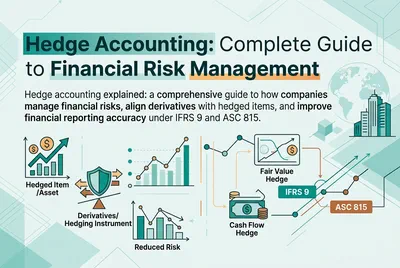
Hedge Accounting: Complete Guide to Financial Risk Management
Hedge accounting explained: a comprehensive guide to how companies manage financial risks, align derivatives with hedged items, and improve financial reporting accuracy under IFRS 9 and ASC 815.

How Convertible Bonds Work: The Guide to Convertible Bonds
This guide explains how convertible bonds work, covering their key features, pricing, risks, conversion mechanisms, and the benefits they offer as hybrid securities that combine fixed-income investing with equity upside potential.
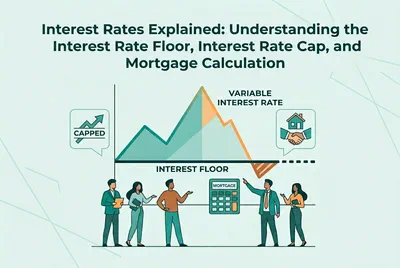
Interest Rate Floor Explained
This Guide provides an overview of interest rate caps and floors in lending, explaining how they set upper and lower limits on variable interest rates in loan contracts and protect lenders and borrowers from extreme market movements.
Ready to simplify your treasury accounting?
See how Finflexia helps you manage financial instruments with ease. Book a demo to learn more.
Book a Demo