Hedge Effectiveness: How to Measure & Improve It
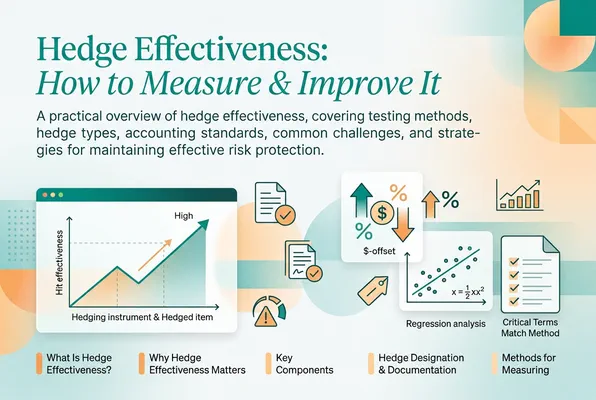

Managing financial risk is only half the battle, knowing whether your hedges actually work is the other half. Hedge effectiveness is the metric that separates a well-designed risk management strategy from one that quietly bleeds money while giving a false sense of security. Whether you’re a corporate treasurer managing currency exposure, a portfolio manager offsetting interest rate risk, or an individual investor using options to protect a position, understanding hedge effectiveness is essential to making informed decisions.
This guide breaks down what hedge effectiveness means, how it’s measured, the accounting standards behind it, and practical steps to improve your hedging outcomes.
What Is Hedge Effectiveness?
Hedge effectiveness refers to the degree to which a hedging instrument, such as a derivative, futures contract, or option, offsets changes in the fair value or cash flows of the underlying exposure it’s designed to protect. In simpler terms, it answers one core question: is your hedge actually doing its job?
A perfectly effective hedge would fully neutralize the risk from price movements, interest rate shifts, or currency fluctuations. In practice, perfect hedges are rare. Most hedging relationships involve some degree of mismatch between the hedging instrument and the hedged item, known as basis risk, which reduces overall effectiveness.
Why Hedge Effectiveness Matters
- Accounting compliance – Under standards like IFRS 9 and ASC 815 (US GAAP), companies must demonstrate that a hedge is effective to qualify for hedge accounting treatment, which allows gains and losses on the hedge and the hedged item to be recognized in the same period.
- Risk management accuracy – An ineffective hedge can leave a company exposed to the very risk it thought it had mitigated.
- Cost efficiency – Hedging isn’t free. Poorly designed hedges waste capital on premiums, margin requirements, or transaction costs without delivering proportional risk reduction.
- Financial reporting clarity – Ineffective hedges can introduce unwanted volatility into earnings, undermining the purpose of hedge accounting.
Key Components of a Hedging Relationship
To evaluate hedge effectiveness properly, you need to understand the building blocks of any hedge relationship:
- Hedged item: The asset, liability, forecasted transaction, or firm commitment exposed to risk (e.g., a foreign currency receivable).
- Hedging instrument: The financial tool used to offset that risk (e.g., a forward contract, swap, or option).
- Hedge ratio: The proportion of the hedged item’s exposure covered by the hedging instrument.
- Risk being hedged: This could be interest rate risk, foreign exchange risk, commodity price risk, or credit risk.
Each of these elements affects how closely the hedge’s performance tracks the exposure it’s meant to protect.
Hedge Designation and Documentation
A strong hedge relationship starts with clear hedge designation and documentation. At hedge inception, the company should identify the hedged item, the hedging instrument, the specific risk being hedged, and the designated hedge period. This documentation should explain whether the hedge is expected to achieve high effectiveness and how the relationship will be monitored. Clear hedge documentation is particularly important when a company intends to apply hedge accounting, because the hedge accounting requirements depend on the type of relationship and the applicable accounting framework.
The documentation of a hedge should also specify the effectiveness criterion used to evaluate the relationship. The information required at hedge inception should make it possible to assess whether the hedge meets the effectiveness criteria throughout its life. A hedge is designated as a hedge relationship only when the relevant requirements are satisfied, and incomplete documentation can make the application of hedge accounting more difficult or, in some circumstances, result in hedge accounting being disallowed.
Methods for Measuring Hedge Effectiveness
There are several established methods for testing whether a hedge is effective, each suited to different types of exposures and hedging instruments.
1. The Dollar-Offset Method
This approach compares the change in value of the hedging instrument to the change in value of the hedged item over the same period. The ratio is calculated as:
Hedge Effectiveness Ratio = Change in Value of Hedging Instrument / Change in Value of Hedged Item
Historically, under the “80-125 rule” used in older accounting frameworks, a ratio between 80% and 125% was considered highly effective. While IFRS 9 moved away from this rigid bright-line test, many practitioners still use it as a quick diagnostic tool.
2. Regression Analysis
Regression analysis measures the statistical relationship between changes in the value of the hedging instrument and the hedged item over time. Key outputs include:
- R-squared: Indicates how much of the variability in the hedged item’s value is explained by the hedging instrument. A higher R-squared (typically above 0.80) suggests a strong effectiveness relationship.
- Slope coefficient: Should be close to -1 (for an inverse hedge relationship) to indicate that the hedge offsets risk proportionally.
Regression is particularly useful for hedges involving cash flow variability, such as interest rate swaps hedging floating-rate debt.
3. Critical Terms Match Method
This qualitative method checks whether the critical terms of the hedging instrument (notional amount, maturity, underlying reference rate, etc.) match those of the hedged item. If the terms align closely, the hedge can often be assumed highly effective without extensive quantitative testing—simplifying compliance under both IFRS 9 and ASC 815.
4. Scenario and Sensitivity Analysis
Beyond formal statistical tests, many risk managers run scenario analyses to stress-test hedge performance under various market conditions, rate shocks, currency devaluations, or commodity price spikes, to see how effectiveness might hold up outside historical data ranges.
Quantitative and Qualitative Effectiveness Assessment
The appropriate effectiveness assessment depends on the characteristics of the hedge and the applicable accounting requirements. A quantitative effectiveness assessment is required in situations where numerical analysis is necessary to demonstrate the relationship between the hedging instrument and the hedged item. This can involve statistical techniques, valuation analysis, or other quantitative measures of effectiveness in offsetting changes in the relevant exposure.
In other cases, qualitative assessments of effectiveness may be appropriate when the critical terms of the hedged item and hedging instrument closely align. The objective is not to assume perfect effectiveness, but to determine whether the hedge is expected to provide a sufficiently strong offset. Even when a hedge is expected to be highly effective, subsequent effectiveness assessments may be necessary if market conditions, hedge ratios, or other relevant terms change.
Prospective vs. Retrospective Testing
Hedge effectiveness testing typically occurs in two phases:
- Prospective testing: Conducted before or at the inception of the hedge to assess whether the relationship is expected to be highly effective going forward.
- Retrospective testing: Conducted periodically throughout the life of the hedge to confirm that it has been effective during the reporting period.
Both are required under most hedge accounting frameworks, ensuring that effectiveness isn’t just assumed at the start but continuously validated.
Prospective and Retrospective Effectiveness Assessments
An effective monitoring framework combines prospective effectiveness with retrospective analysis. A prospective effectiveness assessment considers whether the hedge is expected to offset changes in the hedged item going forward. This expectation of high effectiveness is particularly important when the hedge is first designated and whenever significant changes occur in the underlying exposure.
Retrospective effectiveness assessment, on the other hand, considers how the hedge actually performed during a previous period. These prospective and retrospective effectiveness assessments provide complementary information: prospective testing addresses whether the hedge is expected to work, while retrospective effectiveness evaluates the actual effectiveness of the relationship. Depending on the applicable accounting framework, effectiveness assessments may be required at inception and on a periodic basis thereafter.
Accounting Standards and Hedge Effectiveness
Cash Flow, Fair Value, and Net Investment Hedges
The type of hedge determines how changes in value are evaluated and how hedge accounting is applied. A cash flow hedge is generally used to manage variability in future cash flows, while a fair value hedge is designed to offset changes in the fair value of a recognized asset, liability, or firm commitment attributable to the hedged risk. A net investment hedge, by contrast, is used to manage foreign currency exposure arising from an entity’s net investment in a foreign operation.
For a fair value hedge, the focus is often on offsetting changes in fair value between the hedging instrument and the hedged item. The accounting treatment therefore considers the change in fair value attributable to the hedged risk. For a cash flow hedge, the analysis instead focuses on the variability in future cash flows, including flows attributable to the hedged risk. Understanding this distinction helps companies select an appropriate hedge accounting model and determine whether they qualify for cash flow hedge accounting or another form of hedge accounting.
IFRS 9 Approach
IFRS 9 replaced the strict numerical thresholds of its predecessor (IAS 39) with a more principles-based test. To qualify for hedge accounting, a hedge must meet three criteria:
- There is an economic relationship between the hedged item and the hedging instrument.
- The effect of credit risk does not dominate the value changes resulting from that economic relationship.
- The hedge ratio is consistent with the actual quantities used for risk management purposes.
This shift gives companies more flexibility but also requires robust documentation and judgment to demonstrate effectiveness.
US GAAP (ASC 815) Approach
Under US GAAP, companies can use either quantitative methods (like regression) or qualitative methods (like critical terms match) to assess effectiveness. The “highly effective” threshold generally still aligns with the 80-125% offset range, though the FASB has introduced simplifications in recent years to reduce the compliance burden for straightforward hedges.
Common Causes of Low Hedge Effectiveness
Even well-intentioned hedges can underperform. Common culprits include:
- Basis risk: When the hedging instrument doesn’t perfectly correlate with the hedged item (e.g., hedging jet fuel exposure with crude oil futures).
- Notional mismatch: Hedging more or less exposure than actually exists.
- Timing mismatches: Differences in settlement dates or cash flow timing between the hedge and the underlying exposure.
- Credit risk fluctuations: Changes in counterparty credit risk that distort the value of derivatives independent of the hedged risk.
- Liquidity constraints: Illiquid hedging instruments that don’t move in line with market rates during volatile periods.
Identifying which of these factors is dragging down effectiveness is the first step toward fixing it.
Ongoing Monitoring and Subsequent Assessments
Effectiveness does not end with the initial designation. Effectiveness assessments are required on an ongoing basis to determine whether the hedge continues to meet the relevant criteria. Periodic effectiveness reviews can identify changes in correlation, exposure size, timing, or market conditions that may reduce the hedge’s ability to offset the relevant risk.
For this reason, effectiveness assessments need to be integrated into the overall risk management process rather than treated as a one-time accounting exercise. Companies should monitor whether the hedge is expected to remain highly effective and whether subsequent changes could affect its qualification for hedge accounting. Regular ongoing assessments of effectiveness also help distinguish temporary fluctuations from persistent hedge ineffectiveness and provide a stronger basis for maintaining appropriate hedge documentation.
How to Improve Hedge Effectiveness
1. Match Critical Terms Closely
Whenever possible, align the notional amount, maturity date, and underlying reference index of the hedging instrument with those of the hedged item. The closer the match, the lower the basis risk.
2. Use Dynamic Hedge Ratios
Static hedge ratios can drift out of alignment as market conditions change. Regularly rebalancing the hedge ratio based on updated exposure calculations helps maintain effectiveness over time.
3. Choose the Right Instrument
Not all hedging instruments are created equal. A forward contract might offer a more precise hedge for a known future cash flow than an option, which introduces additional variables like implied volatility and time decay.
4. Monitor and Re-test Regularly
Effectiveness isn’t a “set it and forget it” metric. Ongoing monitoring, monthly or quarterly, depending on volatility, ensures that a hedge that started strong hasn’t drifted into ineffectiveness due to market shifts.
5. Leverage Technology and Analytics Tools
Modern risk management platforms can automate effectiveness testing, flag deteriorating hedges before they fail compliance thresholds, and provide scenario modeling to anticipate future performance. This reduces manual error and frees up treasury teams to focus on strategy rather than spreadsheets.
Hedge Effectiveness in Practice: A Simple Example
Imagine a US-based company expecting to receive €1,000,000 in three months and wants to hedge against euro depreciation. It enters into a forward contract to sell €1,000,000 at a fixed exchange rate.
- If the euro depreciates as feared, the loss on the receivable is offset by the gain on the forward contract.
- If the terms match precisely (same notional, same settlement date), the hedge is likely to be highly effective, close to a 1:1 offset ratio.
- If the company instead used a slightly different notional amount or a forward with a mismatched settlement date, effectiveness could drop below acceptable thresholds, introducing residual currency risk.
This simple example illustrates why precision in hedge design directly drives effectiveness outcomes.
Final Thoughts
Hedge effectiveness isn’t just an accounting checkbox, it’s the practical measure of whether your risk management strategy is actually protecting your financial position. By understanding the methods used to test effectiveness, the accounting frameworks that govern it, and the common pitfalls that erode performance, businesses and investors can build hedging strategies that hold up under real market pressure.
Whether you’re managing currency exposure, interest rate risk, or commodity price volatility, the goal remains the same: design hedges with matched terms, monitor them consistently, and adjust as market conditions evolve. A hedge that isn’t tested for effectiveness is really just a bet—and effective risk management should never rely on luck.

Written by
Dominik KonoldFounder
Dominik is the founder of Finflexia and an expert in treasury accounting, financial instrument valuation and IFRS compliance. Since 2016, he's been a certified Professional Risk Manager (PRMIA) and also lectures for the Association of Public Banks and the Academy of International Accounting. He built Finflexia to help treasury teams automate complex accounting workflows.
Related Posts

Hypothetical Derivative Method Explained
To better understand the practical application of hedge accounting, the following sections examine key concepts related to hedge effectiveness, hypothetical derivatives, and cash flow hedges.
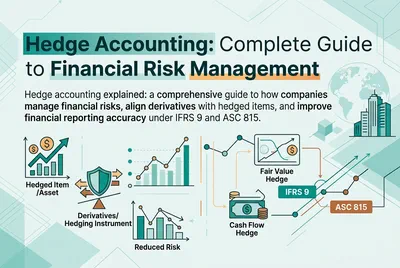
Hedge Accounting: Complete Guide to Financial Risk Management
Hedge accounting explained: a comprehensive guide to how companies manage financial risks, align derivatives with hedged items, and improve financial reporting accuracy under IFRS 9 and ASC 815.
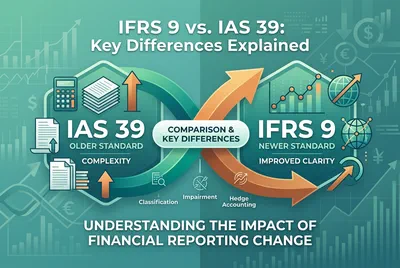
IFRS 9 vs. IAS 39: Key Differences Explained
This article explores the key differences between IAS 39 and IFRS 9, focusing on classification, impairment, hedge accounting, and the practical impact of the transition on financial reporting.
Ready to simplify your treasury accounting?
See how Finflexia helps you manage financial instruments with ease. Book a demo to learn more.
Book a Demo