Embedded Finance Solutions: Complete Business Guide 2026
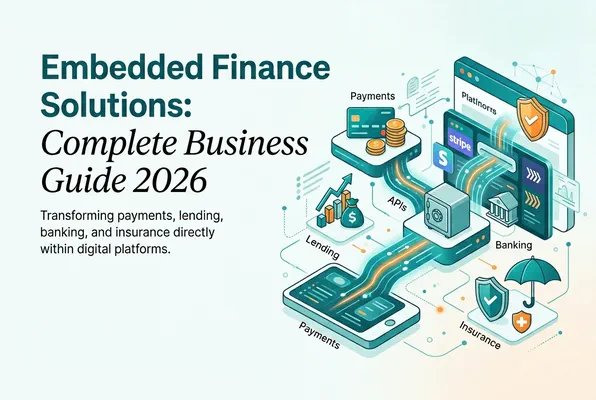

Embedded finance is rapidly reshaping how companies deliver value to their customers. From ride-sharing apps that offer driver insurance to e-commerce platforms with instant checkout financing, the integration of financial services into everyday digital experiences is accelerating at a remarkable pace. By 2026, the global embedded finance market is projected to surpass $7 trillion in transaction value and businesses that act now stand to capture a significant competitive advantage.
This guide covers everything you need to know about embedded finance solutions: what they are, how they work, the different types available, and how platforms like Finflexia are making it easier than ever to get started.
What Are Embedded Finance Solutions?
Embedded finance solutions refer to the seamless integration of financial products and services, like payments, lending, insurance, banking, and investments, directly into non-financial applications, platforms, and workflows. Rather than redirecting users to a bank or third-party financial provider, the financial service lives natively within the product experience itself.
Think of it this way: when you book a trip on a travel platform and are offered travel insurance at checkout, or when an e-commerce store provides instant financing for a large purchase, that is embedded finance in action. The customer never leaves the platform, and the transaction feels like a natural part of the journey.
The Role of APIs in Embedded Finance
The technical backbone of embedded finance solutions is the API (Application Programming Interface). Financial infrastructure providers expose their capabilities—payment rails, lending engines, card issuance, account creation—through well-documented APIs. Businesses can then plug these capabilities directly into their software stack without needing to build financial infrastructure from scratch or obtain banking licenses themselves.
This API-first model dramatically lowers the barrier to entry, allowing startups, mid-market companies, and enterprises alike to become financial service providers within months rather than years.
The Embedded Finance Ecosystem and Emerging Infrastructure
The modern embedded finance ecosystem is powered by a growing network of fintech companies, banking providers, and API-driven platforms that enable businesses to integrate financial products and services directly into their digital environments. Companies like Stripe and Marqeta have become leading examples of embedded finance providers by offering scalable embedded finance infrastructure for payments, issuing, and banking solutions. These fintech solutions allow fintechs and other non-bank businesses to offer embedded finance products without building complex banking systems from scratch. Through partnerships with fintech companies and licensed banking partners, businesses can provide services like banking, digital wallets, and virtual and physical cards without leaving the platform. This platform that enables seamless integration helps companies streamline both frontend customer experience and backend operational workflows while giving users to access financial tools more efficiently than through traditional finance models.
Why Embedded Finance Solutions Are Gaining Momentum
Several converging trends are driving the rapid adoption of embedded finance solutions across industries.
Shifting Customer Expectations
Modern customers expect frictionless, contextual experiences. They want to pay, borrow, or protect their purchases in the moment—not after navigating to a separate website or filling out lengthy applications. Embedded finance solutions meet customers where they already are, reducing drop-off rates and increasing conversion.
The Rise of Platform Business Models
As more businesses adopt platform models that aggregate buyers, sellers, and service providers, the opportunity to monetize financial flows within those ecosystems becomes enormous. Marketplaces, SaaS platforms, and super-apps are natural homes for embedded financial products because they already own the customer relationship and transaction data.
Open Banking and Regulatory Evolution
Regulatory frameworks like PSD2 in Europe and Open Banking initiatives globally have mandated data sharing between banks and third parties, creating fertile ground for innovative embedded finance products. These regulations have effectively opened up financial infrastructure that was previously locked behind proprietary systems.
Profitability Pressure and New Revenue Streams
In a tighter economic environment, businesses are looking for ways to diversify revenue beyond their core product. Embedded finance solutions offer a compelling path: take a percentage of transaction volume, earn interest on embedded lending products, or generate fee income from financial services—all without a fundamental change to the core business model.
Core Types of Embedded Finance Solutions
Understanding the different categories of embedded finance helps businesses identify which products align with their strategy and customer base.
There are many different types of embedded financial solutions available today, ranging from embedded payments and embedded lending to insurance, investment tools, and full-service banking services. Embedded lending is a type of financial service that allows businesses to provide financing options exactly when customers need them, while other types of embedded finance products focus on instant payments, branded debit cards, or rewards programs. The benefits of embedded finance include stronger customer retention, higher transaction volumes, and improved monetization opportunities for finance companies operating digital platforms. By integrating innovative financial services directly into existing user journeys, businesses create smoother customer experience flows and reduce friction traditionally associated with traditional financial institutions. These embedded financial solutions also expand access to financial products for underserved users who may not engage with banks directly.
Embedded Payments
Embedded payments are the most mature and widely deployed form of embedded finance. Rather than redirecting users to a payment gateway, businesses integrate payment acceptance directly into their platform. This includes:
- In-app payments that allow users to transact without leaving an application
- Marketplace payment splitting, where funds are distributed automatically between sellers and the platform
- One-click checkout experiences that store payment credentials securely
- Cross-border payment capabilities for globally distributed platforms
Embedded payment solutions reduce cart abandonment, speed up reconciliation, and create a cleaner data trail for businesses to analyze customer behavior.
Embedded Lending and Buy Now, Pay Later (BNPL)
Embedded lending solutions allow businesses to offer credit at the point of need—typically at the checkout stage or within a B2B procurement workflow. Consumer BNPL products have surged in popularity, but the B2B embedded lending space is arguably even more significant in terms of volume.
Key use cases include:
- Consumer installment plans at checkout, spreading payments over weeks or months
- Invoice financing for B2B platforms, where buyers can pay on extended terms
- Revenue-based financing for SaaS platforms, where businesses can access capital based on their recurring revenue data
- Working capital loans embedded within accounting or ERP software
By integrating lending directly into the purchase workflow, conversion rates improve significantly—studies consistently show that offering flexible payment options at the point of sale increases average order values by 20–30%.
Embedded Insurance
Embedded insurance is one of the fastest-growing segments within embedded finance. It involves offering relevant insurance products contextually, at the moment a customer is most likely to need them.
Examples include:
- Travel insurance offered during flight booking
- Device protection at the point of electronics purchase
- Cargo insurance embedded within logistics management platforms
- Health or life insurance integrated into HR and benefits platforms
The value proposition is strong: customers get protection when they think about risk, and businesses earn distribution revenue while improving the overall service they provide.
Embedded Banking and Branded Financial Accounts
Perhaps the most transformative type of embedded finance solution is embedded banking—the ability for non-bank businesses to offer their customers branded bank accounts, debit cards, and savings products.
This is sometimes referred to as “Banking-as-a-Service” (BaaS) when viewed from the infrastructure provider’s perspective. From the business perspective, it means:
- Branded debit or prepaid cards that carry the company’s logo and live within its app
- Stored value accounts where customers can hold balances and earn rewards
- Payroll and disbursement accounts for gig economy platforms to pay workers instantly
- Business accounts embedded within accounting, invoicing, or ERP tools
When a business offers its customers a place to store and move money, it dramatically increases engagement and lock-in. Customers who bank with a platform tend to transact more frequently and are significantly less likely to churn.
Embedded Investments and Wealth Management
While still emerging, embedded investment solutions allow platforms to offer users the ability to invest directly within their existing apps. Salary platforms might offer pension contributions, retail apps might offer round-up micro-investing, and corporate treasury tools might offer yield-bearing cash management.
The Embedded Finance Technology Stack
To deploy embedded finance solutions successfully, businesses need to understand the key components of the underlying technology stack.
Infrastructure Providers and BaaS Platforms
At the foundation are licensed financial infrastructure providers—banks, payment networks, and specialist BaaS providers—that hold the regulatory licenses and maintain the core financial systems. They expose these capabilities to embedding businesses through APIs. Platforms like Finflexia act as orchestration layers, simplifying access to these capabilities.
KYC and Identity Verification
Know Your Customer (KYC) and Anti-Money Laundering (AML) compliance are non-negotiable requirements for any financial service. Modern embedded finance solutions include automated identity verification workflows that can verify users in seconds using document scanning, biometric checks, and database lookups—all surfaced through simple API calls.
Ledgering and Core Banking Systems
Behind every account balance and transaction history is a ledger. Modern cloud-native ledgering systems provide real-time balance updates, transaction histories, and reconciliation capabilities that integrate cleanly with the embedding platform’s own data infrastructure.
Risk and Decisioning Engines
For embedded lending products in particular, risk decisioning engines are critical. These systems assess creditworthiness in real time, drawing on both traditional credit bureau data and alternative data signals—such as transaction history on the platform itself—to make instant lending decisions.
Compliance and Regulatory Orchestration
Different financial products in different jurisdictions require different regulatory treatment. Good embedded finance solutions include compliance orchestration layers that handle licensing requirements, data residency rules, consumer protection regulations, and reporting obligations automatically.
Key Business Benefits of Implementing Embedded Finance Solutions
New Revenue Streams
Financial services typically carry attractive economics. Payment processing generates interchange and service fees. Lending products generate interest income. Insurance generates distribution commissions. By embedding these products, businesses can add high-margin revenue streams that scale with their existing user base.
Increased Customer Lifetime Value
Customers who use financial services within a platform tend to engage more frequently and spend more over time. The more financial touchpoints a business controls, the stronger the relationship—and the harder it becomes for customers to leave.
Improved Conversion Rates
Removing friction from financial transactions directly improves conversion. Whether it is enabling one-click payments, offering instant financing, or auto-filling insurance forms with data already held on file, embedded finance solutions systematically eliminate the drop-off points that cost businesses revenue.
Richer Data and Insights
Every financial transaction is a data point. Businesses that handle financial flows within their own platform gain access to detailed transaction data that can inform product development, risk management, personalization, and marketing.
Competitive Differentiation
As embedded finance becomes mainstream, offering financial services within your platform becomes a table-stakes expectation in many industries. Companies that move early establish defensible advantages through customer habit formation and network effects.
Challenges and Considerations
Regulatory Compliance
Financial services are among the most heavily regulated activities in any jurisdiction. Businesses must carefully assess what licenses are required, how liability is shared with infrastructure partners, and how to maintain compliance as regulations evolve. Working with established embedded finance platforms that maintain regulatory expertise is essential.
Technology Integration Complexity
Even with well-designed APIs, integrating financial services into an existing platform requires careful engineering work. Data models, security architectures, and user experience flows all need to be adapted to accommodate financial functionality.
Trust and Brand Risk
Financial products create a higher level of customer trust and scrutiny. If an embedded financial service fails—a payment doesn’t process, a loan application is declined incorrectly, or a fraud incident occurs—the reputational damage falls on the embedding business, not just the infrastructure provider. Rigorous vendor selection and robust service level agreements are essential.
Unit Economics
Not all embedded finance products are profitable from day one. Businesses need to model the economics carefully, accounting for revenue share arrangements with infrastructure partners, compliance costs, fraud losses, and customer acquisition attribution.
How to Evaluate Embedded Finance Solution Providers
When selecting a partner or platform for embedded finance, businesses should assess the following dimensions.
Regulatory Coverage and Licensing
Does the provider hold—or partner with licensed entities holding—the necessary licenses for the markets and products you need? What is the scope of their passporting or cross-border capabilities?
Product Breadth and Modularity
Can you start with one product (e.g., payments) and expand to others (lending, insurance, accounts) over time? Modular platforms that grow with your needs are preferable to narrow, single-product solutions.
API Quality and Developer Experience
Evaluate the quality of documentation, the sandbox environment, the speed of integration, and the responsiveness of developer support. Poor API design will inflate your engineering costs significantly.
Security and Compliance Infrastructure
Review the provider’s security certifications (PCI-DSS, SOC 2, ISO 27001), their KYC/AML capabilities, and their track record on compliance.
Commercial Model
Understand the fee structure clearly. Revenue share arrangements, per-transaction fees, platform fees, and minimum volumes all affect the unit economics of your embedded finance strategy.
Partnership and Support Model
Embedded finance is a long-term strategic initiative. Choose a partner that offers dedicated support, proactive compliance guidance, and a roadmap that aligns with your product vision.
Getting Started with Embedded Finance on Finflexia
Finflexia is designed to give businesses fast, flexible access to embedded finance solutions without the complexity traditionally associated with financial infrastructure. The platform provides:
- Modular API access to payments, accounts, cards, and lending
- Built-in compliance orchestration covering KYC, AML, and regulatory reporting
- A developer-friendly sandbox environment for rapid prototyping and testing
- Transparent, scalable commercial models that grow with your business
Whether you are a marketplace looking to embed split payments, a SaaS platform exploring revenue-based financing for your customers, or an enterprise seeking to issue branded payment cards, Finflexia provides the infrastructure and expertise to bring your embedded finance vision to life.
Industry Use Cases: Embedded Finance Solutions in Practice
E-Commerce and Retail
Online retailers embed BNPL options at checkout to increase conversion and average order value. Marketplaces offer instant payouts to sellers, eliminating the cash flow friction that traditionally drives seller churn. Loyalty programs evolve into stored value accounts with card-linked rewards.
SaaS and B2B Platforms
Accounting software embeds business banking accounts, allowing customers to manage invoices, payroll, and cash flow in one place. Project management tools offer built-in expense cards for teams. ERP systems provide supplier financing directly within the procurement workflow.
Gig Economy and Workforce Platforms
Rideshare and delivery platforms issue instant-pay debit cards to workers, allowing same-day access to earnings. Freelancer platforms offer income-based lending. HR platforms integrate payroll savings accounts and benefits disbursement.
Healthcare
Patient billing platforms embed financing options to improve payment rates. Health and wellness apps offer embedded insurance products. Telehealth platforms integrate HSA/FSA payment acceptance directly into the care delivery workflow.
Logistics and Supply Chain
Freight platforms offer cargo insurance at the point of booking. Trade finance solutions embedded within supply chain platforms give suppliers early payment access. Fleet management software integrates fuel card programs and vehicle insurance.
How Embedded Finance Works Across Modern Digital Platforms
At its core, embedded finance works by connecting businesses to licensed financial infrastructure through APIs and cloud-based backend systems. This layered architecture—often described as the layers of embedded finance—includes regulated banking partners, middleware orchestration platforms, compliance services, and customer-facing applications. A financial services company can therefore integrate financial services directly into marketplaces, SaaS products, healthcare portals, or gig economy apps without becoming a bank itself. Examples of embedded finance include ride-sharing apps offering driver payout accounts, e-commerce platforms providing Buy Now Pay Later financing, and SaaS platforms embedding banking solutions for invoicing and expense management. As more businesses seek to offer embedded finance products, the demand for scalable embedded finance infrastructure and flexible API ecosystems continues to accelerate globally.
The Future of Embedded Finance Solutions
The evolution of embedded finance will be shaped by several emerging trends.
AI-Powered Financial Personalization
Artificial intelligence will enable embedded finance solutions to offer hyper-personalized products—lending terms calibrated to individual risk profiles, insurance premiums priced in real time based on behavioral data, investment recommendations tailored to spending patterns. As platforms accumulate richer financial data, AI models will improve continuously.
Decentralized Finance (DeFi) Integration
Blockchain-based financial infrastructure is beginning to intersect with embedded finance, particularly for cross-border payments, programmable money flows, and tokenized assets. While still early, forward-looking embedded finance platforms are building bridges between traditional financial rails and decentralized alternatives.
Super-App Evolution
Western markets are beginning to see the emergence of super-apps—platforms that aggregate multiple services including financial ones—similar to WeChat Pay and Alipay in Asia. Embedded finance solutions are the critical infrastructure enabling this evolution, as they allow any app to add financial capabilities incrementally.
Embedded Finance for the Underbanked
One of the most socially significant applications of embedded finance is expanding financial access to populations that are underserved by traditional banking. By leveraging alternative data and removing the need for customers to navigate traditional banking channels, embedded finance platforms can provide credit, savings, and payment tools to billions of people globally.
Conclusion
Embedded finance solutions represent one of the most significant structural shifts in financial services and technology since the emergence of online banking. For businesses, they offer a compelling combination of new revenue streams, deeper customer relationships, and competitive differentiation. For consumers, they deliver more convenient, contextual, and accessible financial experiences.
The businesses that will lead their industries over the next decade are those that recognize embedded finance not as a fintech trend, but as a fundamental evolution in how value is delivered to customers. The infrastructure is mature, the regulatory frameworks are developing, and the market demand is clear.
If you are ready to explore how embedded finance solutions can transform your platform, Finflexia provides the tools, expertise, and infrastructure to help you build with confidence. ```

Written by
Dominik KonoldFounder
Dominik is the founder of Finflexia and an expert in treasury accounting, financial instrument valuation and IFRS compliance. Since 2016, he's been a certified Professional Risk Manager (PRMIA) and also lectures for the Association of Public Banks and the Academy of International Accounting. He built Finflexia to help treasury teams automate complex accounting workflows.
Related Posts
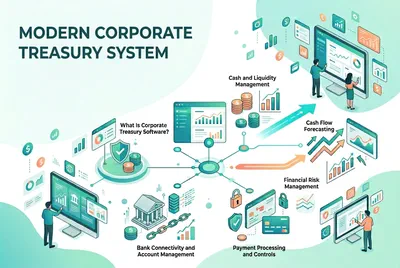
Modern Treasury Management Software for Smarter Financial Operations
Learn how treasury management software improves treasury operations by centralizing financial data, enhancing visibility, automating processes, and optimizing cash and liquidity management within a modern treasury management system.
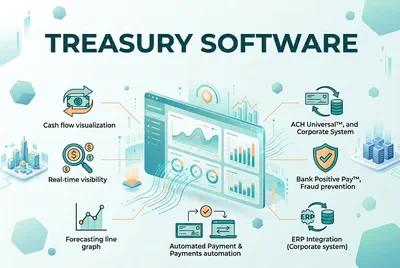
Treasury Software: Best Treasury Management Systems 2026
Treasury software explained: features, benefits, and TMS tools for cash management, forecasting, payments, risk control, and ERP integration.
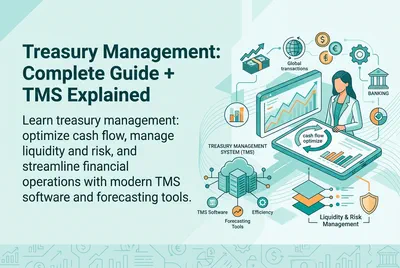
Treasury Management: Complete Guide + TMS Explained
Learn treasury management: optimize cash flow, manage liquidity and risk, and streamline financial operations with modern TMS software and forecasting tools.
Ready to simplify your treasury accounting?
See how Finflexia helps you manage financial instruments with ease. Book a demo to learn more.
Book a Demo