Effective Interest Rate: The Complete Guide
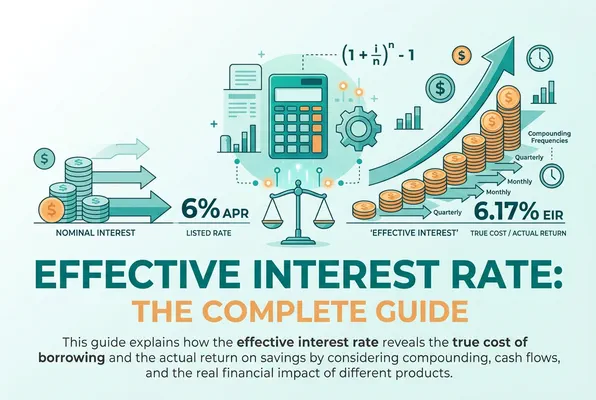

The price tag on a loan or savings account is rarely what it first appears to be. Banks and lenders advertise headline rates to attract customers, but those numbers often hide the full story. To understand what you are genuinely paying on a debt, or genuinely earning on your savings, you need to look at the effective interest rate. This single figure cuts through marketing language and gives you an honest picture of your financial commitments.
Whether you are taking out a mortgage, comparing personal loans, or shopping for a high-yield savings account, understanding the effective interest rate is one of the most powerful tools in your financial toolkit.
What Is the Effective Interest Rate?
The effective interest rate (EIR), sometimes called the effective annual interest rate or the annual equivalent rate (AER), is the real rate of interest you pay or earn once the effect of compounding is factored in. It differs from the nominal interest rate, which is simply the stated rate before compounding is applied.
In practical terms, if a bank advertises a loan at 12% per year but compounds interest monthly, you are not paying 12%, you are paying slightly more, because each month’s interest is added to the principal and then charged interest again. The effective interest rate captures this extra cost precisely.
The Difference Between Nominal and Effective Interest
The nominal interest rate is the baseline figure quoted before any compounding takes place. It is useful as a starting point, but it does not reflect reality on its own.
The effective interest rate is what happens to that nominal rate once you account for:
- Compounding frequency (daily, monthly, quarterly, annually)
- Fees and charges embedded in the loan or product in some regulatory definitions
- The time value of money over a full year
Think of the nominal rate as the speed limit on a road sign and the effective rate as your actual average travel speed after accounting for traffic, stops, and road conditions. Both matter, but one reflects what really happens.
How to Calculate the Effective Interest Rate
The formula for calculating the effective interest rate from a nominal rate is straightforward:
EIR = (1 + i/n)^n - 1
Where: - i = nominal annual interest rate (as a decimal) - n = number of compounding periods per year
A Step-by-Step Example
Suppose you take out a loan with a nominal annual interest rate of 10%, compounded monthly (so n = 12).
- Divide the nominal rate by the number of compounding periods: 10% ÷ 12 = 0.8333%
- Add 1: 1 + 0.008333 = 1.008333
- Raise to the power of 12: 1.008333^12 ≈ 1.10471
- Subtract 1: 1.10471 - 1 = 0.10471
The effective interest rate is approximately 10.47%.
That extra 0.47 percentage points might look small, but over a long-term loan or a large principal, it translates into a meaningful sum of money.
Compounding Frequencies and Their Impact
| Compounding Frequency | Nominal Rate | Effective Interest Rate |
|---|---|---|
| Annually | 10% | 10.000% |
| Semi-annually | 10% | 10.250% |
| Quarterly | 10% | 10.381% |
| Monthly | 10% | 10.471% |
| Daily | 10% | 10.516% |
As the table shows, the more frequently interest compounds, the higher the effective interest rate climbs above the nominal figure. For borrowers, this means higher costs. For savers, it means higher returns.
Why the Effective Interest Rate Matters More Than the Nominal Rate
For Borrowers
When you borrow money, the effective interest rate reveals the true annual cost of your debt. Many consumer protection laws, including regulations across the European Union and disclosure requirements in the United States, require lenders to publish an equivalent figure (often called the Annual Percentage Rate or APR) precisely because the nominal rate alone is misleading.
Lenders may also structure products with:
- Monthly fees that function like interest
- Arrangement or origination fees added upfront
- Penalty clauses that change the cost over time
In some definitions and regulatory frameworks, all of these can be folded into a comprehensive effective interest rate calculation, making it indispensable for fair comparison.
For Savers and Investors
On the savings side, the effective interest rate is your friend. The higher it is, the more your money grows. This is why banks marketing savings accounts often emphasise the Annual Percentage Yield (APY) in the United States or the AER in the United Kingdom, these are forms of the effective interest rate, and they make the savings product look more attractive than the plain nominal rate would.
When comparing savings accounts, always use the effective interest rate or APY/AER rather than the nominal rate. Two accounts advertising 5% might behave very differently depending on whether interest is compounded daily or annually.
Effective Interest Rate vs. APR: Are They the Same?
There is frequent confusion between the effective interest rate and the Annual Percentage Rate (APR). While they are related, they are not always identical.
- The effective interest rate typically refers specifically to the mathematical result of compounding a nominal rate, without necessarily including fees.
- The APR, as defined in many consumer lending regulations, is a broader measure that may include origination fees, broker fees, and certain other charges spread across the loan term.
In practice, the APR is often a more comprehensive figure for comparing loan costs, while the effective interest rate in its pure mathematical form focuses purely on compounding. Some jurisdictions use the terms interchangeably, so it is always worth checking the local regulatory definition.
Effective Interest Method and the True Cost of Financial Products
The effective interest method helps borrowers and investors understand the real financial impact of a product by focusing on the relationship between the stated interest rate and the actual interest rate. Instead of looking only at the advertised rate, this approach considers all relevant cash flows over time, including payments made, interest paid, and interest received. This makes it easier to evaluate a loan, savings account, or other financial instrument because the calculation reflects the true economic effect rather than only the contractual terms. When a loan is repaid over time, the remaining balance can be gradually reduced through amortization, which changes the amount of interest calculated during each period.
Real-World Applications of the Effective Interest Rate
Mortgages and Home Loans
On a 30-year mortgage, even a small difference between nominal and effective interest rates compounds into tens of thousands of dollars or euros over the life of the loan. Mortgage lenders in many countries are legally required to disclose an effective annual rate or equivalent, allowing borrowers to compare products accurately.
If you are using a tool like finflexia.app to model your loan repayments, looking at the effective interest rate rather than the headline rate gives you a realistic projection of your total repayment cost.
Credit Cards
Credit cards are one of the most striking examples of the gap between nominal and effective interest rates. A card might advertise 18% per year, but because interest is typically compounded daily or monthly, the effective interest rate can reach 19.5% or higher. If you carry a balance month to month, this distinction is financially significant.
Personal Loans and Consumer Credit
When comparing personal loan offers from multiple lenders, the effective interest rate provides an apples-to-apples comparison. Lender A might offer 7% compounded monthly, while Lender B offers 7.2% compounded annually. Calculating the effective rate for both reveals which truly costs less.
Savings Accounts and Certificates of Deposit
For savings products, the effective interest rate shows how your money actually grows. A savings account paying 4% nominal with monthly compounding has an effective interest rate of about 4.07%. Over years of saving, that compounding effect, often called the “eighth wonder of the world”, drives meaningful wealth accumulation.
Common Mistakes People Make with Interest Rates
Comparing Nominal Rates Directly
The most frequent error is accepting the nominal rate at face value when comparing financial products. Always ask about compounding frequency and convert to an effective annual rate before drawing conclusions.
Ignoring Fees in the Effective Rate Calculation
In some loan products, fees can be substantial enough to dramatically raise the effective cost of borrowing. A loan with a 6% nominal rate and a 2% origination fee will cost considerably more than its headline rate suggests, especially on shorter-term loans.
Assuming All “Annual” Rates Are Comparable
Not every product that quotes an annual rate uses the same methodology. Some quote simple interest (no compounding), others use compound interest. Asking explicitly whether the quoted rate is nominal or effective saves confusion and potential financial harm.
Overlooking the Impact Over Time
The longer the loan or savings period, the more pronounced the gap between nominal and effective rates becomes. On a 25-year mortgage, the difference between a 6% nominal rate and its 6.17% effective equivalent adds up significantly in absolute terms.
How Technology Helps You Work with Effective Interest Rates
Modern financial apps make it easy to cut through the complexity. Tools like finflexia.app allow you to:
- Input a nominal rate and compounding frequency to instantly calculate the effective interest rate
- Compare multiple loan or savings scenarios side by side using effective rates
- Model the long-term impact of different compounding frequencies on savings goals
- Understand the true cost of debt before committing to a financial product
Having these calculations at your fingertips removes the guesswork and empowers you to negotiate or select products from a position of knowledge.
Tips for Using the Effective Interest Rate in Financial Decisions
Always Ask for the Effective Annual Rate
Before signing any loan agreement or opening a savings account, ask the provider to state the effective annual interest rate explicitly. In many jurisdictions, they are legally required to provide this figure.
Use Online Calculators
Simple online calculators and financial apps can convert nominal rates to effective rates instantly. There is no need to do the mathematics by hand every time.
Factor In All Costs
For the most accurate comparison, consider the full cost of a financial product, including fees, charges, and the effective interest rate, rather than any single figure in isolation.
Review Regularly
Interest rates change. If you have a variable-rate loan or savings account, periodically recalculate the effective interest rate to understand how changes in the base rate affect your actual costs or returns.
The Effective Interest Rate and Personal Financial Health
Understanding the effective interest rate is not just an academic exercise, it is a pillar of sound personal financial management. Borrowers who understand it avoid overpaying on loans. Savers who understand it choose better accounts and watch their wealth grow faster. Investors who understand it evaluate bonds, certificates of deposit, and other fixed-income products with confidence.
Financial literacy starts with understanding the real numbers, not the advertised ones. The effective interest rate is one of those real numbers, and once you start seeing it, you will never evaluate a financial product the same way again.
Summary
The effective interest rate is the most honest measure of what interest truly costs or earns over a year. Unlike the nominal rate, it accounts for compounding frequency and reveals the actual financial impact of a lending or savings product. Whether you are managing debt, building savings, or comparing investment options, the effective interest rate should be your primary reference point.
By learning to calculate it, demand it from financial providers, and apply it consistently in your decision-making, you move from being a passive consumer of financial products to an informed participant in your own financial future.

Written by
Dominik KonoldFounder
Dominik is the founder of Finflexia and an expert in treasury accounting, financial instrument valuation and IFRS compliance. Since 2016, he's been a certified Professional Risk Manager (PRMIA) and also lectures for the Association of Public Banks and the Academy of International Accounting. He built Finflexia to help treasury teams automate complex accounting workflows.
Related Posts
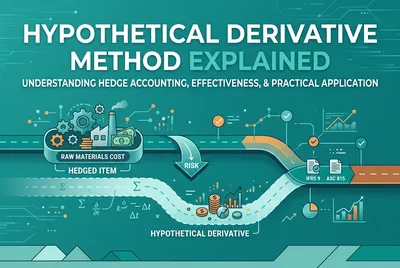
Hypothetical Derivative Method Explained
To better understand the practical application of hedge accounting, the following sections examine key concepts related to hedge effectiveness, hypothetical derivatives, and cash flow hedges.
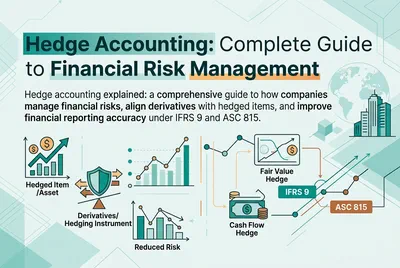
Hedge Accounting: Complete Guide to Financial Risk Management
Hedge accounting explained: a comprehensive guide to how companies manage financial risks, align derivatives with hedged items, and improve financial reporting accuracy under IFRS 9 and ASC 815.
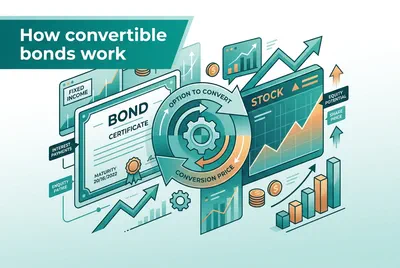
How Convertible Bonds Work: The Guide to Convertible Bonds
This guide explains how convertible bonds work, covering their key features, pricing, risks, conversion mechanisms, and the benefits they offer as hybrid securities that combine fixed-income investing with equity upside potential.
Ready to simplify your treasury accounting?
See how Finflexia helps you manage financial instruments with ease. Book a demo to learn more.
Book a Demo