IFRS 9 Financial Instruments: Derivatives, Embedded Derivatives and Financial Instrument Accounting

Derivatives sit at the heart of modern risk management, yet few areas of financial reporting generate as many questions as the treatment of a derivative under IFRS 9. Whether you are a CFO hedging foreign currency exposure, an accountant preparing financial statements, or a student working through the accounting standard for the first time, understanding how IFRS 9 defines, classifies, measures and hedges derivatives is essential for accurate reporting.
This guide explains the derivative IFRS 9 framework in plain language: what counts as a derivative, how embedded derivatives are handled, how derivatives are measured, and how hedge accounting allows an entity to align the accounting with its risk management activities.
What Is a Derivative Under IFRS 9?
IFRS 9 Financial Instruments, issued by the International Accounting Standards Board (IASB), replaced IAS 39 and became mandatory for annual periods beginning on or after 1 January 2018. It sets out the requirements for the classification and measurement of financial assets and financial liabilities, impairment, and hedge accounting.
The definition of a derivative under IFRS 9 is found in Appendix A of the standard. A derivative is a financial instrument or other contract within the scope of IFRS 9 with all three of the following characteristics:
- Its value changes in response to an underlying variable. This could be a specified interest rate, financial instrument price, commodity price, foreign exchange rate, index of prices or rates, credit rating or credit index, or another variable. For non-financial variables, the variable must not be specific to a party to the contract.
- It requires no initial net investment, or one that is smaller than would be required for other types of contracts expected to respond similarly to changes in market factors.
- It is settled at a future date.
Typical examples include forward contracts, futures, interest rate swaps, currency swaps, and options. Each of these is a financial instrument that creates a financial asset for one party and a financial liability for the other.
Why the Definition of a Derivative Matters
The definition of a derivative determines whether a contract is measured at fair value with changes recognised in profit or loss, or at amortised cost. A contract that meets all three criteria is generally accounted for as a derivative; a contract that falls short may be treated as a regular executory contract or another type of financial instrument. This is why the question “should the contract be accounted for in accordance with IFRS 9?” is one of the first an accountant must answer.
Scope of IFRS 9 for Derivatives
The scope of IFRS 9 is broad. It applies to most financial instruments, including derivatives, but excludes certain items covered by other standards, such as interests in subsidiaries (IFRS 10), leases (IFRS 16, with some exceptions), insurance contracts (IFRS 17, previously IFRS 4) and employee benefit obligations (IAS 19).
Two scope points are particularly relevant for derivatives:
- Contracts to buy or sell non-financial items. Contracts that can be settled net in cash or another financial instrument, or by exchanging financial instruments, are within the scope of IFRS 9 as if they were financial instruments. The exception is the “own use” exemption: contracts entered into and held for the purpose of receiving or delivering a non-financial item in line with the entity’s expected purchase, sale or usage requirements generally stay outside IFRS 9.
- Financial guarantee contracts. A financial guarantee contract is within the scope of IFRS 9 (unless the issuer has previously asserted that it regards such contracts as insurance contracts and applies insurance accounting).
Classification and Measurement of a Derivative Under IFRS 9
The classification and measurement requirements in IFRS 9 for financial assets are driven by two tests: the entity’s business model for managing the assets, and the contractual cash flow characteristics of the instrument. For derivatives, the outcome is typically straightforward.
Derivatives Are Measured at Fair Value Through Profit or Loss
A standalone derivative does not pass the “solely payments of principal and interest” (SPPI) test. SPPI requires that contractual cash flows are solely payments of principal and interest on the principal amount outstanding. A derivative’s cash flows depend on movements in an underlying variable and not just on basic lending features, so it fails this test.
As a result, a derivative financial asset or derivative financial liability is measured at fair value through profit or loss (FVTPL), unless it is designated and effective as a hedging instrument under hedge accounting. Changes in fair value are recognised immediately in profit or loss, which can create volatility in the financial statements.
This FVTPL measurement applies regardless of the business model. Even if an entity intends to collect contractual cash flows or to sell financial assets, a derivative will still be measured at fair value because the contractual cash flow characteristics test is failed.
Derivative Financial Assets and Derivative Financial Liabilities
A derivative is presented as a financial asset when it has a positive fair value and as a financial liability when its fair value is negative. The same contract can switch between asset and liability over its life as market conditions change. Derivative financial assets and financial liabilities should be presented separately in the statement of financial position, and offsetting is only permitted where the criteria in IAS 32 are met.
Initial Recognition and Subsequent Measurement
A derivative is recognised when the entity becomes party to the contractual provisions of the instrument. It is initially measured at fair value, with transaction costs expensed immediately in profit or loss. Subsequent measurement continues at fair value, using quoted prices where available or valuation techniques otherwise. The IFRS 13 fair value hierarchy applies, and disclosures under IFRS 7 explain the inputs and risks.
Derecognition of Financial Assets and Liabilities
Derivatives are derecognised when the contractual rights expire, or when the instrument is settled or transferred. The derecognition of financial assets and liabilities follows the general IFRS 9 rules, so a derivative that matures or is closed out is removed from the balance sheet, with the final gain or loss recognised in profit or loss.
Key Considerations When Applying IFRS 9 in Practice
Although IFRS 9 establishes a consistent framework for accounting for financial instruments, its practical application can involve significant judgement. One important consideration is the distinction between assets that are not held for trading and financial assets managed under other business models. The measurement requirements for financial assets depend on both the contractual cash flow characteristics and the way management oversees the relevant portfolio. Entities should therefore maintain sufficient documentation to demonstrate how these assessments were performed and why a particular classification was selected.
Another important area concerns the ongoing assessment of contractual terms. Changes to agreements, amendments to payment structures or modifications to underlying economic conditions may affect the accounting treatment of an instrument. Finance teams should establish procedures to identify such changes promptly and assess whether they trigger reassessment, modification accounting or derecognition under IFRS 9.
Embedded Derivatives Under IFRS 9
Not all derivatives exist as standalone contracts. Many are embedded within other contracts, creating what IFRS 9 calls a hybrid contract. An embedded derivative is a component of a hybrid contract that also includes a non-derivative host, with the effect that some of the cash flows of the combined instrument vary in a way similar to a standalone derivative.
Common examples include:
- A convertible bond (host debt plus an equity conversion option)
- A lease or supply contract with payments linked to a foreign currency or commodity index
- A loan with an interest rate floor or cap
- A contract with inflation-linked payments
The Two Approaches to Embedded Derivatives
IFRS 9 takes a different approach depending on the host contract.
1. Hybrid contract with a financial asset host. IFRS 9 does not separate embedded derivatives from a host that is a financial asset within the scope of the standard. Instead, the entire hybrid contract is assessed for classification based on the business model and the contractual cash flow characteristics. If the embedded feature causes the SPPI test to fail, the whole instrument is measured at FVTPL.
2. Hybrid contract with a financial liability host or a non-financial host. The embedded derivative must be separated from the host and accounted for as a derivative if all of the following conditions are met:
- The economic characteristics and risks of the embedded derivative are not closely related to those of the host contract.
- A separate instrument with the same terms would meet the definition of a derivative.
- The hybrid contract is not measured at fair value through profit or loss.
When separated, the embedded derivative is measured at fair value through profit or loss, and the host contract is accounted for under the applicable standard (for example, at amortised cost for a debt host).
Closely Related vs. Not Closely Related
Determining whether an embedded derivative is “closely related” requires judgement. Examples that are generally considered closely related include an interest rate floor in a loan where the floor is at or out of the money at inception, or an inflation index in a lease where the index relates to the economic environment of the lease. Examples that are typically not closely related include an equity conversion option in a debt host or a commodity price link in a debt instrument.
Option to Designate the Entire Hybrid at FVTPL
Where an entity has a hybrid contract with a host that is a financial liability and one or more embedded derivatives, it can designate the entire contract as measured at fair value through profit or loss. This avoids the complexity of bifurcation but brings the credit risk component of fair value changes into scope. For liabilities designated at FVTPL, IFRS 9 requires gains or losses attributable to changes in the entity’s own credit risk to be presented in other comprehensive income, unless this creates or enlarges an accounting mismatch.
Hedge Accounting for Derivatives Under IFRS 9
Because derivatives are measured at fair value with changes going through profit or loss, an entity that uses them to manage risk could see artificial volatility. If the derivative offsets the exposure on a hedged item that is measured on a different basis (for example, at amortised cost or not yet recognised), the result is an accounting mismatch.
Hedge accounting solves this problem. Hedge accounting allows an entity to align the timing of gains and losses on the hedging instrument and the hedged item so that the financial statements reflect the entity’s risk management activities. It is optional: an entity has elected to apply hedge accounting only when it chooses to designate a hedging relationship and meets the criteria.
Hedging Instruments and Hedged Items
A hedging instrument is a designated derivative (or, in limited cases, a non-derivative financial asset or liability measured at FVTPL) whose fair value or cash flows are expected to offset changes in the fair value or cash flows of a designated hedged item.
Eligible hedging instruments include:
- Derivatives measured at FVTPL (with limited exceptions, such as some written options)
- For foreign currency risk only, non-derivative financial assets or financial liabilities measured at FVTPL
A hedged item can be a recognised asset or liability, an unrecognised firm commitment, a highly probable forecast transaction, or a net investment in a foreign operation. The hedged item must be reliably measurable and can be a single item, a group of items, or a component of an item, including risk components of non-financial items, which is a notable improvement over IAS 39.
The Three Types of Hedging Relationships
IFRS 9 recognises three types of hedging relationships:
| Hedge Type | What Is Hedged | Where Hedging Gains or Losses Go |
|---|---|---|
| Fair value hedge | Exposure to changes in fair value of a recognised asset or liability, or firm commitment | Hedging gain or loss and hedged item adjustment both go to profit or loss (or OCI for equity instruments at FVOCI) |
| Cash flow hedge | Exposure to variability in cash flows from a recognised item or forecast transaction | Effective portion in OCI (cash flow hedge reserve); ineffective portion in profit or loss |
| Hedge of a net investment | Foreign currency exposure in a foreign operation | Effective portion in OCI; ineffective portion in profit or loss |
Fair Value Hedge
In a fair value hedge, an entity hedges the exposure to changes in fair value of a recognised asset or liability, such as a fixed-rate bond. The derivative is measured at fair value, and the carrying amount of the hedged item is adjusted for the hedged risk. Both effects are recognised in profit or loss, so they naturally offset to the extent the hedge is effective.
Cash Flow Hedge
A cash flow hedge addresses variability in future cash flows, for example a variable-rate loan hedged with an interest rate swap, or forecast foreign currency sales hedged with forwards. The effective portion of the gain or loss on the hedging instrument is recognised in other comprehensive income and later reclassified to profit or loss when the hedged cash flows affect earnings. For a hedge of a forecast purchase of a non-financial item, the amount in the cash flow hedge reserve is included directly in the initial cost of the item (basis adjustment).
Net Investment Hedge
This hedge addresses exchange differences arising from translating the financial statements of a foreign operation. It is accounted for similarly to a cash flow hedge.
Qualifying Criteria for Hedge Accounting
To qualify for hedge accounting, a hedging relationship must meet all of the following criteria at inception and on an ongoing basis:
- Eligible hedging relationship. The relationship consists only of eligible hedging instruments and eligible hedged items.
- Formal designation and documentation. At inception there must be formal documentation of the relationship, the entity’s risk management objective and strategy, the hedged item and hedging instrument, the nature of the risk being hedged, and how the entity will assess hedge effectiveness, including sources of ineffectiveness and how the hedge ratio is determined.
- Hedge effectiveness requirements. The hedging relationship must satisfy three requirements: - There is an economic relationship between the hedged item and the hedging instrument. - The effect of credit risk does not dominate the value changes resulting from that economic relationship. - The hedge ratio of the hedging relationship is the same as that actually used in the entity’s risk management (the quantity of the hedged item and the hedging instrument actually used), and it does not reflect an imbalance that would create hedge ineffectiveness leading to an accounting outcome inconsistent with the purpose of hedge accounting.
This principle-based approach replaced the 80–125% bright-line test in IAS 39. The assessment is now forward-looking and qualitative where possible, which better aligns hedge accounting with how entities actually manage risk.
Practical Application of Hedge Accounting Requirements in IFRS
The IFRS accounting hedge accounting requirements in IFRS 9 are closely connected to an entity’s documented risk management strategy. In practice, companies should establish clear procedures for identifying eligible instruments and documenting the intended hedging relationship before hedge accounting is applied. The decision to apply hedge accounting by designating the derivative must be supported by contemporaneous documentation that identifies the specific risk, the hedged item and the intended hedging instrument.
A derivative as a hedging instrument must form part of an eligible hedging relationship. In other words, an instrument in an eligible hedging relationship must meet the relevant designation criteria, and the relationship qualifies for hedge accounting only when all applicable conditions are satisfied. Entities should also maintain evidence of their effectiveness assessments and explain how the designated quantities reflect their actual risk management activities. These controls help demonstrate that the hedging relationship qualifies for hedge accounting throughout the reporting period.
Rebalancing and Discontinuation
If the hedge ratio no longer meets the risk management objective but the objective itself is unchanged, the entity must rebalance the hedging relationship by adjusting the quantities of the hedged item or hedging instrument. Hedge accounting must be discontinued prospectively only when the relationship no longer meets the qualifying criteria after rebalancing, or when the risk management objective changes, or when the hedging instrument expires, is sold or terminated. Voluntary discontinuation is not permitted if the criteria are still met.
Hedge Accounting and Economic Turmoil
Periods of market stress put hedge accounting to the test. Consider a company such as a fictional “Mailing Co” that hedges forecast foreign currency sales. If economic turmoil makes those forecast sales less likely to occur, the “highly probable” criterion may no longer be met, forcing discontinuation of cash flow hedge accounting. Credit deterioration of a derivative counterparty could cause credit risk to dominate the economic relationship, and volatile markets can widen the sources of ineffectiveness. Entities should therefore reassess their hedging relationships regularly and document how credit risk, liquidity and forecast assumptions affect the effectiveness of hedging relationships.
Disclosure Requirements for Derivatives: IFRS 7 and IFRS 9
IFRS 9 works in tandem with IFRS 7 Financial Instruments: Disclosures. IFRS 7 requires entities to provide information that allows users to evaluate the significance of financial instruments, the nature and extent of risks arising from them, and how the entity manages those risks.
For derivatives and hedge accounting, IFRS 7 disclosures include:
- The entity’s risk management strategy and how it is applied to manage risk
- The amount, timing and uncertainty of future cash flows arising from hedging instruments
- The effects of hedge accounting on the statement of financial position, statement of comprehensive income and statement of changes in equity
- A reconciliation of the cash flow hedge reserve
- Fair value measurement information, including the level in the fair value hierarchy
Understanding how IFRS 9 and IFRS 7 interact is critical, since good accounting for derivatives is of limited value without clear disclosure.
Recent Amendments and Developments
The derivative IFRS 9 framework has evolved since the standard’s mandatory effective date. Key developments include:
- Prepayment features with negative compensation (2017 amendments). These clarified that certain prepayable financial assets with negative compensation can still meet the SPPI test and be measured at amortised cost or FVOCI.
- Interest rate benchmark reform (Phase 1 and Phase 2). Amendments to IFRS 9, IAS 39 and IFRS 7 provided temporary relief so that hedge accounting could continue during the transition away from IBORs, and addressed modifications of financial instruments and hedging relationships.
- Annual Improvements to IFRS Standards 2018–2020. These included a clarification of the “10 per cent” test for derecognition of financial liabilities.
- Amendments to the classification and measurement of financial instruments (2024). These clarify the date of recognition and derecognition of financial assets and liabilities, including a policy choice for derecognising financial liabilities settled through electronic payment systems, and provide further guidance on assessing contractual cash flow characteristics, including contingent features such as ESG-linked terms, and non-recourse and contractually linked instruments. They also add disclosure requirements to IFRS 7.
- IFRS 18 and IFRS 17. IFRS 17 now governs insurance contracts, replacing IFRS 4, and IFRS 18 will change the presentation of financial statements, affecting where derivative gains or losses are presented in the income statement categories.
The Interpretations Committee has also issued agenda decisions on topics such as physical delivery contracts for non-financial items, which are relevant for assessing whether a contract falls within the scope of IFRS 9 as a derivative.
The Role of the IFRS Interpretations Committee
The IFRS Interpretations Committee plays an important role in supporting the consistent application of International Financial Reporting Standards. It considers questions about the practical application of existing requirements and may publish agenda decisions explaining how particular accounting issues should be addressed using the applicable standards.
For entities dealing with complex derivative arrangements, these decisions can provide useful interpretative guidance. For example, questions involving contracts for the physical delivery of non-financial items, the own-use exception or the assessment of contractual cash flows may require careful consideration of the relevant IFRS 9 provisions. Although agenda decisions do not create new requirements or replace the standard itself, they explain how existing IFRS accounting requirements should be applied to specific fact patterns. Companies should therefore consider relevant interpretations when developing their accounting policies and reviewing unusual financial transactions.
IFRS 9 and Smaller Entities: The IFRS for SMEs Standard
Not every company applies full IFRS. The IFRS for SMEs Accounting Standard is designed for entities without public accountability that publish general purpose financial statements for external users. Its Sections 11 and 12 cover basic and other financial instruments, and Section 12 deals with derivatives, which are generally measured at fair value through profit or loss. The IFRS for SMEs Standard also permits an entity to choose between applying IFRS 9 in full or the SME-specific financial instrument sections, and it provides a simplified hedge accounting model.
Companies should consult local regulations to decide which framework applies, as the eligibility to use the IFRS for SMEs Standard depends on the jurisdiction and the entity’s public accountability.
Practical Tips for Applying IFRS 9 to Derivatives
Applying IFRS 9 to derivatives in practice requires both technical accuracy and good processes. Consider the following:
- Inventory all contracts. Identify standalone derivatives and screen host contracts for embedded derivatives, including those in leases, supply contracts, and debt agreements.
- Document risk management objectives. Hedge accounting depends on documentation at inception. Without it, the hedge relationship cannot qualify.
- Test early for hedge effectiveness. Establish a methodology for the economic relationship, the credit risk assessment and the hedge ratio.
- Monitor credit risk. Both counterparty credit risk and own credit risk can undermine a hedge relationship and affect fair value measurement.
- Align treasury and accounting. Because hedge accounting must reflect the entity’s risk management, close collaboration between the treasury and finance teams is essential.
- Automate where possible. Tools that track derivative positions, fair values and hedge documentation reduce the risk of errors and make period-end close more efficient.

Written by
Dominik KonoldFounder
Dominik is the founder of Finflexia and an expert in treasury accounting, financial instrument valuation and IFRS compliance. Since 2016, he's been a certified Professional Risk Manager (PRMIA) and also lectures for the Association of Public Banks and the Academy of International Accounting. He built Finflexia to help treasury teams automate complex accounting workflows.
Related Posts
Fair Value Hedge: Accounting, Examples & Best Practices
A concise guide to fair value hedge accounting, its mechanics, requirements, and practical applications under IFRS 9 and ASC 815.
Amortized Cost: Complete Guide with Examples
This guide explains what amortized cost is, how it is calculated using the effective interest method, when it is applied under IFRS and US GAAP, and how it impacts financial reporting, asset valuation, and the analysis of financial statements.
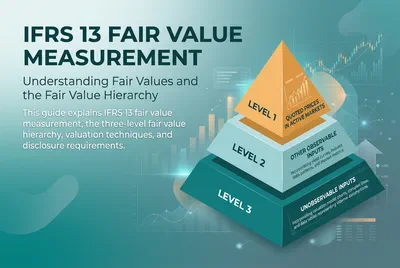
IFRS 13 Fair Value Measurement: Understanding Fair Values and the Fair Value Hierarchy
This guide explains IFRS 13 fair value measurement, the three-level fair value hierarchy, valuation techniques and disclosure requirements, supported by practical examples.
Ready to simplify your treasury accounting?
See how Finflexia helps you manage financial instruments with ease. Book a demo to learn more.
Book a Demo