Debit Valuation Adjustment (DVA): Understanding Valuation Adjustments
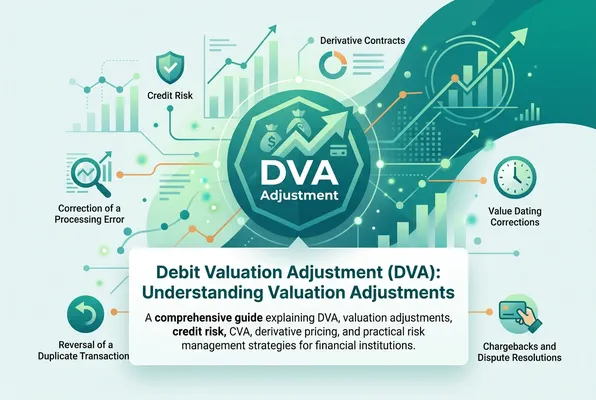

Managing your finances requires a clear understanding of every entry that appears on your bank statement, and one term that often causes confusion is Debit Value Adjustment. Whether you’ve spotted this phrase on your account activity or you’re simply trying to get ahead of unexpected charges, understanding what this adjustment means, why it happens, and how to respond is essential for maintaining accurate financial records.
This comprehensive guide breaks down everything you need to know about Debit Value Adjustments, including their causes, how they differ from other banking terms, and practical steps to manage them.
What Is a Debit Value Adjustment?
A Debit Value Adjustment is a correction made to your bank account by the financial institution to fix, reverse, or reconcile a previous transaction. Unlike a typical debit, which represents money leaving your account for a purchase or payment, a value adjustment is a backend correction designed to ensure your account balance reflects accurate and legitimate activity.
These adjustments are common in banking and financial systems because transactions don’t always process perfectly the first time. Errors can occur due to system glitches, duplicate entries, merchant disputes, or timing issues between when a transaction is authorized and when it’s settled.
Key Characteristics of a Debit Value Adjustment
- Initiated by the bank or financial institution, not the merchant
- Corrects discrepancies in previous transactions
- Can increase or decrease your account balance depending on the nature of the correction
- Typically includes a reference number linking it to the original transaction
- Appears with a specific value date, which may differ from the transaction date
Why Does a Debit Value Adjustment Appear on Your Statement?
There are several common scenarios that trigger a Debit Value Adjustment. Understanding these reasons can help you quickly identify whether the adjustment is legitimate or requires further investigation.
Valuation Adjustments and Credit Risk
Valuation adjustments are an important part of modern financial valuation because the theoretical market value of a financial instrument does not always reflect the risks associated with the parties involved. In particular, credit risk can affect the fair value of derivative contracts when there is a possibility that one party may fail to meet its contractual obligations. These adjustments help incorporate factors such as creditworthiness, default risk, and the expected exposure over the lifetime of a contract.
A debit valuation adjustment (DVA) focuses on the credit risk of the institution holding the liability. In contrast, a credit valuation adjustment (CVA) reflects the potential loss arising from a counterparty’s default. Together with other valuation components, DVA and CVA are commonly discussed under the broader concept of XVA. This framework allows financial institutions to provide a more accurate valuation of liabilities and derivative positions.
1. Correction of a Processing Error
Banks occasionally process transactions with incorrect amounts due to system errors. A Debit Value Adjustment corrects this by debiting or crediting the difference to restore the correct balance.
2. Reversal of a Duplicate Transaction
If a payment was accidentally processed twice, a common issue with automated billing systems, the bank will apply an adjustment to reverse the duplicate charge.
3. Value Dating Corrections
Sometimes, transactions are recorded with an incorrect value date (the date when funds are officially considered transferred). A Debit Value Adjustment corrects this discrepancy, which can affect interest calculations or available balance reporting.
4. Chargebacks and Dispute Resolutions
When a cardholder disputes a transaction and the dispute is resolved in favor of the merchant, a Debit Value Adjustment may be applied to reinstate the original charge after a temporary credit was issued.
5. Fee Adjustments
Banks sometimes apply, waive, or correct fees retroactively. This can show up as a Debit Value Adjustment on your account, particularly for monthly maintenance fees, overdraft charges, or foreign transaction fees.
Debit Value Adjustment vs. Other Common Banking Terms
To fully understand this concept, it helps to compare it with similar terms that often appear on statements.
CVA, DVA and Counterparty Credit Risk
Counterparty credit risk is particularly relevant for over-the-counter (OTC) derivatives, where the value of a contract can change significantly before maturity. The potential credit risk associated with a counterparty depends not only on its credit quality but also on the future exposure of the contract. If the counterparty defaults while the position has a positive market value, the resulting loss can be substantial.
CVA is therefore closely connected to the assessment of credit exposure. Financial institutions may estimate probabilities of default, expected exposure, and recovery assumptions to determine an appropriate adjustment. DVA takes a complementary perspective by considering the institution’s own default risk and the effect this can have on the valuation of its liabilities.
Debit Value Adjustment vs. Refund
A refund is initiated by a merchant when a customer returns a product or cancels a service. A Debit Value Adjustment, on the other hand, is initiated by the bank to correct an internal error or reconcile a transaction, regardless of merchant involvement.
Debit Value Adjustment vs. Chargeback
A chargeback is a forced transaction reversal initiated through the card network, usually due to fraud or a dispute. A Debit Value Adjustment may occur as a result of a chargeback resolution but isn’t the chargeback process itself.
Debit Value Adjustment vs. Pending Transaction
Pending transactions are simply authorized but not yet finalized. A Debit Value Adjustment applies to already settled transactions that require correction.
How to Identify a Legitimate Debit Value Adjustment
Not all adjustments are cause for concern, but it’s important to verify each one. Here’s how to check the legitimacy of a Debit Value Adjustment:
- Check the reference number: Legitimate adjustments typically include a transaction ID linking back to the original charge.
- Review the value date: Compare it to the date of the original transaction to understand the timeline.
- Cross-reference your transaction history: Look for related entries, such as an original debit, a reversal, or a fee correction.
- Contact your bank directly: If the adjustment is unclear or unexpected, request a detailed explanation through official banking channels.
- Monitor for patterns: Recurring unexplained adjustments could indicate a system issue or, in rare cases, fraudulent activity.
Common Causes That Trigger Debit Value Adjustments
Understanding the root causes can help you anticipate when these adjustments might occur:
- System migrations or software updates at your bank
- Batch processing delays for automated payments
- Currency conversion corrections for international transactions
- Interest recalculations on savings or loan accounts
- Merchant-side processing errors that require bank intervention
Derivative Pricing and Valuation Models
The calculation of valuation adjustments can become complex because the exposure of a derivative changes over time. Derivative pricing models therefore need to consider both market variables and credit-related factors. Monte Carlo simulation is one approach that can be used to generate possible future market scenarios and estimate the expected exposure of a portfolio.
The resulting calculations can incorporate the present value of expected losses and apply an appropriate discount to future cash flows. This enables institutions to assess how changes in market value, creditworthiness, or probabilities of default may influence the valuation of derivative contracts. The approach is especially relevant for portfolios containing numerous instruments with different maturities and risk profiles.
Credit Default Swaps and Hedging Credit Exposure
Credit default swaps (CDS) are financial instruments that can be used to transfer or hedge credit risk. A CDS contract generally provides protection against a specified credit event, such as a default, in exchange for regular payments. Because CDS prices contain information about perceived credit quality, they can also be relevant when assessing credit risk in valuation models.
For risk management purposes, institutions may use CDS and other hedging strategies to manage their credit exposure. The relationship between the underlying derivative, the hedge, and the counterparty’s creditworthiness must be considered carefully, since changes in financial markets can affect both the value of the position and the effectiveness of the hedge.
How Debit Value Adjustments Affect Your Financial Planning
While a single Debit Value Adjustment might seem minor, frequent or unexpected adjustments can impact your budgeting and cash flow management. Here’s why this matters:
Impact on Available Balance
Since these adjustments modify your balance retroactively, they can affect how much money you believe is available for spending, potentially leading to overdrafts if not monitored closely.
Impact on Interest Calculations
For savings accounts or interest-bearing checking accounts, value date corrections can slightly alter the interest you earn or owe, especially if adjustments affect the timing of when funds are considered “in” the account.
Impact on Financial Record-Keeping
If you use budgeting apps or manual tracking methods, unexplained adjustments can create discrepancies between your records and your actual bank balance, making reconciliation more difficult.
Best Practices for Managing Debit Value Adjustments
To stay on top of these banking corrections, consider adopting these habits:
Managing Credit Risk Across a Derivative Portfolio
Effective risk management requires institutions to look beyond the valuation of individual contracts. A portfolio approach can reveal concentrations of credit exposure, dependencies between counterparties, and the potential impact of adverse market conditions. Institutions can use these assessments to manage their credit risk and determine how changes in default probabilities or market conditions could affect the overall portfolio.
By incorporating CVA, DVA and other XVA measures into their valuation processes, financial institutions can better understand the relationship between market value and counterparty credit risk. This provides a more comprehensive view of the financial position and supports decisions concerning pricing, trading, hedging, and capital allocation.
Regularly Review Your Statements
Set a routine, weekly or biweekly, to review your account activity. This makes it easier to spot adjustments early and address any issues before they compound.
Use Financial Management Tools
Modern budgeting and finance apps can automatically flag unusual transactions, including Debit Value Adjustments, helping you stay informed without manually combing through every line item.
Keep Records of Disputes
If you’ve recently disputed a transaction or reported an error, keep documentation of your communication with the bank. This makes it easier to verify related adjustments later.
Set Up Account Alerts
Many banks allow you to set up real-time notifications for account changes. Enabling alerts for balance adjustments can help you respond quickly to unexpected entries.
Reach Out Promptly
If a Debit Value Adjustment seems incorrect or unauthorized, contact your bank’s customer service immediately. Most institutions have a limited window for disputing charges, so timely action is important.
When to Escalate a Debit Value Adjustment Issue
While most adjustments are routine corrections, there are situations where further action is warranted:
- The adjustment doesn’t match any transaction in your history
- Multiple adjustments occur without clear explanation
- The bank cannot provide a reference number or justification
- You suspect unauthorized account access or fraud
In these cases, escalate the issue to your bank’s fraud or dispute resolution department and request a formal investigation. Keep written records of all correspondence for future reference.
Final Thoughts
A Debit Value Adjustment is simply one of many mechanisms banks use to maintain accuracy in your account. While it can initially seem confusing or concerning, understanding its purpose, correcting processing errors, reconciling duplicate charges, or adjusting for value dating issues, makes it much easier to manage.
By regularly reviewing your bank statements, leveraging financial tools, and promptly addressing unclear entries, you can ensure your account remains accurate and your financial planning stays on track. If you’re ever uncertain about a specific adjustment, don’t hesitate to reach out to your bank for clarification, staying informed is the best way to protect your financial well-being.

Written by
Dominik KonoldFounder
Dominik is the founder of Finflexia and an expert in treasury accounting, financial instrument valuation and IFRS compliance. Since 2016, he's been a certified Professional Risk Manager (PRMIA) and also lectures for the Association of Public Banks and the Academy of International Accounting. He built Finflexia to help treasury teams automate complex accounting workflows.
Related Posts
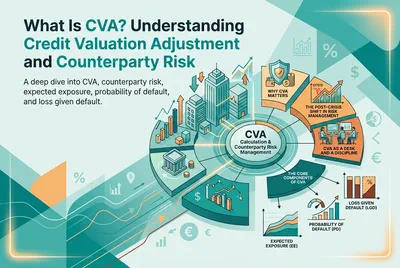
What Is CVA? Understanding Credit Valuation Adjustment and Counterparty Risk
This guide explains how Credit Valuation Adjustment (CVA) prices, hedges, and regulates the risk that a derivatives counterparty defaults.

Hypothetical Derivative Method Explained
To better understand the practical application of hedge accounting, the following sections examine key concepts related to hedge effectiveness, hypothetical derivatives, and cash flow hedges.
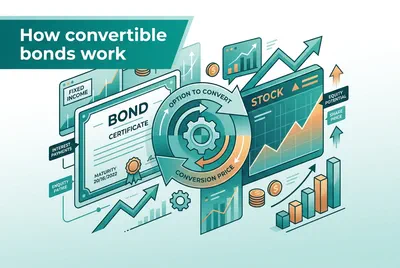
How Convertible Bonds Work: The Guide to Convertible Bonds
This guide explains how convertible bonds work, covering their key features, pricing, risks, conversion mechanisms, and the benefits they offer as hybrid securities that combine fixed-income investing with equity upside potential.
Ready to simplify your treasury accounting?
See how Finflexia helps you manage financial instruments with ease. Book a demo to learn more.
Book a Demo