Cash Flow Hedge: A Complete Guide to Hedging Cash Flows
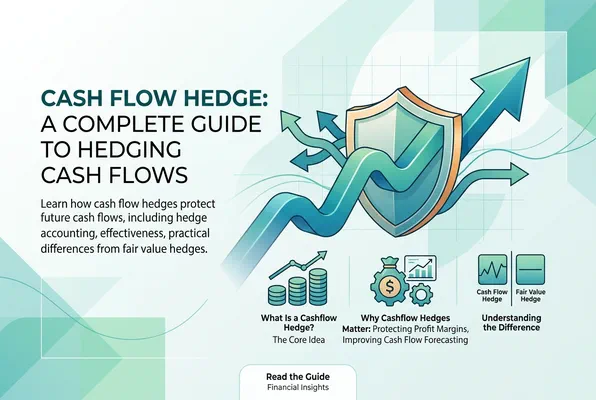

Managing financial uncertainty is one of the most pressing challenges for businesses of every size. Whether you’re a CFO navigating volatile interest rates or a treasury manager dealing with foreign currency exposure, unpredictable cash flows can threaten your company’s stability and strategic plans. A cashflow hedge is one of the most powerful tools available to address exactly this problem.
This guide covers everything you need to know about cashflow hedges, from the foundational concepts to accounting treatment, real-world examples, and practical implementation strategies.
What Is a Cashflow Hedge?
A cashflow hedge is a hedging strategy designed to offset the variability in future cash flows that are attributable to a specific risk. That risk could stem from fluctuating interest rates, changes in foreign exchange rates, or volatile commodity prices. The goal is not to eliminate risk entirely, but to stabilize anticipated cash inflows or outflows so that a company can plan with greater confidence.
In formal accounting terms, a cashflow hedge involves using a hedging instrument, typically a derivative such as an interest rate swap, currency forward, or options contract, to counterbalance the risk associated with a hedged item, which is usually a future transaction or a variable-rate liability.
The Core Idea: Swapping Uncertainty for Predictability
Imagine your company has taken out a loan with a floating interest rate. Every quarter, your interest payments might go up or down depending on benchmark rates like SOFR or EURIBOR. This unpredictability makes budgeting difficult. By entering into an interest rate swap, where you pay a fixed rate and receive a floating rate, you effectively convert your variable payments into fixed ones. That swap is functioning as a cashflow hedge.
The same logic applies to: - A U.S. company expecting euro-denominated revenues in six months - An airline locking in fuel prices for the next financial quarter - A manufacturer purchasing raw materials priced in a foreign currency
In each case, the cashflow hedge acts as a financial counterweight, reducing the risk of adverse cash flow variability.
Why Cashflow Hedges Matter for Businesses
Risk management is no longer just a back-office function, it’s a strategic imperative. According to global treasury surveys, currency and interest rate risk consistently rank among the top concerns for CFOs and finance directors. Here’s why cashflow hedges deserve serious attention:
Protecting Profit Margins
When input costs or financing expenses are subject to market volatility, profit margins can erode rapidly. A well-structured cashflow hedge locks in acceptable cost levels, protecting the company’s bottom line even when markets move against it.
Improving Cash Flow Forecasting
One of the most practical benefits is more accurate forecasting. When future cash flows are hedged, treasury teams can predict outflows and inflows with much greater precision, which directly improves working capital management and liquidity planning.
Supporting Strategic Decision-Making
Boards and executives are better positioned to make long-term investments when they can rely on stable projected cash flows. A cashflow hedge removes a layer of financial noise, making it easier to assess the true performance of business operations.
Satisfying Lenders and Investors
Financial institutions often require or prefer that borrowers hedge variable-rate debt. Similarly, institutional investors tend to view disciplined risk management, including hedging programs, as a sign of operational maturity and corporate governance quality.
Cashflow Hedge vs. Fair Value Hedge: Understanding the Difference
These two types of hedges are frequently confused, but they serve distinct purposes under both accounting standards and business strategy.
| Feature | Cashflow Hedge | Fair Value Hedge |
|---|---|---|
| What it protects | Variability in future cash flows | Changes in fair value of an asset or liability |
| Common instruments | Interest rate swaps, forward contracts, options | Interest rate swaps, futures |
| Typical exposure | Floating-rate debt, forecast transactions | Fixed-rate debt, commodity inventory |
| Accounting impact | Effective portion goes to OCI | Adjustments made directly to profit or loss |
| Example | Floating-rate loan hedged with a pay-fixed swap | Fixed-rate bond hedged against interest rate changes |
A fair value hedge aims to protect the balance sheet value of an existing position. A cashflow hedge, by contrast, is forward-looking, it’s concerned with future transactions and the variability those transactions might introduce into the income statement.
There is also a third category, the net investment hedge, which protects against foreign exchange risk arising from a company’s investment in a foreign subsidiary. However, this is separate from both cashflow and fair value hedges and operates under its own accounting rules.
Cash Flow Hedge vs. Fair Value Hedge
The key difference between cash flow and fair value hedge accounting is the type of exposure being protected. A cash flow hedge protects against variability in future cash flows, while fair value hedge accounting addresses changes in the fair value of an existing asset, liability, or firm commitment. Understanding the difference between a cash flow hedge and a fair value hedge is essential when determining how changes in the value of the hedging instrument and the hedged item should be recognized in the financial statements.
How a Cashflow Hedge Works: Step-by-Step
Let’s break down the mechanics of a typical cashflow hedge using a concrete example.
Step 1: Identify the Exposure
A European manufacturing company expects to receive USD 5 million from a U.S. customer in four months. The company’s functional currency is the euro. If the USD weakens against the EUR over those four months, the company will receive fewer euros than planned.
Step 2: Designate the Hedged Item and Hedging Instrument
The hedged item is the highly probable future receipt of USD 5 million. The hedging instrument is a forward contract to sell USD 5 million and receive EUR at today’s agreed-upon exchange rate.
Step 3: Document the Hedge Relationship
Under IFRS 9 and ASC 815, formal hedge documentation must be established at inception. This includes: - A description of the risk management objective - Identification of the hedged item and hedging instrument - The nature of the risk being hedged - How the company will assess hedge effectiveness
Step 4: Assess and Measure Effectiveness
For hedge accounting to apply, the hedge must be “highly effective.” This means the hedging instrument must substantially offset the cash flow variability of the hedged item. Accounting standards allow both prospective and retrospective assessments of effectiveness.
Step 5: Record the Accounting Entries
- The effective portion of the hedge’s gain or loss is recognized in Other Comprehensive Income (OCI) and is accumulated in a separate equity component sometimes called the cash flow hedge reserve.
- The ineffective portion is recognized immediately in profit or loss.
- When the hedged item (the USD receivable) affects earnings, the cumulative amount in OCI is reclassified to profit or loss.
Step 6: Monitor and Rebalance
Hedges rarely remain perfectly aligned over their lifetime. Market conditions change, volumes fluctuate, and hedge ratios may need rebalancing. Ongoing monitoring is essential to maintain hedge accounting qualification and to ensure the strategy continues to meet its original objectives.
Cashflow Hedge Accounting: IFRS 9 vs. ASC 815
Depending on where your company operates and reports, you’ll follow different accounting frameworks. The two dominant standards are IFRS 9 (used internationally) and ASC 815 (used in the United States under US GAAP).
IFRS 9 – Hedge Accounting
IFRS 9, which replaced IAS 39, introduced a more principles-based approach to hedge accounting. Key features include:
- Qualitative effectiveness testing is now permitted in many cases, reducing the burden of quantitative testing
- The 80–125% bright-line test from IAS 39 has been removed
- Companies must align their hedge accounting with their actual risk management strategy
- Rebalancing is required when the hedge relationship no longer meets the hedge ratio requirement but the risk management objective remains the same
ASC 815 – Derivatives and Hedging (US GAAP)
ASC 815 governs derivative accounting in the United States. While broadly similar in concept, there are notable differences:
- US GAAP uses a more rules-based framework compared to IFRS 9’s principles-based approach
- Specific quantitative thresholds still play a larger role
- The shortcut method and critical terms match simplifications can reduce the complexity of effectiveness testing for certain qualifying hedges
For multinational companies reporting under both standards, understanding these differences is critical to maintaining compliant and consistent hedge accounting across jurisdictions.
Cash Flow Hedge Accounting and the Hedged Risk
Cash flow hedge accounting is used to manage the hedge of the variability in future cash flows caused by a specific hedged risk, such as changes in interest rates, exchange rates, or commodity prices. A designated as a cash flow hedge relationship links the hedging instrument to the expected cash flows of the hedged transaction. For example, a company may use an interest rate swap to hedge future interest payments, with the hedge expected to be highly effective in offsetting changes in cash flows attributable to the designated risk.
Common Instruments Used in Cashflow Hedges
Several financial derivatives are commonly used to implement cashflow hedge strategies. Each has its own risk profile, cost structure, and suitability depending on the underlying exposure.
Interest Rate Swaps
An interest rate swap involves two parties exchanging cash flows based on different interest rate structures, typically, one party pays a fixed rate while the other pays a floating rate. When a company has floating-rate debt, a pay-fixed/receive-floating swap effectively converts that debt into fixed-rate exposure, hedging the cash flow variability.
Forward Contracts
A forward contract is an agreement to buy or sell a currency or commodity at a predetermined price on a future date. Forward contracts are widely used for foreign exchange cashflow hedges and can be highly customized to match the specific timing and amount of the hedged transaction.
Options (Caps, Floors, and Collars)
- Interest rate caps protect against rising interest rates by paying out when rates exceed a specified level (the strike rate)
- Floors provide protection against falling rates, useful for floating-rate investors
- Collars combine a cap and a floor, limiting exposure within a defined range
Options carry a premium cost but offer asymmetric protection, you benefit if rates move in your favor while being protected if they don’t.
Cross-Currency Swaps
For companies with foreign currency-denominated debt, a cross-currency swap can hedge both the foreign exchange risk and the interest rate risk simultaneously. These instruments are particularly common among large corporations with multi-currency financing structures.
Practical Examples of Cashflow Hedges
Example 1: Hedging Floating-Rate Debt
A property company has a EUR 20 million loan at EURIBOR + 150 bps, with quarterly interest payments over five years. Concerned about rising rates, the treasury team enters into a five-year interest rate swap, paying a fixed rate of 4.5% and receiving EURIBOR quarterly.
Result: Regardless of where EURIBOR moves, the company’s net interest cost is locked at approximately 6% (4.5% fixed + 1.5% spread). The swap qualifies as a cashflow hedge, with the effective portion of gains and losses deferred in OCI until the hedged interest payments occur.
Reclassification Into Earnings
The effective portion of the hedging instrument’s gains or losses is generally recognized in the cash flow hedge reserve before the hedged transaction affects earnings. When the underlying transaction affects the relevant income statement line item, the accumulated amount is reclassified into earnings so that the hedge result is recognized in the same period as the related transaction. This accounting treatment helps align cash flow hedge gains and losses with the economic impact of the hedged transaction over the life of the hedge.
Example 2: Foreign Currency Revenue Hedge
A UK-based software company expects to receive USD 2 million per quarter from U.S. clients over the next 12 months. To hedge against GBP strengthening (which would reduce the GBP value of those receipts), the company enters into quarterly USD/GBP forward contracts.
Result: The company locks in a predictable GBP revenue figure, removing FX volatility from its income statement. Each forward contract is designated as a cashflow hedge of the corresponding quarterly forecast receipt.
Example 3: Commodity Price Hedge
An airline company is exposed to jet fuel price risk. To protect against fuel cost increases, the airline uses crude oil futures or commodity swaps to hedge a portion of its anticipated fuel purchases for the next six months.
Result: If jet fuel prices rise, losses on the physical fuel purchases are offset by gains on the hedge, stabilizing operating cash flows. Airlines like Delta and Lufthansa have historically used such strategies, though their effectiveness depends heavily on the correlation between crude oil and jet fuel prices (basis risk).
Hedge Effectiveness: The Foundation of Qualifying for Hedge Accounting
One of the most technically complex aspects of cashflow hedge accounting is demonstrating and maintaining hedge effectiveness. Without meeting the effectiveness criteria, a company cannot apply hedge accounting treatment and must recognize all derivative gains and losses immediately in profit or loss.
What Makes a Hedge Effective?
Under both IFRS 9 and ASC 815, an effective hedge must:
- Have an economic relationship between the hedged item and hedging instrument
- Not be dominated by credit risk to the extent it overwhelms the economic relationship
- Be consistent with the designated hedge ratio—i.e., the ratio between the quantity of hedging instrument and the quantity of hedged item must align with the actual risk management approach
Types of Effectiveness Assessment
- Prospective effectiveness: Assessed at inception and on an ongoing basis to confirm the hedge is expected to remain effective
- Retrospective effectiveness: Under IAS 39 (older standard), retrospective testing was required to confirm the hedge was effective during the reporting period; IFRS 9 removed this strict requirement
Basis Risk: A Common Source of Ineffectiveness
Basis risk arises when the hedging instrument and the hedged item don’t move in perfect lockstep. For example, an airline hedging jet fuel with crude oil futures faces basis risk because the two prices, while correlated, don’t always move identically. This mismatch creates hedge ineffectiveness that flows through profit or loss.
Minimizing basis risk requires careful instrument selection and sometimes accepting higher hedging costs in exchange for better-matched instruments.
Measuring the Hedge and the Hedged Transaction
An assessment of hedge effectiveness considers whether the hedging instrument is highly effective in achieving offsetting changes in the cash flows associated with the hedged item. This can involve comparing the fair value of the derivative with changes in the hedged exposure, including differences caused by the timing of cash flows or changes in the value of the hedged item. For options, factors such as intrinsic value and time value may also need to be considered separately under the applicable accounting rules.
Setting Up a Cashflow Hedge Program: Key Considerations
Implementing a formal hedging program is not just about executing trades, it requires a structured governance framework, clear policies, and reliable technology.
Define Your Risk Management Policy
Start with a formal treasury risk management policy approved by the board. This should specify: - Which risks are eligible for hedging - The percentage of exposure to hedge (hedge ratio) - Permitted instruments and counterparties - Approval authorities and reporting requirements
Choose the Right Counterparties
Hedging instruments are typically executed with banks or other financial intermediaries. Consider: - Counterparty credit risk: The risk that the counterparty defaults on the hedge contract - ISDA Master Agreements: Standardize the terms of derivative transactions - Central clearing: Many derivatives are now required to be centrally cleared, reducing bilateral counterparty risk
Invest in Treasury Technology
Manual spreadsheet-based approaches are inadequate for managing complex hedging programs. Modern treasury management systems (TMS) and platforms, like finflexia.app, provide tools to monitor exposures, track hedge positions, calculate effectiveness, and generate the reporting needed for hedge accounting compliance.
Document Everything
Hedge accounting documentation is not optional, it’s a prerequisite. Documentation must be established at inception of the hedge and must be sufficiently detailed to withstand audit scrutiny. Retroactive designation of hedge relationships is not permitted under IFRS 9 or ASC 815.
Review and Rebalance Regularly
Markets change. So do your company’s underlying exposures. Build regular review cycles (monthly or quarterly) into your treasury process to assess whether existing hedges remain aligned with the underlying exposures and whether the hedge ratio needs adjustment.
Disclosures and Reporting Requirements
Both IFRS 7 (Financial Instruments: Disclosures) and ASC 815 require extensive note disclosures related to hedge accounting. These disclosures are designed to give financial statement users insight into the nature and extent of hedging activities and their financial impact.
Key Disclosures for Cashflow Hedges
- Description of each type of risk being hedged
- The notional amounts and terms of the hedging instruments
- The periods when hedged cash flows are expected to occur
- The amount recognized in OCI during the period
- The amount reclassified from OCI to profit or loss
- Any ineffectiveness recognized in profit or loss
- The cash flow hedge reserve balance and expected reclassification timing
Transparent and well-structured disclosures can actually enhance investor confidence by demonstrating a sophisticated and disciplined approach to financial risk management.
Expected Cash Flows and Changes in Cash
When expected cash flows change after a hedge has been designated, treasury teams need to reassess whether the underlying exposure remains consistent with the original hedging relationship. This is particularly important when estimated cash flows differ materially from the company’s initial forecast or when the change in the cash exposure affects the amount or timing of the anticipated transaction. A cash flow hedge used to manage a group of forecasted transactions should therefore be monitored throughout its term to ensure that the expected cash requirements remain aligned with the hedging instrument in a cash flow hedge. If the forecast transaction is no longer highly probable, hedge accounting would generally require the company to reassess the existing designation and determine the appropriate accounting treatment.
Common Mistakes to Avoid in Cashflow Hedge Accounting
Even experienced treasury teams can fall into traps when implementing cashflow hedge accounting. Here are the most frequent pitfalls:
1. Failing to Document at Inception
Documentation cannot be backdated. If a derivative has been in place for three months before someone decides to apply hedge accounting, it’s too late, hedge accounting can only be applied prospectively from the documentation date.
2. Over-Hedging
Designating a hedge that exceeds the actual underlying exposure can create speculative positions. If your EUR revenue forecast turns out to be lower than hedged, you may end up with open derivative positions that generate losses rather than offsets.
3. Ignoring Basis Risk
Using a proxy hedge (e.g., crude oil to hedge jet fuel) without fully understanding the basis risk can lead to unexpected ineffectiveness and income statement volatility.
4. Failing to Rebalance
When the relationship between the hedging instrument and hedged item drifts due to changed volumes or market conditions, rebalancing is required under IFRS 9. Failing to do so can result in loss of hedge accounting.
5. Inadequate Counterparty Risk Management
Not monitoring the credit quality of hedge counterparties exposes a company to loss if the counterparty defaults before the hedge matures.
The Role of Technology in Modern Cashflow Hedge Management
The complexity of cashflow hedge accounting, combined with the volume of transactions in a large treasury operation, makes technology not just helpful but essential.
Modern platforms offer capabilities including:
- Exposure identification and aggregation across business units and currencies
- Hedge ratio optimization based on forecasted cash flows
- Real-time mark-to-market valuation of derivative portfolios
- Automated effectiveness testing in line with IFRS 9 or ASC 815 requirements
- OCI tracking and reclassification scheduling
- Audit trails and documentation management
Solutions like finflexia.app are designed to bring this level of sophistication to treasury teams of all sizes, reducing the manual burden of hedge accounting and improving accuracy and compliance.
Conclusion: Cashflow Hedges as a Pillar of Financial Resilience
A well-designed cashflow hedge program is one of the clearest demonstrations of financial discipline a company can exhibit. It reflects a proactive mindset, one that acknowledges market uncertainty and takes concrete steps to manage it rather than simply hoping for favorable outcomes.
From protecting interest payments on variable-rate debt to stabilizing foreign currency revenues and locking in commodity input costs, cashflow hedges provide the financial predictability that supports sound strategic planning, investor confidence, and long-term business resilience.
Whether you’re just beginning to explore hedging strategies or looking to refine an existing program, the foundational principles remain the same: identify your exposures clearly, select appropriate instruments, document rigorously, and monitor continuously. Technology platforms like finflexia.app can help you do all of this more efficiently and with greater confidence.
In an increasingly volatile global economy, cashflow hedges aren’t a luxury, they’re a strategic necessity.

Written by
Dominik KonoldFounder
Dominik is the founder of Finflexia and an expert in treasury accounting, financial instrument valuation and IFRS compliance. Since 2016, he's been a certified Professional Risk Manager (PRMIA) and also lectures for the Association of Public Banks and the Academy of International Accounting. He built Finflexia to help treasury teams automate complex accounting workflows.
Related Posts

Hypothetical Derivative Method Explained
To better understand the practical application of hedge accounting, the following sections examine key concepts related to hedge effectiveness, hypothetical derivatives, and cash flow hedges.
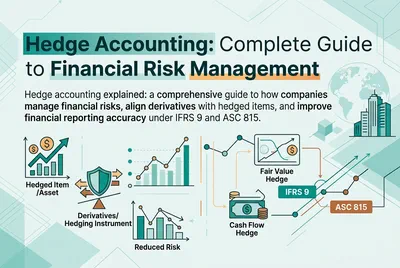
Hedge Accounting: Complete Guide to Financial Risk Management
Hedge accounting explained: a comprehensive guide to how companies manage financial risks, align derivatives with hedged items, and improve financial reporting accuracy under IFRS 9 and ASC 815.
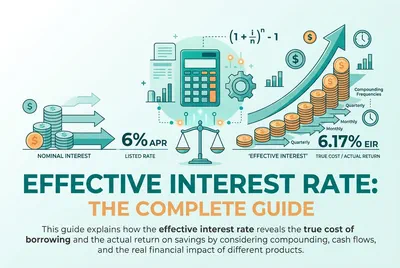
Effective Interest Rate: The Complete Guide
This guide explains how the effective interest rate reveals the true cost of borrowing and the actual return on savings by considering compounding, cash flows, and the real financial impact of different products.
Ready to simplify your treasury accounting?
See how Finflexia helps you manage financial instruments with ease. Book a demo to learn more.
Book a Demo