Cash Management System Software: The Ultimate Cash Management Solution for Modern Businesses
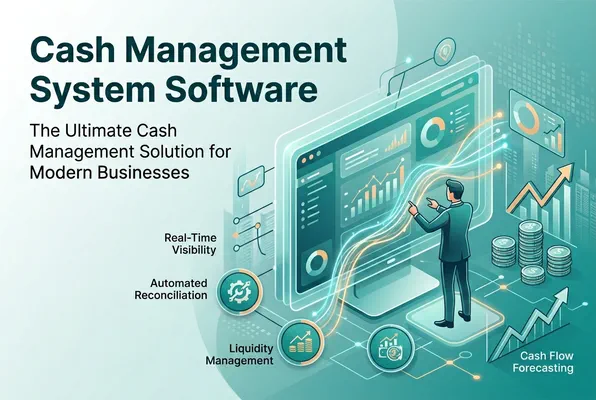

Managing money sounds simple until it isn’t. Late customer payments, surprise expenses, idle cash sitting in low-yield accounts, and disconnected bank statements create a constant fog that makes confident financial decision-making nearly impossible. This is exactly the problem a cash management system is designed to solve.
Whether you run a growing startup, an established SME, or a large enterprise, having a structured approach to managing cash is one of the highest-leverage financial decisions you can make. In this guide, you’ll learn what a cash management system is, how it works, which features matter most, and how to select the right solution for your business.
What Is a Cash Management System?
A cash management system is an integrated combination of processes, policies, and software tools that enables organizations to efficiently collect, manage, disburse, and monitor their cash and liquid assets. The core objective is to ensure that a business always has enough liquidity to meet its obligations while maximizing the productivity of any surplus funds.
Unlike a basic bank account dashboard or a spreadsheet, a modern cash management system provides:
- Real-time visibility across multiple accounts and financial entities
- Automated reconciliation of transactions and bank statements
- Cash flow forecasting based on historical data and upcoming obligations
- Centralized control over payments and collections
- Integration with accounting, ERP, and payroll systems
In practice, the system acts as the nerve center of your company’s financial operations — connecting the dots between incoming revenue, outgoing expenses, investment activities, and short-term financing needs.
Why Cash Management Matters More Than Ever
The global economy is more volatile and fast-moving than at any point in recent memory. Supply chain disruptions, interest rate fluctuations, inflationary pressure, and unpredictable customer payment behavior all create liquidity risks that can destabilize even profitable businesses.
The Hidden Danger of Poor Cash Management
A company can be profitable on paper and still run out of cash. This scenario — sometimes called a cash flow crisis — happens when:
- Revenue is recognized before cash is actually received
- Vendor payments are due before customer invoices are settled
- Growth investments strain working capital
- Seasonal demand creates temporary but severe cash gaps
According to multiple studies on SME failures, poor cash flow management is one of the leading causes of business insolvency — not lack of revenue, but lack of timely access to cash.
The Opportunity Cost of Idle Cash
On the flip side, holding excess cash in non-interest-bearing accounts represents a missed opportunity. A cash management system helps identify surplus liquidity so it can be swept into higher-yield instruments, used to pay down expensive debt, or reinvested into growth.
Cash Management Software Solutions for Better Financial Management
Modern cash management software and advanced management software solutions help businesses gain full control of their cash flow while reducing manual financial workloads. A robust cash management solution gives finance teams real-time visibility into cash across multiple bank accounts, currencies, and business entities. These cash management software solutions are designed to automate cash management tasks such as reconciliation, payment approvals, reporting, and liquidity management. By improving visibility into your cash flow and delivering accurate cash flow data, businesses can make faster decisions, maintain enough cash for operations, and build more efficient cash management processes. For growing companies, choosing the best cash management software is no longer optional — it is a critical part of long-term financial management and stability.
Core Components of an Effective Cash Management System
Not all cash management systems are built the same. However, the most effective ones share a set of fundamental components.
1. Cash Positioning and Real-Time Visibility
Cash positioning is the process of knowing, at any given moment, exactly how much cash your business has — across every account, in every currency, at every bank. Without this foundation, everything else becomes guesswork.
A strong cash management system provides:
- Multi-bank account aggregation via direct API connections or open banking integrations
- Daily opening and closing balances for every account
- Intraday transaction monitoring for high-frequency businesses
- Multi-currency conversion for international operations
Real-time cash visibility is especially critical for treasury teams managing complex corporate structures with multiple subsidiaries or operating in different geographies.
2. Cash Flow Forecasting
Forecasting is where a cash management system truly earns its value. Rather than reacting to cash shortfalls after they occur, forecasting allows finance teams to anticipate and prepare.
Modern systems support several forecasting horizons:
- Short-term forecasts (1–30 days): Based on known payment schedules, receivables aging, and confirmed transactions
- Medium-term forecasts (30–90 days): Incorporating budgeted expenses, seasonal patterns, and sales pipeline data
- Long-term forecasts (90+ days): Linked to financial models, strategic plans, and macroeconomic assumptions
The best systems use machine learning and pattern recognition to continuously improve forecast accuracy over time as more transaction data is collected.3.3
3. Automated Cash Management and Cash Forecasting Capabilities
An automated cash management system helps businesses forecast cash flow more accurately by combining historical transaction data, payment schedules, and future obligations into one centralized platform. These cash flow management tools allow finance teams to forecast cash positions, identify future cash shortages, and optimize cash reserves before problems occur. Good cash management depends heavily on accurate cash forecasting and real-time cash flow visibility, especially for businesses operating with tight margins or rapid growth. Modern cash flow management software can track cash movements automatically, monitor every cash transaction, and provide deeper insights into cash flow trends. This allows organizations to manage cash flow proactively, maintain healthy cash balances, and improve short-term cash planning without relying on outdated spreadsheets.
4. Bank Reconciliation Automation
Manual bank reconciliation is one of the most time-consuming and error-prone tasks in finance. Matching transactions in your accounting system to bank statements line by line is tedious work that adds no strategic value.
Automated reconciliation within a cash management system:
- Matches transactions automatically using rules and algorithms
- Flags exceptions and discrepancies for human review
- Dramatically reduces the month-end close timeline
- Provides a clean audit trail for compliance purposes
For businesses processing hundreds or thousands of transactions daily, automation here can save dozens of hours per month.
5. Payment Processing and Disbursement Controls
A comprehensive cash management system doesn’t just track money — it also facilitates and controls how money moves out of the business.
Key disbursement features include:
- Batch payment processing for payroll, supplier payments, and expense reimbursements
- Approval workflows ensuring payments are authorized before execution
- Payment scheduling to optimize timing and avoid unnecessary overdraft fees
- Fraud detection and anomaly alerts on unusual payment patterns
Controlling outgoing cash flows with precision is just as important as accelerating incoming collections.
6. Receivables and Collections Management
The faster your customers pay, the better your cash position. A cash management system supports collections by:
- Tracking outstanding invoices and aging receivables
- Automating payment reminders and follow-up communications
- Providing customers with convenient digital payment options
- Reconciling incoming payments to open invoices automatically
Reducing Days Sales Outstanding (DSO) — the average time it takes to collect payment — is one of the fastest ways to improve business cash flow without increasing revenue.
7. Working Capital Optimization
Working capital is the difference between current assets and current liabilities. Optimizing it is fundamentally a cash management challenge.
A robust system helps by:
- Identifying opportunities to extend supplier payment terms without damaging relationships
- Flagging early payment discount opportunities from suppliers
- Balancing inventory levels against cash requirements
- Providing metrics like the cash conversion cycle to measure efficiency
Cash Management System vs. Traditional Treasury Management
Many finance professionals use the terms “cash management system” and “treasury management system” interchangeably, but there are meaningful distinctions.
| Feature | Cash Management System | Treasury Management System |
|---|---|---|
| Primary focus | Day-to-day cash operations | Strategic financial risk management |
| Typical users | Finance teams, controllers, CFOs | Corporate treasurers, large enterprises |
| Key capabilities | Cash positioning, forecasting, reconciliation | Hedging, debt management, investment portfolios |
| Complexity | Low to medium | High |
| Cost | Accessible to SMEs | Often enterprise-grade pricing |
For most growing businesses, a cash management system provides exactly the right level of capability. Enterprise organizations may eventually layer treasury management tools on top for more sophisticated risk and investment management.
Benefits of Implementing a Cash Management System
The return on investment from deploying a proper cash management system is typically fast and measurable.
Improved Liquidity and Financial Stability
With accurate forecasting and real-time visibility, businesses can maintain optimal cash buffers — never holding too little (risking insolvency) or too much (leaving money idle).
Reduced Administrative Costs
Automation of reconciliation, payment processing, and reporting dramatically reduces the manual labor hours devoted to routine finance tasks. Teams can be redeployed to higher-value analytical and strategic work.
Faster, More Confident Decision-Making
When leadership has access to reliable, up-to-date cash data, they can make faster decisions on hiring, capital expenditure, dividend payments, and debt management without waiting for delayed reports.
Stronger Relationships with Banks and Lenders
Lenders look favorably on businesses that demonstrate strong cash management discipline. Accurate financial records, consistent cash flow, and documented forecasting processes all support better credit terms and faster loan approvals.
Better Fraud Prevention and Internal Controls
Centralized visibility and approval workflows significantly reduce the risk of unauthorized transactions, duplicate payments, and internal fraud. The system creates accountability and a clear audit trail.
How to Choose the Right Cash Management System
With dozens of options in the market, selecting the right cash management system requires a structured evaluation process.
Step 1: Assess Your Current Pain Points
Before evaluating vendors, document your current challenges:
- How much time does your team spend on manual reconciliation?
- How accurate are your current cash flow forecasts?
- Do you have full visibility across all bank accounts?
- Are you experiencing any cash flow surprises or near-misses?
The answers will shape your must-have feature list.
Step 2: Define Your Integration Requirements
Your cash management system doesn’t operate in isolation. It needs to connect with:
- Your accounting software (QuickBooks, Xero, Sage, SAP, etc.)
- Your ERP system if applicable
- Your banking partners (via APIs or open banking)
- Payment processors and gateways
A system that integrates smoothly with your existing technology stack will deliver value faster and with less disruption.
Step 3: Evaluate Scalability
Your needs today are not your needs in three years. Choose a system that can grow with you — handling more accounts, more currencies, more entities, and more transaction volume without requiring a platform migration.
Step 4: Consider Security and Compliance
Cash management involves highly sensitive financial data. Evaluate each vendor on:
- Data encryption standards (at rest and in transit)
- Role-based access controls to limit data exposure
- Regulatory compliance (GDPR, SOC 2, PCI DSS as applicable)
- Audit logging and user activity tracking
Step 5: Test Usability and Support
The most feature-rich system in the world is worthless if your team won’t use it. Prioritize platforms with intuitive interfaces, clear onboarding, and responsive customer support.
Key Features of Cash Management Software and Liquidity Management
The key features of cash management software typically include automated reconciliation, account management dashboards, payment scheduling, cash flow analysis, and visibility and reporting on cash positions. Many cash management solutions offer built-in integrations with accounting software for small and mid-sized businesses, helping teams automate reporting and simplify cash handling across departments. One of the most valuable features of cash management is real-time visibility into cash and liquidity, enabling companies to understand exactly how much cash available they have at any moment. This visibility helps management process financial decisions more confidently while ensuring businesses can manage their cash flow effectively during both stable and uncertain market conditions. Companies that take control of your cash strategy through efficient cash management systems are far better positioned to optimize free cash flow, respond to changing cash needs, and stay on top of your cash performance long term.
Cash Management Best Practices for 2025 and Beyond
Even with the best software in place, the technology only amplifies the quality of your underlying processes. Here are proven best practices to maximize the impact of your cash management system.
Establish a Daily Cash Review Routine
Assign ownership of a daily cash review process. This involves checking overnight positions, flagging any unexpected movements, and updating the short-term forecast with any new information. Fifteen minutes a day prevents fifteen crises a quarter.
Maintain a Rolling 13-Week Cash Flow Forecast
The 13-week rolling forecast is a widely used best practice in corporate finance. It provides a granular week-by-week view of cash inflows and outflows across a quarter, giving enough time to react to emerging shortfalls without being so long-range that it becomes unreliable.
Centralize Cash Where Possible
If your business operates across multiple entities or geographies, consider implementing a cash pooling or notional pooling structure. This allows surplus cash in one entity to offset deficits in another, reducing the total external financing needed.
Segment Cash Reserves by Purpose
Not all cash is created equal. Best-practice cash management distinguishes between:
- Operating cash: Required within 30 days to cover expenses
- Reserve cash: A buffer for unexpected shortfalls (typically 1–3 months of operating expenses)
- Strategic cash: Surplus funds earmarked for investment or opportunity
By segmenting reserves, you can place strategic cash in higher-yield instruments while keeping operating funds instantly accessible.
Review and Update Forecasting Assumptions Regularly
A forecast is only as good as its assumptions. Schedule monthly reviews of your forecasting model to update customer payment patterns, adjust for seasonal trends, and incorporate any changes in business strategy.
Finflexia: A Modern Cash Management System for Growing Businesses
Finflexia is built for finance teams that need powerful cash management capabilities without the complexity and cost of enterprise treasury platforms.
Finflexia brings together real-time cash visibility, automated bank reconciliation, intelligent cash flow forecasting, and streamlined payment workflows in a single, intuitive platform. Whether you’re managing one bank account or twenty, operating in one currency or several, Finflexia gives you the clarity and control to make confident financial decisions every day.
Key highlights include:
- Seamless multi-bank integration via open banking and direct API connections
- AI-powered forecasting that learns from your transaction history
- Automated reconciliation that eliminates manual matching
- Role-based access controls for secure team collaboration
- Flexible reporting dashboards customized to your business metrics
Finflexia is designed to grow with your business — from early-stage startups discovering the value of cash visibility for the first time to scaling companies with sophisticated working capital needs.
Common Mistakes to Avoid in Cash Management
Even with a system in place, certain behavioral and process mistakes can undermine your results.
Ignoring Small Variances
Small discrepancies between forecasts and actuals are easy to brush off. But consistently ignoring them means your model never improves, and small errors compound into large ones over time. Review every variance and understand its source.
Over-Relying on Accounting Reports for Cash Management
Your profit and loss statement and balance sheet are important, but they are backward-looking documents that don’t reflect real-time cash. Managing cash from accounting reports alone is like driving using only the rearview mirror.
Neglecting Accounts Receivable Follow-Up
Many businesses focus on cutting costs to improve cash flow but neglect the simpler lever of collecting what they’re already owed. Systematic follow-up on overdue invoices often has an immediate and significant impact on cash position.
Keeping Cash Management Siloed
Cash management decisions affect and are affected by sales (payment terms), procurement (supplier terms), HR (payroll timing), and operations (inventory purchasing). The best outcomes come from finance teams that communicate proactively with other departments.
Different Types of Cash Management Solutions and Their Business Value
There are different types of cash management systems designed for businesses of all sizes, from lightweight cash management tools for startups to enterprise-grade liquidity management platforms. Some solutions focus primarily on bank connectivity and cash flow visibility, while others provide broader cash management services including forecasting, payment execution, treasury support, and advanced reporting. The best cash flow management platforms help organizations manage their cash and cash on hand more strategically by providing a complete picture of your cash position and future cash flow obligations. Whether a company needs automated cash reconciliation, better control of your cash flow, or stronger cash and liquidity oversight, modern cash management solutions offer scalable functionality that grows alongside the business.
The Future of Cash Management Systems
The cash management landscape is evolving rapidly, driven by several technological and regulatory trends.
Open Banking and API-First Architecture
Open banking regulations across Europe, the UK, and increasingly the US are enabling real-time, direct connections between financial software and bank accounts. This removes the dependency on file-based bank feeds and manual data entry, enabling truly real-time cash positioning.
Artificial Intelligence and Predictive Analytics
AI is transforming cash flow forecasting from a manual budgeting exercise into a dynamic, continuously learning process. Systems that incorporate machine learning can identify patterns in payment behavior, seasonal cycles, and market conditions to generate forecasts with previously impossible accuracy.
Embedded Finance and Payment Innovation
The lines between cash management systems, banking platforms, and payment infrastructure are blurring. The next generation of solutions will embed banking-like functionality — such as virtual accounts, instant payments, and dynamic discounting — directly into the cash management workflow.
Real-Time Payments
As real-time payment rails (such as SEPA Instant in Europe or FedNow in the US) become the standard, the timing assumptions underlying traditional cash flow forecasting will shift dramatically. Cash management systems will need to adapt to a world where funds move in seconds, not days.
Conclusion
A cash management system is not a luxury for large corporations, it is a foundational tool for any business that wants to maintain financial stability, grow confidently, and make decisions based on real data rather than guesswork.
From real-time cash visibility and automated reconciliation to intelligent forecasting and streamlined disbursements, the right system transforms cash management from a reactive, manual burden into a proactive, strategic advantage.
The cost of inaction, in terms of missed opportunities, financial surprises, and wasted administrative hours, far outweighs the investment in the right platform.
If you’re ready to take control of your business cash flow, explore what Finflexia can do for your finance team today.

Written by
Dominik KonoldFounder
Dominik is the founder of Finflexia and an expert in treasury accounting, financial instrument valuation and IFRS compliance. Since 2016, he's been a certified Professional Risk Manager (PRMIA) and also lectures for the Association of Public Banks and the Academy of International Accounting. He built Finflexia to help treasury teams automate complex accounting workflows.
Related Posts
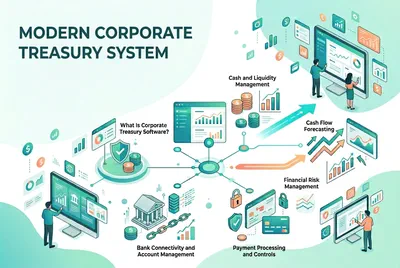
Modern Treasury Management Software for Smarter Financial Operations
Learn how treasury management software improves treasury operations by centralizing financial data, enhancing visibility, automating processes, and optimizing cash and liquidity management within a modern treasury management system.
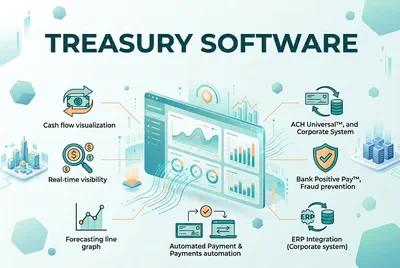
Treasury Software: Best Treasury Management Systems 2026
Treasury software explained: features, benefits, and TMS tools for cash management, forecasting, payments, risk control, and ERP integration.
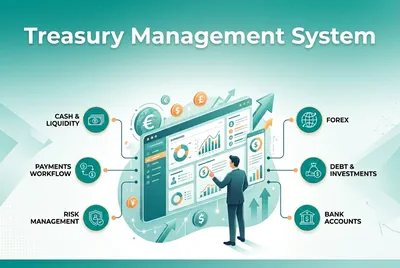
Treasury Management System: Complete TMS Guide 2026
Treasury management system (TMS) guide: features, benefits, cash flow, risk management, ERP vs TMS, and how to choose the best treasury software.
Ready to simplify your treasury accounting?
See how Finflexia helps you manage financial instruments with ease. Book a demo to learn more.
Book a Demo